

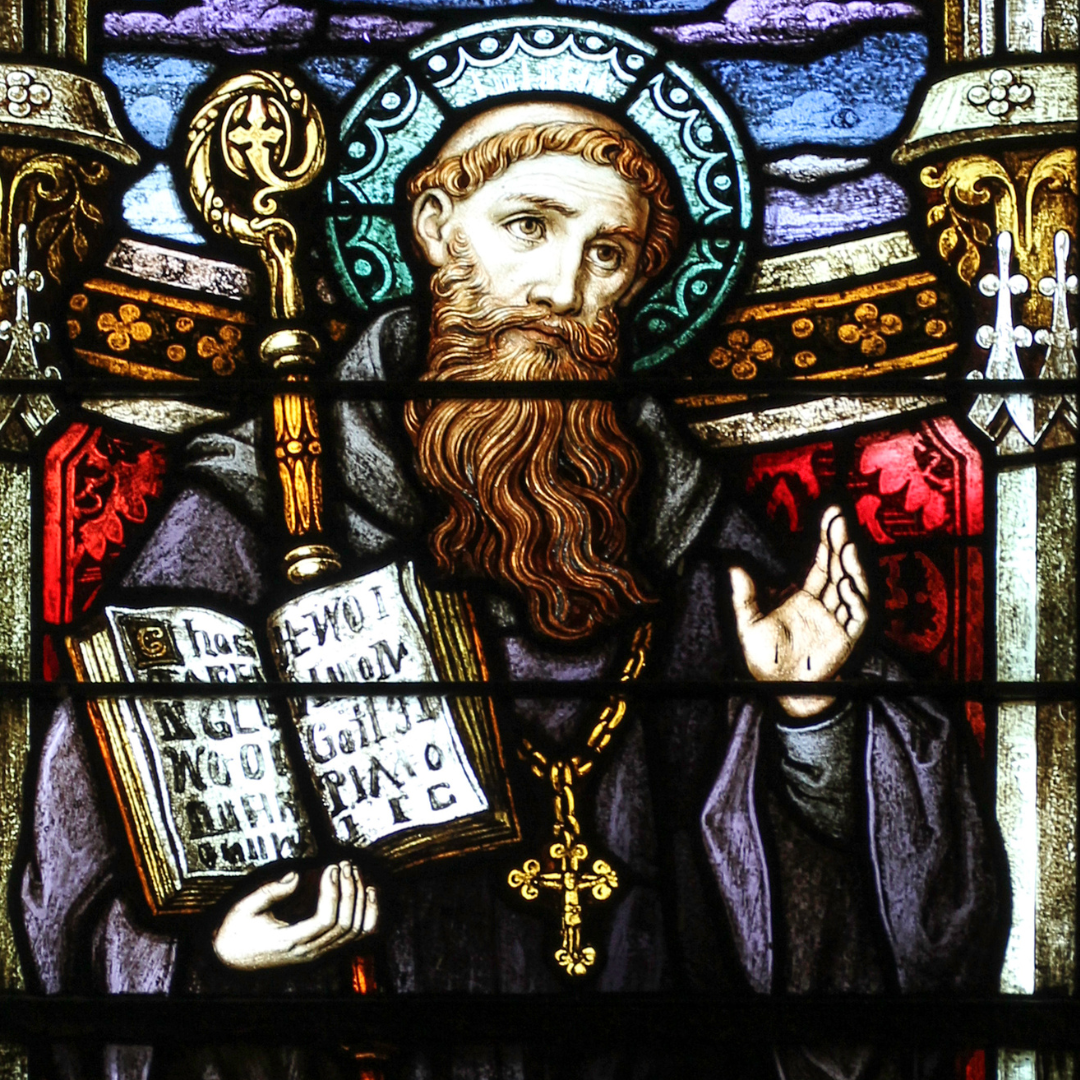
If you've ever enjoyed the peace of a monastery retreat, prayed the Liturgy of the Hours, or appreciated the intellectual legacy of a Benedictine school, then you’ve already tasted the fruit of an ancient spiritual revolution.
But where did Western monasticism begin? With Saint Benedict of Nursia, right? Sort of. Like most things in the Catholic Church, it goes back even further. Way further.
It All Starts in the Desert
Before there were habits, chant, and stone cloisters, there were caves, silence, and the burning sun of Egypt. Monasticism was born in the East, in the 3rd and 4th centuries, when men and women like Saint Anthony the Great and Saint Macrina fled into the desert—not to escape the world, but to fight for it through prayer, asceticism, and spiritual warfare.
This desert movement wasn’t weird or escapist. It was profoundly prophetic. As the Roman Empire crumbled, these spiritual warriors became the new backbone of Christian civilization.
East Meets West
So, how did this desert fire reach the Italian hills?
Enter Saint Benedict (c. 480–547), a young man born into privilege in the shadow of a collapsing empire. Sent to study in Rome, Benedict was disillusioned by the city’s decadence. He left it all behind, retreating to a cave in Subiaco—alone, fasting, and praying. Sound familiar? He had heard stories of the Eastern Desert Fathers and was inspired to imitate their radical devotion to Christ.
The Spirit of the East had found a home in the West.
From Solitude to Structure
But Benedict wasn’t meant to stay hidden forever. Over time, disciples came to him, drawn to his holiness. What emerged wasn’t a copy-paste of Eastern monasticism, but a deeply Western expression of it. Where the East emphasized spontaneity and individual spiritual fatherhood, Benedict brought structure, balance, and rhythm—ora et labora, “pray and work.”
His Rule of Saint Benedict became the foundation of Western monasticism and, eventually, Western civilization itself. It sanctified daily life, emphasized stability, community, and obedience—all while preserving the fire of the Eastern contemplative spirit.
One Church, Breathing with Both Lungs
The life of St. Benedict reminds us that East and West are not rivals—they are siblings. In fact, they’re lungs in the same Body of Christ. What began in the deserts of Egypt blossomed in the hills of Italy. What was ignited in solitude now sustains the Church in community.
As Catholics, our roots are deep and wide. And in the life of St. Benedict, we see that the wisdom of the East gave birth to the heart of the West.
So next time you pray the Divine Office or walk into a Benedictine abbey, remember: you’re stepping into a mystery that began with a whisper in the desert.
And that whisper?
It was the sound of God calling a soul to Himself.