

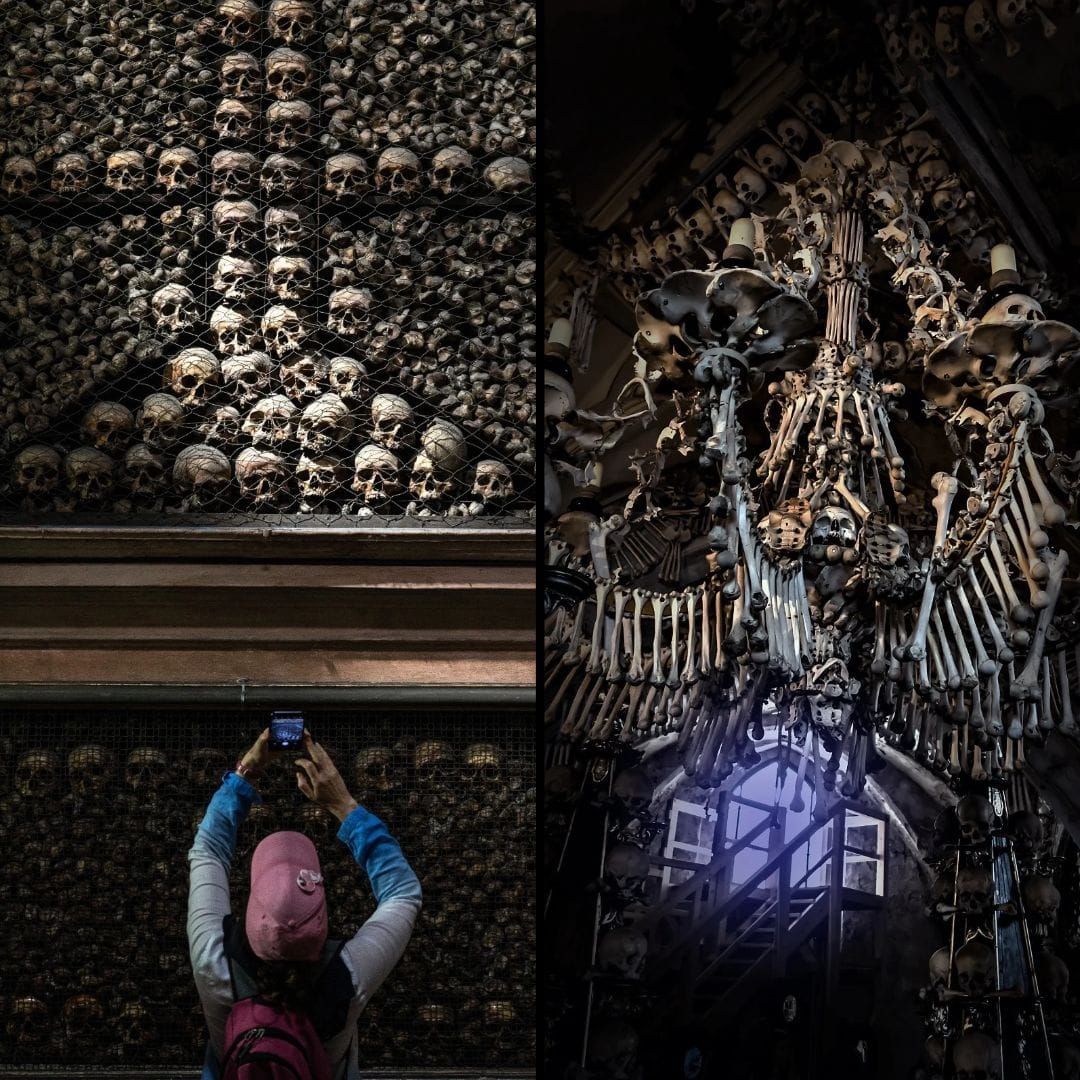
Did you know throughout history Catholics have built chapels made of the bones of the faithful to remind us of physical mortality and our spiritual resurrection: memento mori.
As All Hallows’ Eve, All Saints’ Day and All Souls’ Day approach, the season is upon us to dive further into some of these Catholic chapels that encompass the spirit of these holidays, here to show Catholics that while we will be remembered by our loved ones when we are gone from this life, the ultimate goal is to join God in Heaven through sanctification and sainthood.
Our enriching Catholic history is filled with places that invite believers to meditate on eternity, but few do so as directly and literally as Europe’s bone chapels. These sacred spaces, known as ossuaries, preserve human remains as that powerful reminder of death, resurrection, and the shortness of earthly life.
The creators of these chapels used bones and skulls to point visitors toward a central Christian truth: this world is not our final home.
1. Capuchin Crypt, Rome, Italy

Beneath the Church of Santa Maria della Concezione dei Cappuccini in Rome is one of the world’s most famous bone chapels: the Capuchin Crypt.
The crypt contains the remains of thousands of Capuchin friars, traditionally estimated at nearly 4,000. When the Capuchins relocated to the site in the 17th century, they brought the remains of deceased brothers with them. Over time, bones were arranged in striking designs across several underground chapels, forming arches, stars, floral patterns, chandeliers, and other elaborate displays.
It can seem startling at first, but the purpose was not meant to be macabre. The friars created the space as a memento mori. The bones of the dead religious were intended to call the living to humility, prayer, conversion, and hope in eternal life.
A message commonly associated with the crypt captures its spiritual purpose: what its visitors are now, the friars once were; what the friars are now, visitors will someday become.
2. Sedlec Ossuary, Kutná Hora, Czech Republic
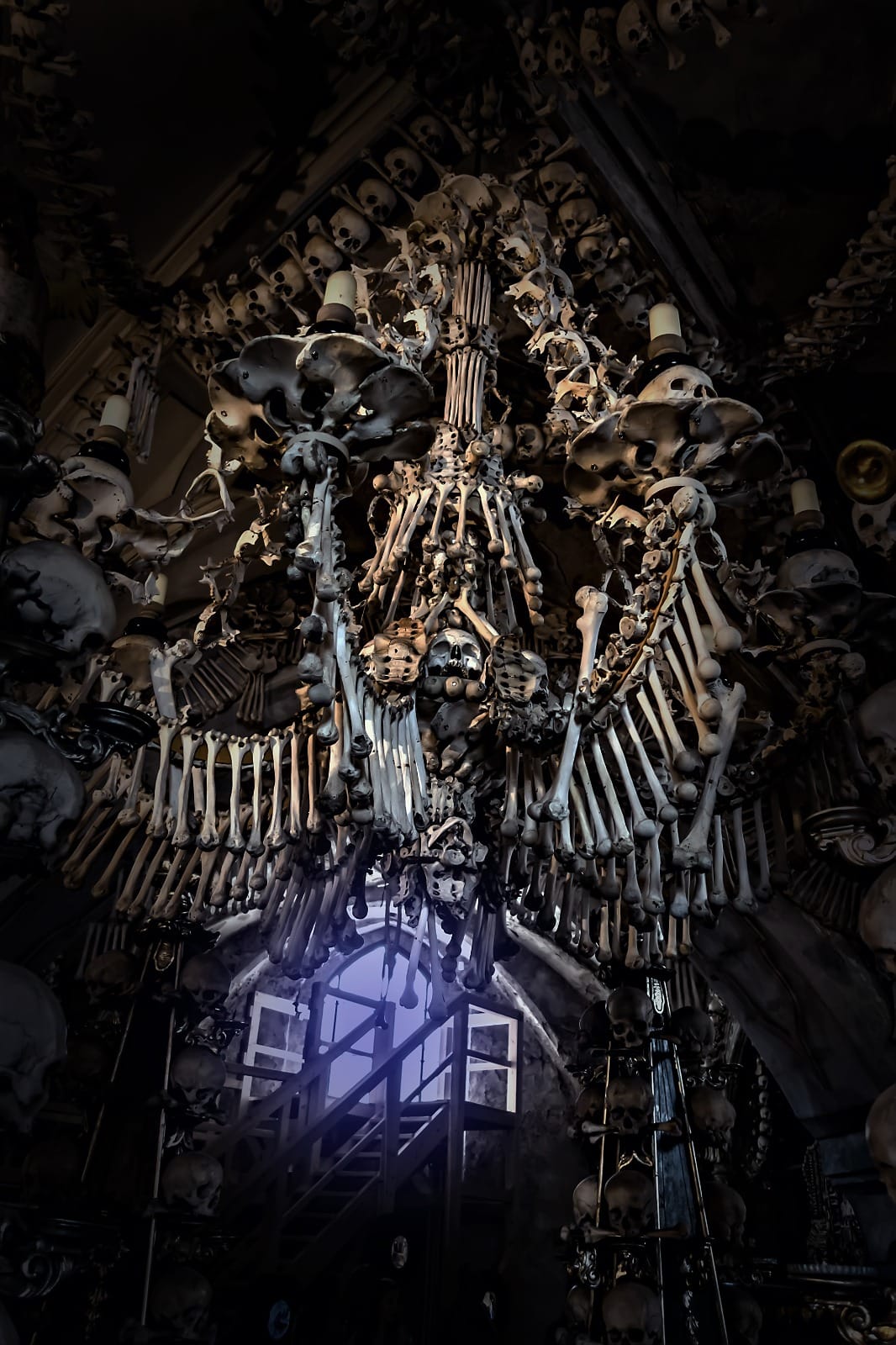
The Sedlec Ossuary, often called the “Church of Bones”, is a small Catholic chapel in Sedlec, near Kutná Hora in the Czech Republic. Its modest Gothic exterior gives little warning of what waits inside: a chapel decorated with the skeletal remains of tens of thousands of people.
The story began in 1278, when the abbot of the local Cistercian monastery reportedly returned from the Holy Land with soil connected to Golgotha. The cemetery at Sedlec became a sought-after burial place, and its population of graves grew dramatically over the centuries. Later, the lower chapel of the Church of All Saints became an ossuary for remains removed from the cemetery.
In 1870, a woodcarver named František Rint was commissioned to organize the bones. He created the ossuary’s famous features, including a massive chandelier that reportedly incorporates every type of human bone, decorative garlands, a chalice-like display, and the Schwarzenberg family coat of arms. Estimates vary, but the chapel is commonly associated with the remains of about 40,000 people.
Fun fact: in order to get married at this chapel, apart from needing a dispensation from your diocese and all the regular protocols, you also need to wait at least two years! It’s small, doesn’t fit a lot of people and very popular, so plan ahead… But, I’m sure it is worth it for a Catholic destination wedding, as it is truly breathtaking and a clear reminder that we are more than our physical bodies, we are spiritual beings waiting to join our Heavenly Father.
3. Chapel of Bones, Évora, Portugal
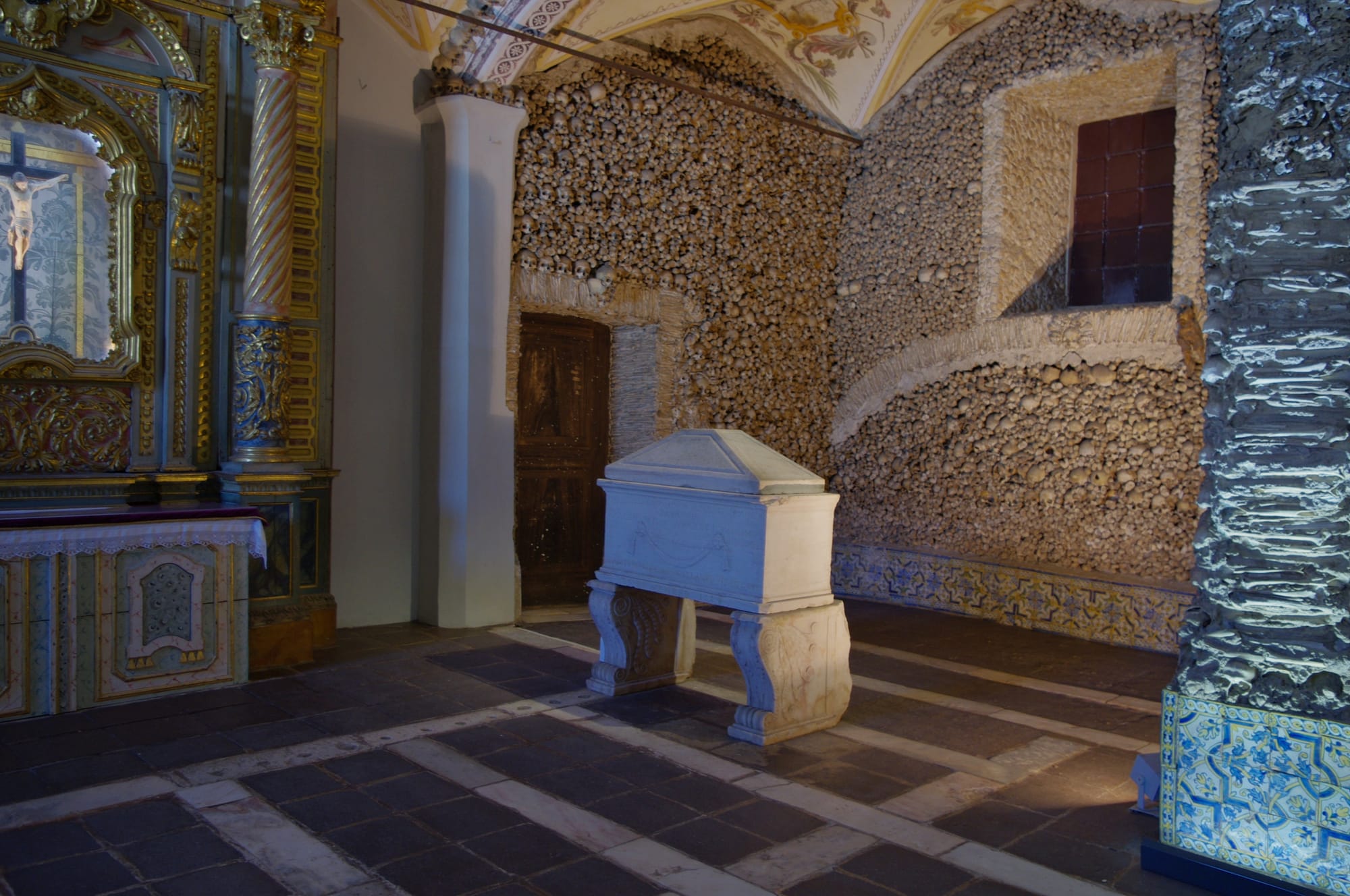
Inside the Church of St. Francis in Évora, Portugal, stands the hauntingly beautiful Capela dos Ossos, or Chapel of Bones. Its walls and pillars are covered with carefully arranged skulls and bones from an estimated 5,000 people.
Franciscan friars constructed the chapel in the late 16th century, when cemeteries in and around Évora were overcrowded. But practical necessity was only part of the story. The chapel was also designed to confront visitors with the fragility of life and the equal destiny shared by rich and poor alike.
Above the entrance, visitors encounter the chapel’s famous message:
“We bones that are here, for yours await.”
It is a sobering sentence, but not necessarily a hopeless one. For the Franciscans, the chapel was a place of meditation. It encouraged people to detach from worldly status and possessions, remember death, and prepare their souls to meet God.
4. San Bernardino alle Ossa, Milan, Italy
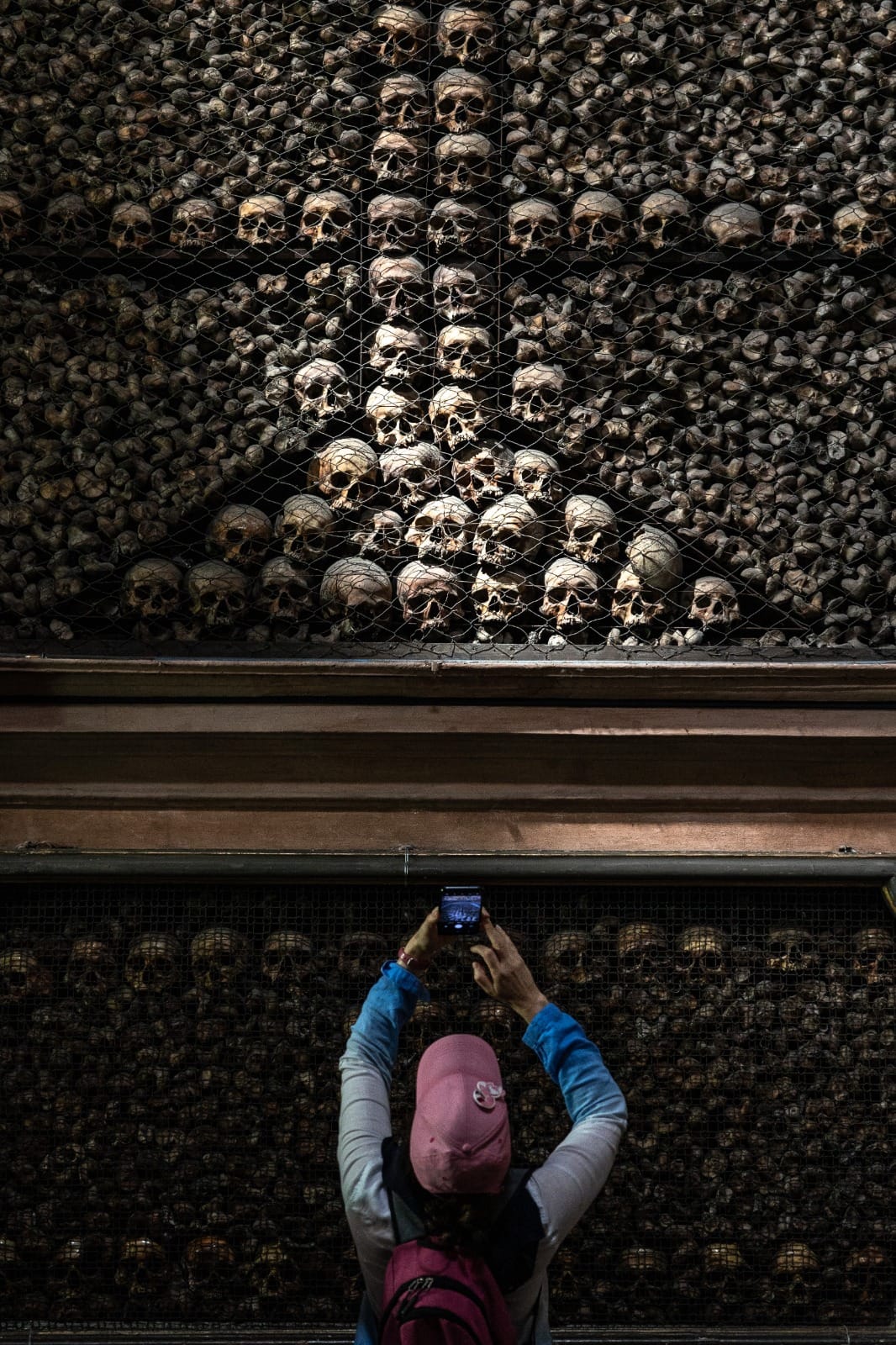
San Bernardino alle Ossa in Milan is a Catholic church with a remarkable adjoining ossuary chapel. Its walls are covered with skulls and long bones arranged in decorative patterns, while paintings above the bone-covered surfaces depict themes connected to heaven, death, and eternal life.
The site’s history reaches back to the early 13th century. According to accounts of the church’s origins, a room was established to house remains after the adjoining cemetery ran out of burial space. Over the centuries, the ossuary developed into the unusual chapel visitors see today.
Unlike a museum display, the ossuary emerged from a centuries-old Christian practice of respectfully gathering the remains of the dead after burial grounds became full. The chapel’s effect is undeniably striking, but its deeper message is spiritual: human life passes quickly, while the soul’s destiny matters eternally.
5. Skull Chapel, Czermna, Poland

The Skull Chapel, known in Polish as Kaplica Czaszek, is located in Czermna, now part of Kudowa-Zdrój in southwestern Poland. Built in the late 18th century, the chapel’s walls and ceiling are densely covered with approximately 3,000 skulls and bones. Thousands more remains are interred beneath the chapel.
Local priest Father Wacław Tomaszek began the project after human remains were found in nearby mass graves. He and his helpers gathered, cleaned, and arranged bones believed to belong to victims of war, disease, and epidemic outbreaks, including people who died during the Thirty Years’ War and later regional conflicts.
The chapel was inspired in part by Rome’s Christian ossuaries. Its purpose was both memorial and devotional: to honor unnamed dead, preserve their memory, and call the living to remember their own mortality. The chapel is still understood not merely as a curiosity, but as a sacred burial place and place of worship.
Why Do Catholic Chapels Use Bones?
These chapels can be difficult for modern visitors to understand. They are not intended to glorify death or turn human remains into spectacle. Instead, they arise from a combination of practical burial needs and a deeply Christian devotional tradition.
For centuries, limited cemetery space meant that older graves were sometimes opened after a period of burial, and the bones were reverently placed in ossuaries. In certain places, religious communities transformed those ossuaries into chapels meant for prayer and reflection.
The theme was common throughout researching each chapel, their central message is memento mori: remember that you will die.
For Catholics, that reminder does not end in despair. It is meant to inspire repentance, humility, gratitude, and readiness for eternal life. Surrounded by the remains of those who came before them, visitors are invited to pray for the dead, and remember Christ’s promise of the resurrection.
These chapels may be unsettling, but they also offer a distinctly Catholic witness: death is real, human dignity remains, prayer for the departed matters, and eternal life is worth preparing for.
There are many ossuaries all over Europe that serve the same purpose: the Paris Catacombs, the Hallstatt Ossuary in Hallstatt, Austria, the Capuchin Monastery Kapuzinerkloster in Salzburg, Austria, and the Faro Chapel Ossuary in Faro, Portugal just to name a few others.