

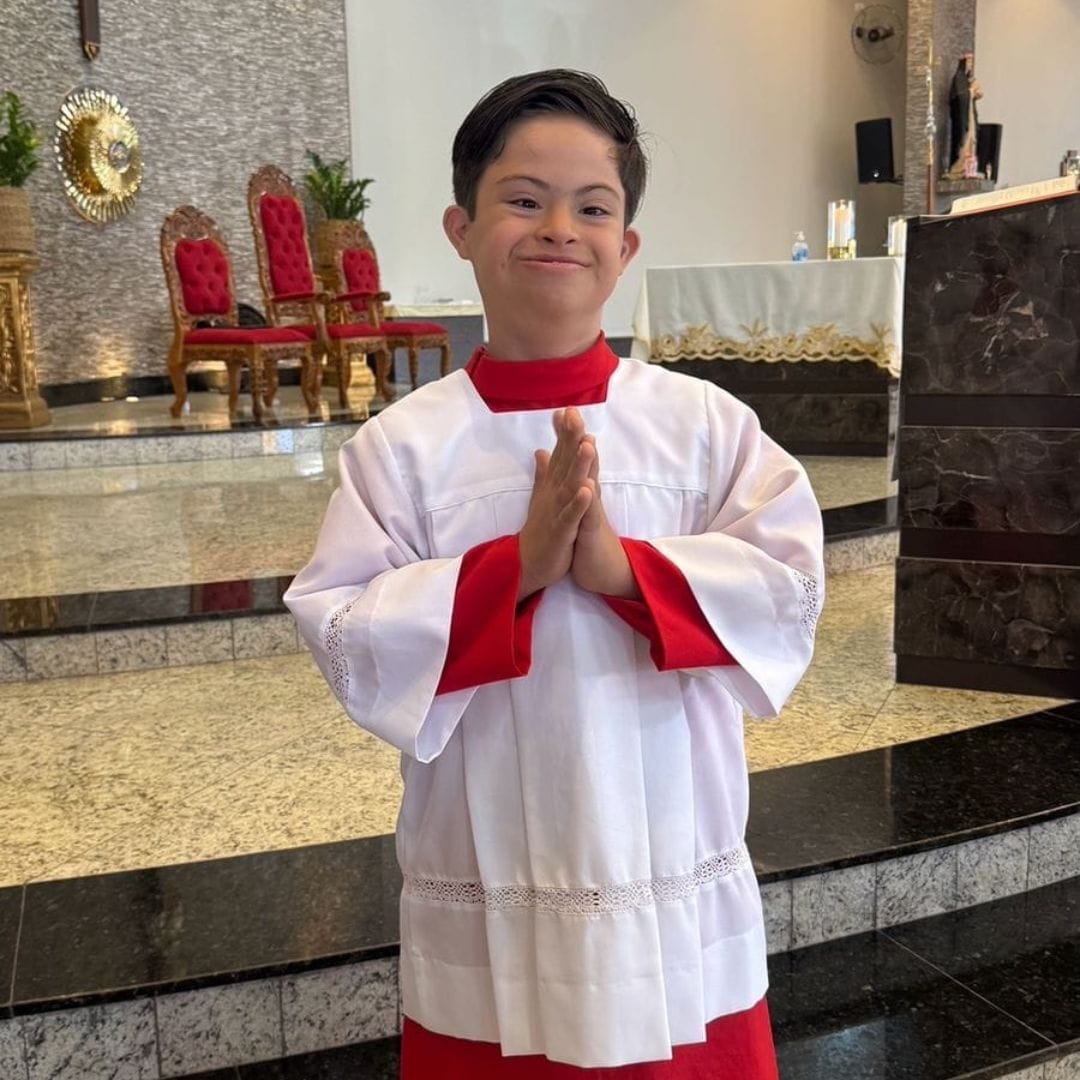
When doctors recommended an abortion, his parents chose to continue the pregnancy. Eleven years later, Miguel Lopes—a boy with Down syndrome—now serves as an altar boy in his parish in Brazil and is touching hearts with his presence at the altar.
Miguel is 11 years old. He has Down syndrome and a tremendous love for Jesus. But he also has something special: the courage to serve and inspire an entire Church with his “yes.”
When his mother, Tássia, was pregnant with him, doctors delivered difficult medical diagnoses. Abortion was recommended. But she and her husband chose to move forward in faith.
“If it is God’s will, so be it,” they said.
That decision changed everything.
From birth, Miguel faced several health complications, but he grew up full of joy and life. At a young age, he expressed a desire to become an altar boy. His parish welcomed him and looked for ways to help him participate.
That was the beginning of his service in the Church.
The Parish of Santa Rosa de Lima in Piracicaba, Brazil, made some adjustments, trained its catechists, and provided catechesis tailored to Miguel’s needs. His mother played an active role throughout the process, and the catechesis coordinator, Jaci, also committed herself to supporting him.
Today, Miguel takes part in the Mass: he kneels, prays, and assists during Communion. His presence has become a familiar and joyful part of the parish community’s celebrations.
“Miguel has a friend who didn’t go to church. After seeing him serve, she asked her mother if they could start attending,” Tássia explains. “Now she helps with the collection basket, and her mother became a catechist.”
Faith lived with simplicity can have a powerful impact on those around us.
Over time, Miguel’s presence has encouraged other families to return to the parish. Some even ask when he will be serving at Mass so they can attend.
For mothers who hope their children will become more involved in parish life, Tássia offers a simple piece of advice:
“It starts at home. And when you go to church, be willing to help. Empathy has to come from both sides: we need to welcome people, but also help pave the way.”
As part of that effort, she created a form titled “Who Am I?” which she gives to catechists. It explains how her son learns and communicates, helping them better accompany him in catechesis.
More than just a personal story, Miguel’s journey shows how a parish community can grow stronger when it commits to inclusion, patience, and accompaniment.