
Catholics believe that Jesus Christ is really, truly, and substantially present in the Eucharist. Throughout Church history, many stories of Eucharistic miracles have seemed to confirm this important teaching.
It is important to note that Catholics are not required to believe any of these stories. Even when the Church investigates and approves a reported miracle, she does not provide a guarantee of its authenticity. Nor does the Catholic doctrine of transubstantiation depend on these accounts; it rests on Sacred Scripture and Sacred Tradition.
Nonetheless, these stories are especially remarkable because you can still see evidence of the alleged miracles today.
1) Miracle of Lanciano (8th Century)
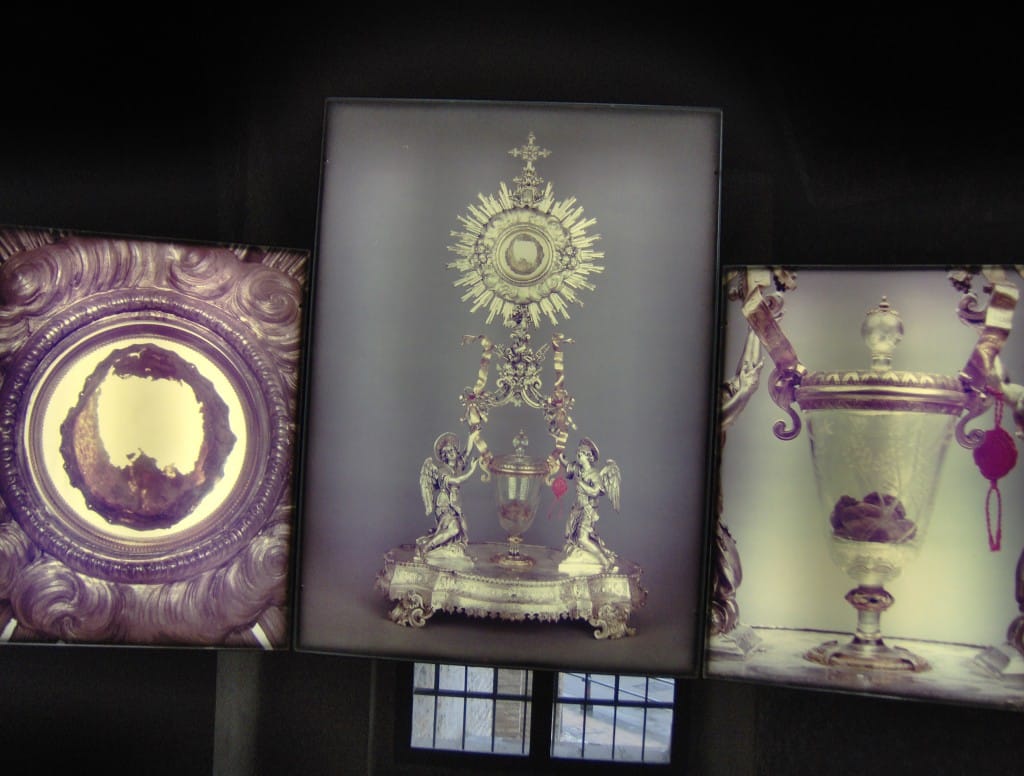
In the eighth century, a priest in Lanciano, Italy, struggled with doubts about Jesus' Real Presence in the Eucharist. While celebrating Mass, he pronounced the words of consecration—"This is my body" and "This is my blood"—and reportedly saw the bread and wine transform into human flesh and blood.
The blood coagulated into five globules, which many later associated with the Five Wounds of Christ. News of the event spread quickly. The local archbishop launched an investigation, and Church authorities approved the miracle.
The flesh remains preserved to this day. In 1971, Professor Odoardo Linoli, a specialist in anatomy, conducted a scientific analysis and concluded that the flesh was cardiac tissue. He also reported that the blood appeared fresh rather than 1,200 years old and showed no trace of preservatives.
Pilgrims can still visit the miraculous flesh and blood at the Church of San Francesco in Lanciano, Italy.
2) The Corporal of Bolsena (13th Century)
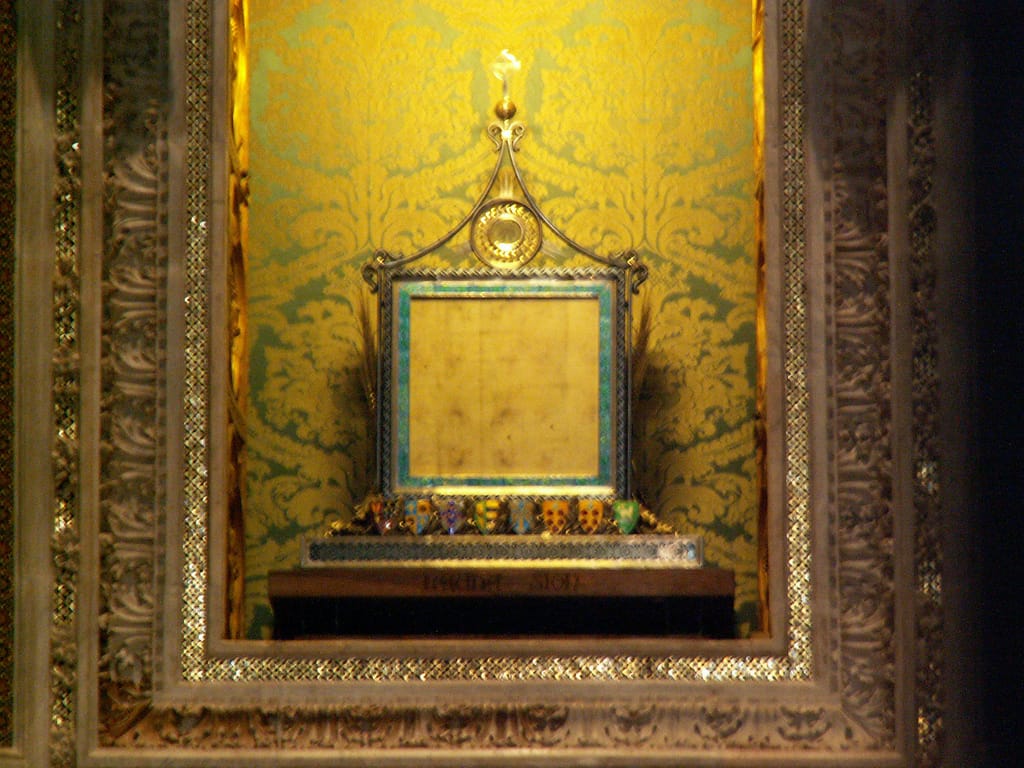
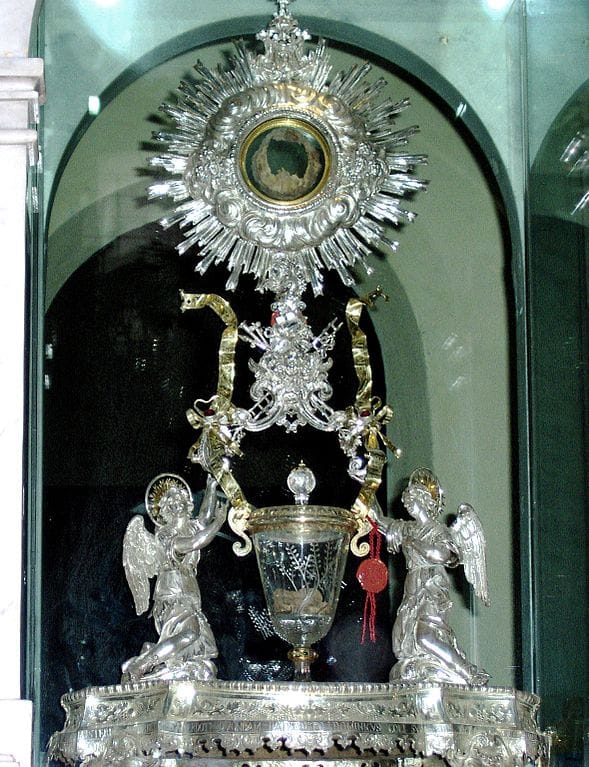
A priest struggling with doubts about transubstantiation was celebrating Mass in Bolsena, near Orvieto, Italy. Shortly after consecrating the Eucharist, the host reportedly began to bleed onto the corporal, a liturgical cloth placed on the altar.
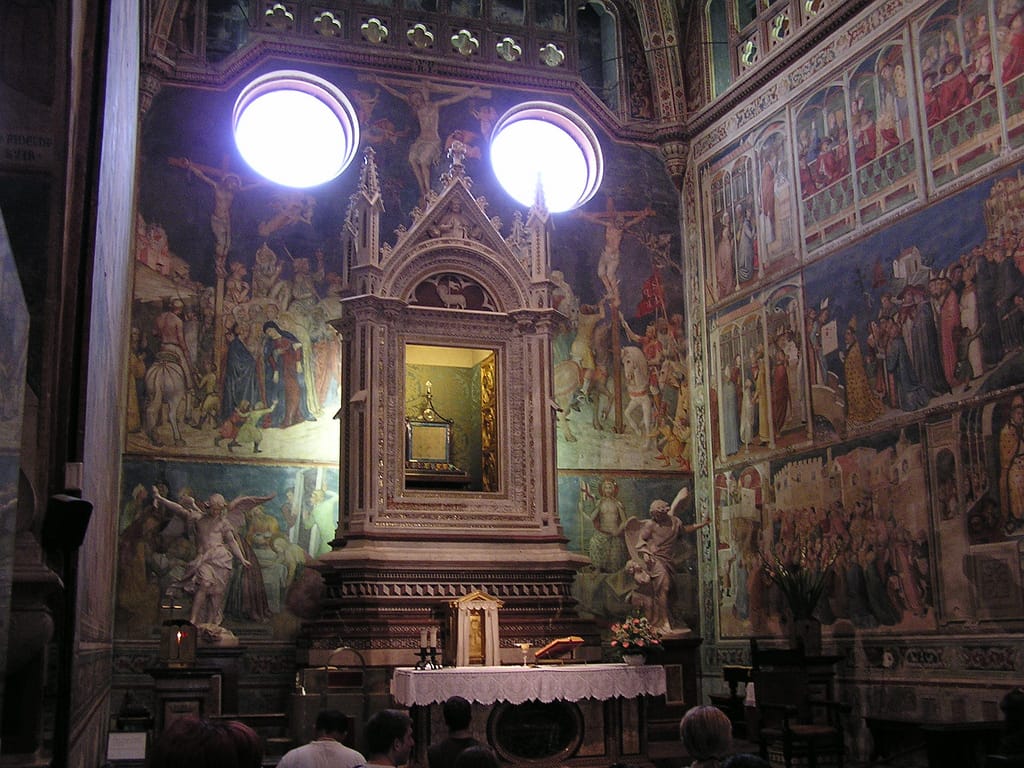
According to the story, the priest immediately sought out the pope, who was visiting nearby, and confessed his doubts. The blood-stained corporal remains on display in the Cathedral of Orvieto.
Some historians question the account's historical reliability because the first written records appeared roughly a century after the event supposedly occurred. Even so, the corporal remains an object of veneration.
3) The Hosts of Siena (18th Century)
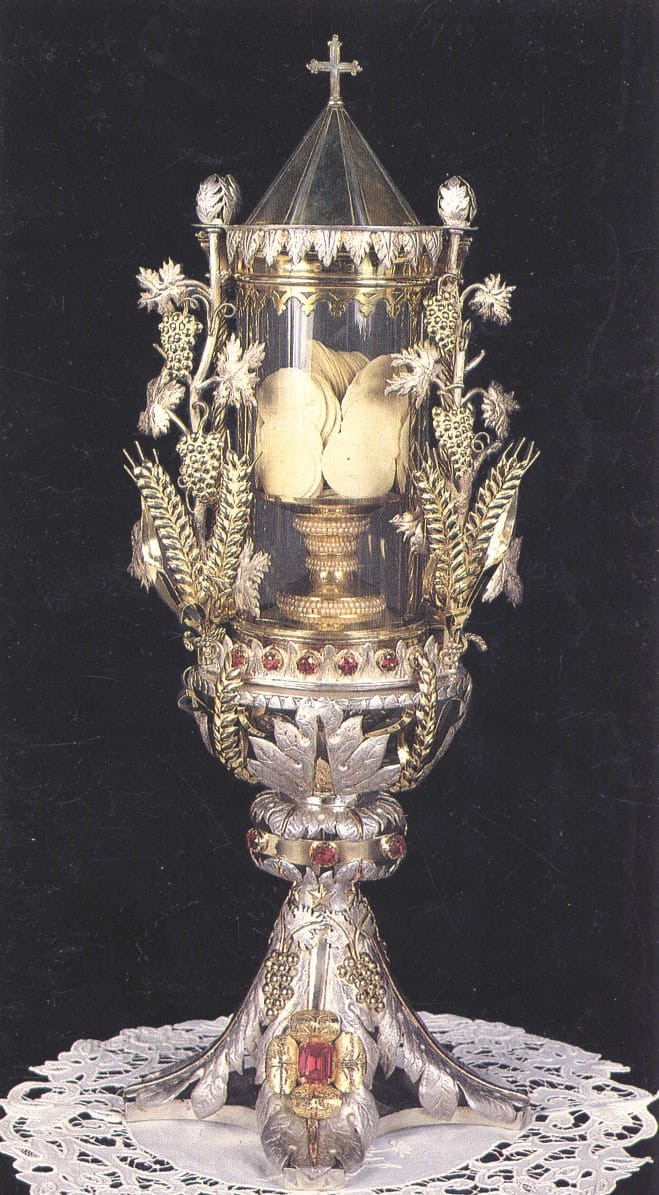
On Aug. 14, 1730, while Catholics in Siena, Italy, attended celebrations for the Vigil of the Assumption, thieves entered the Church of St. Francis and stole a golden ciborium containing hundreds of consecrated hosts.
Two days later, someone noticed a white object protruding from an alms box in another church. Priests investigated and discovered the missing hosts tangled in cobwebs and dirt.
After cleaning them as thoroughly as possible, the priests placed the hosts in a new ciborium and returned them to the Church of St. Francis, where the faithful offered prayers of reparation and veneration.
Because the hosts had become dirty, the priests decided not to consume them. Instead, they expected them to deteriorate naturally.
To everyone's amazement, the hosts never decayed. Decades passed, yet they continued to appear fresh.
The hosts remain in that condition today and can still be seen in the Basilica of St. Francis in Siena, nearly three centuries later.
4) The Miracle of Chirattakonam, India (21st Century)
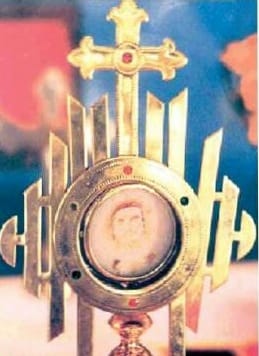
On April 28, 2001, parishioners gathered for Eucharistic adoration at St. Mary's Parish in Chirattakonam, India, when three red stains suddenly appeared on a host exposed for adoration.
Unsure how to respond, the priest placed the host back in the tabernacle.
Several days later, he retrieved it and noticed that the stains had arranged themselves into what appeared to be the face of a man. He quickly contacted a photographer and had photographs taken of the host.
The reported miracle attracted widespread attention and remains one of the most recent Eucharistic miracle accounts.
5) The Eucharistic Miracle of Santarém (13th Century)
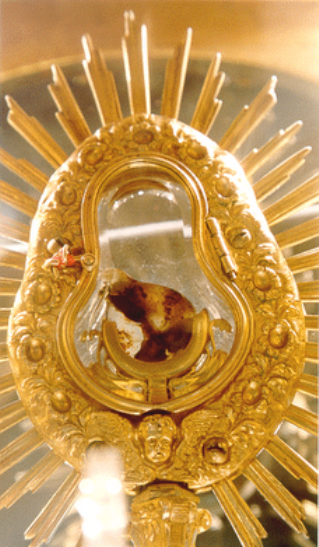
In the thirteenth century, a woman living in Santarém, Portugal, became distressed by her husband's infidelity and sought help from a sorceress.
The sorceress demanded a consecrated host as payment.
The woman attended Mass at the Church of St. Stephen, received Holy Communion on her tongue, secretly removed the Eucharist from her mouth, wrapped it in her veil, and headed toward the church door.
Before she left the church, the host reportedly began to bleed.
When she arrived home, she placed the bloodied host inside a trunk. That night, a miraculous light reportedly shone from the trunk.
Filled with remorse, she repented of her actions and confessed to her priest the following morning. The priest retrieved the host and returned it to the church.
After Church authorities investigated and approved the miracle, they renamed the church the Church of the Holy Miracle. The bloodied host remains on display there to this day.
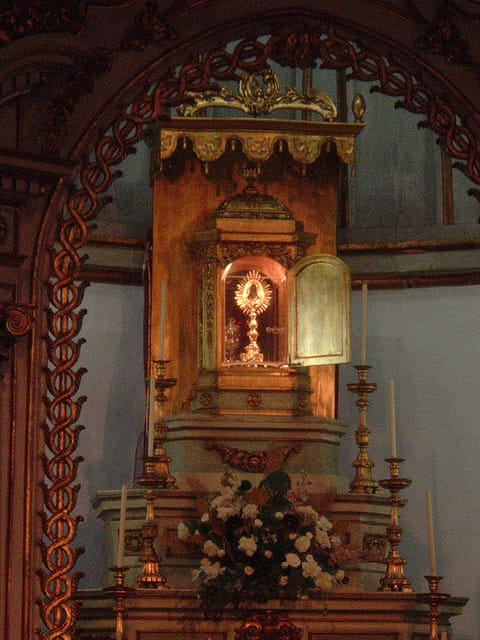
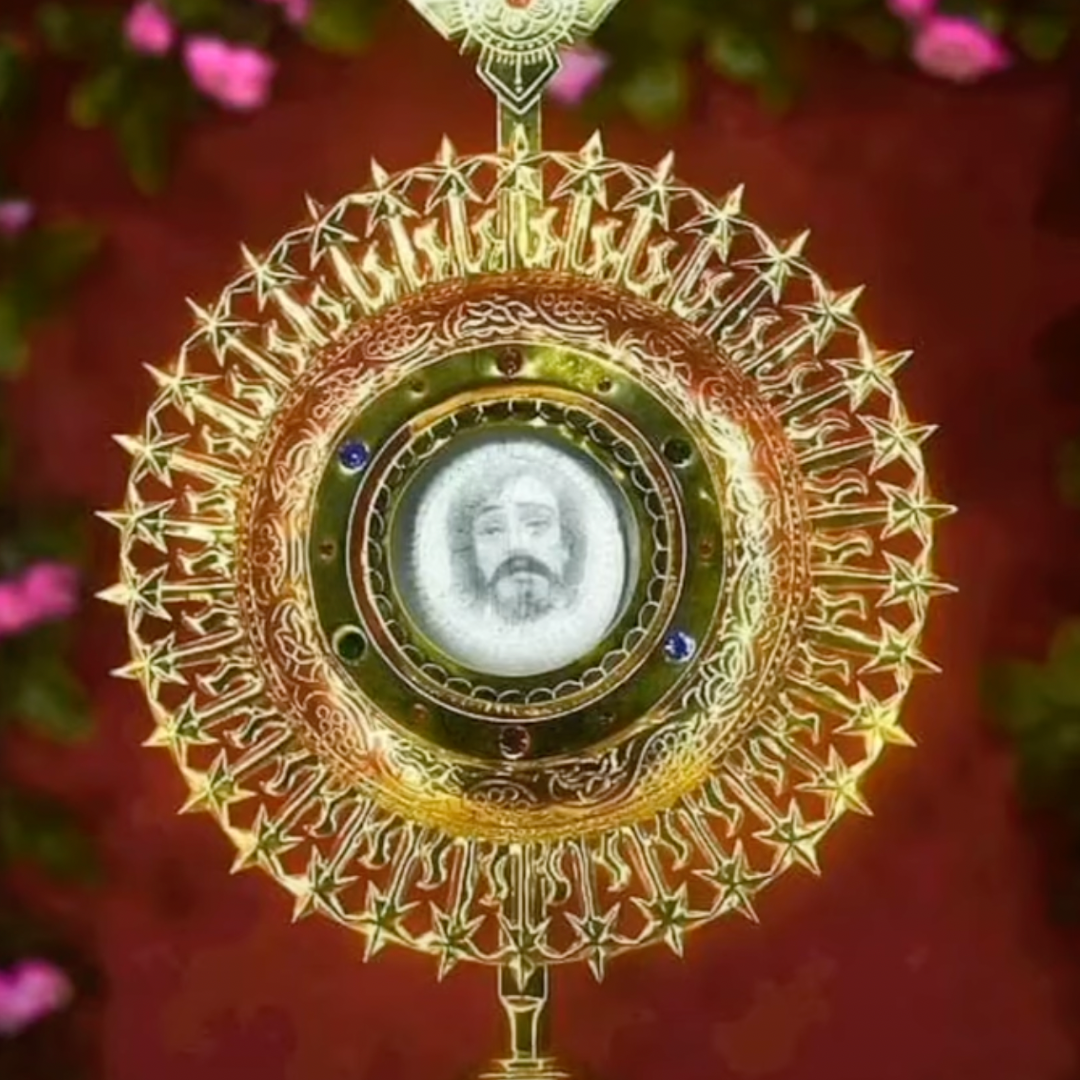
6) Holy Face of Jesus – Vilakkannur, India (2013; Vatican recognition 2025)
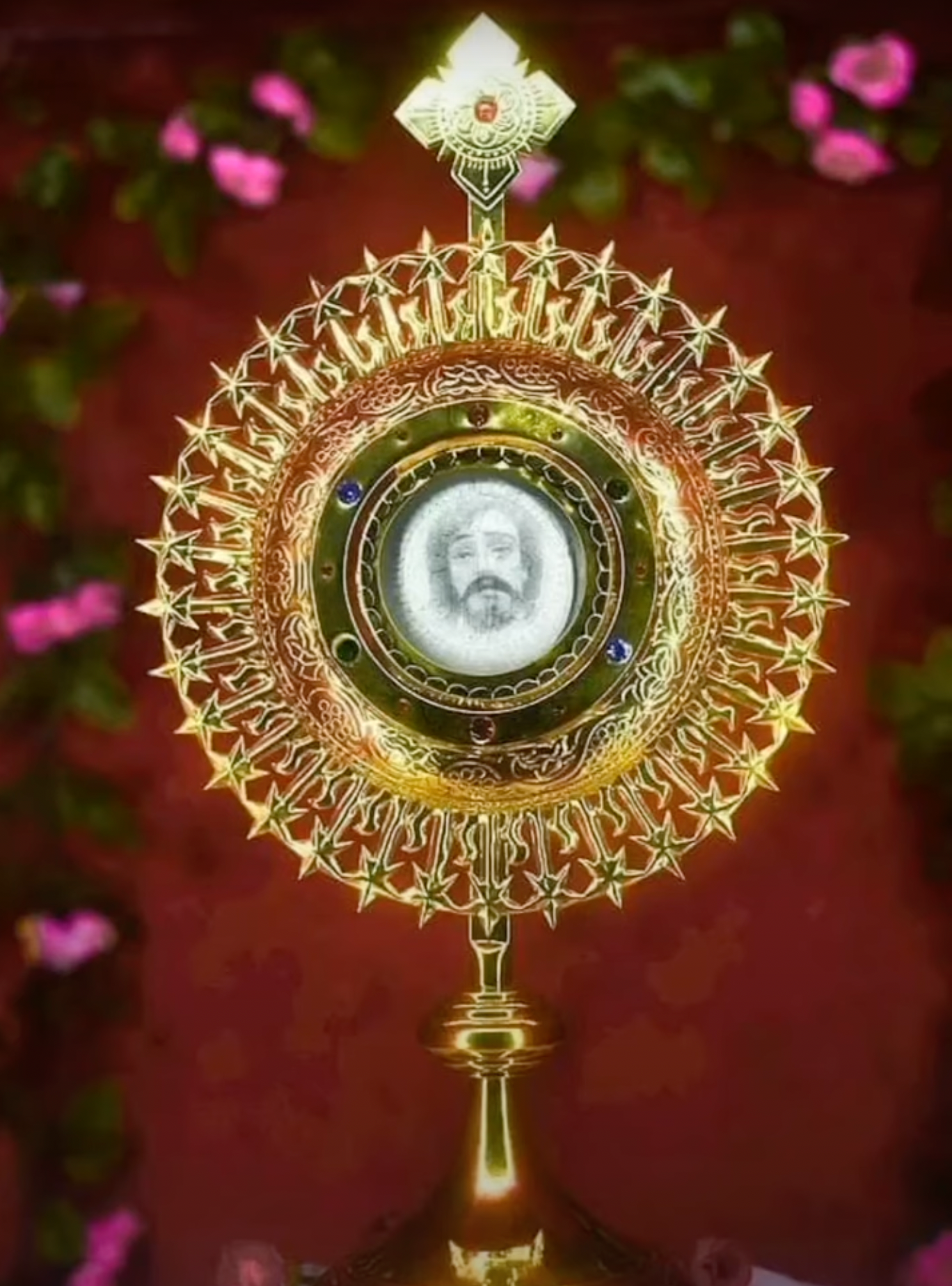
On Nov. 15, 2013, during morning Mass at Christ the King Church in Vilakkannur, Kerala, India, then‑pastor Fr. Thomas Pathickal noticed a dark spot appear on the large host he was elevating during the consecration.
As the Mass continued, the spot grew brighter and gradually formed what appeared to be the Holy Face of Jesus Christ, astonishing the priest and parishioners and leading him to reserve the host for further observation.
Over the following years, thousands of pilgrims came to venerate the host, and in 2018 Archbishop Mar George Njaralakatt solemnly placed it on a side altar for public devotion, after the Syro‑Malabar Church’s Theological Commission studied the event “as per the guidelines of the Holy See” and declared that “the Eucharist is a Relic of Divinity.”
The host was sent to Rome for scientific and theological evaluation, and in May 2025 the Vatican officially recognized it as a Eucharistic miracle—India’s first Vatican‑approved Eucharistic miracle and the first in the world where Christ’s face visibly appeared on a consecrated host, confirming once again the Church’s faith in Jesus’ Real Presence in the Blessed Sacrament.