
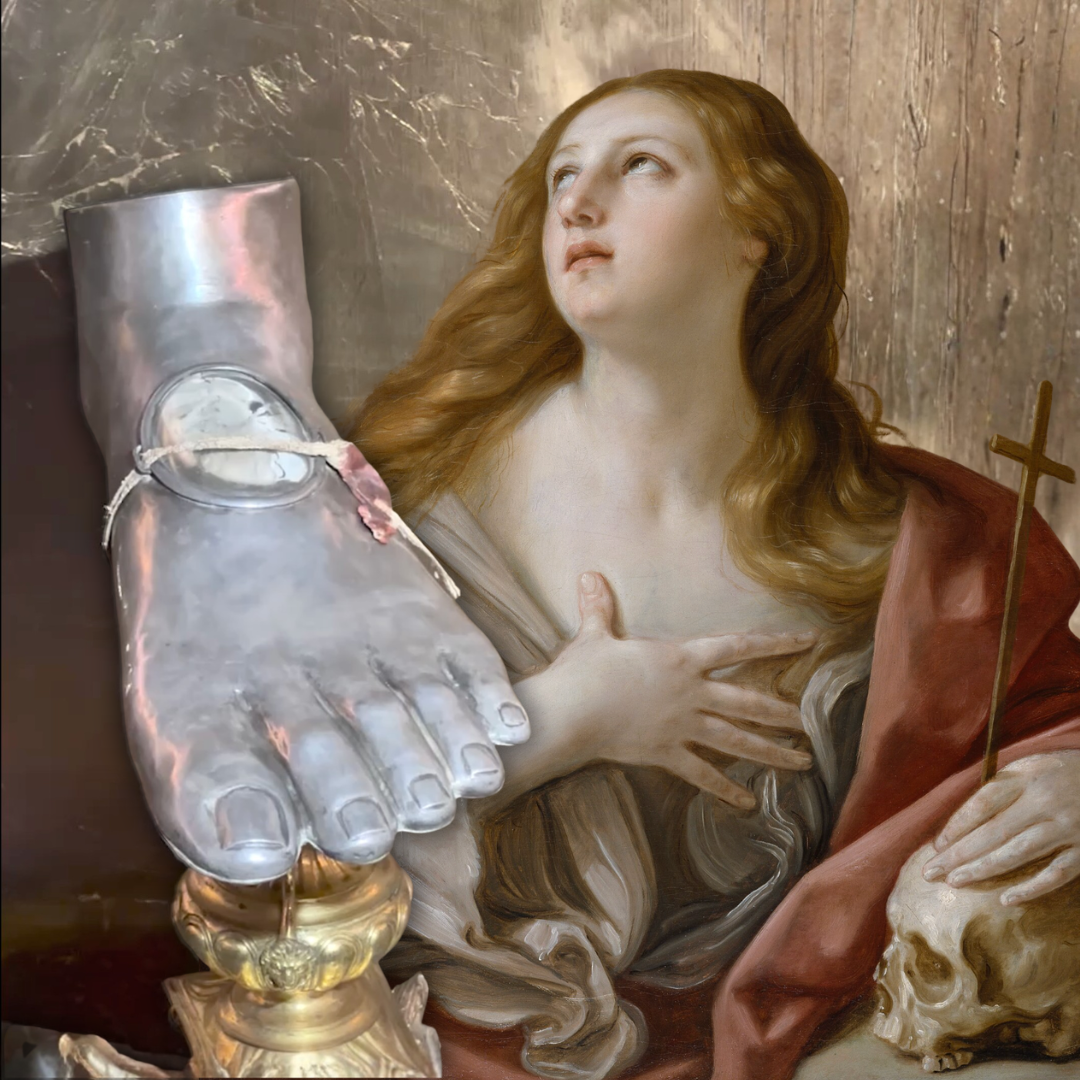
Mary Magdalene is celebrated on July 22 — and since 2016, her day is a full feast in the Church, like the apostles.
The Gospels mention her at least a dozen times, more than many apostles.
In the Western tradition, she’s often identified with three women in the Gospels: Mary Magdalene, Mary of Bethany, and the “sinful woman” who anoints Jesus’ feet. This triple‑identity isn’t required belief, but calls it a “beautiful” and “compelling” way to see one great story of mercy.
She is Exhibit A that someone “broken by sin and outcast” can become one of Christ’s greatest friends.
She’s one of the tiny group of truly courageous people who stayed with Jesus all the way to Calvary, standing near the Cross with Our Lady and St. John.
She watched Jesus’ burial with her own eyes, then returned at dawn to the tomb, driven by love and grief.
Because she doesn’t give up, she becomes the first recorded witness of the Resurrection — Easter morning begins with Mary.
After meeting the Risen Christ, she runs to tell the apostles, making her the original “Apostle to the Apostles.”
Her name “Magdalene” likely comes from Magdala, a Galilean town, but also notes a Talmudic phrase about “curling women’s hair” linked with adultery — perfect background for a great penitent.
The Church celebrates her especially for her “devotion,” “loyalty during His passion,” and her role as first announcer of the Resurrection.
She is patron saint of repentant sinners, hairdressers, perfumeries, contemplative life, and more — a wonderfully quirky patronage set.
She is a living icon of mercy: from being possessed and sinful to a faithful friend, from tears at the tomb to the first voice shouting, “I have seen the Lord!”