

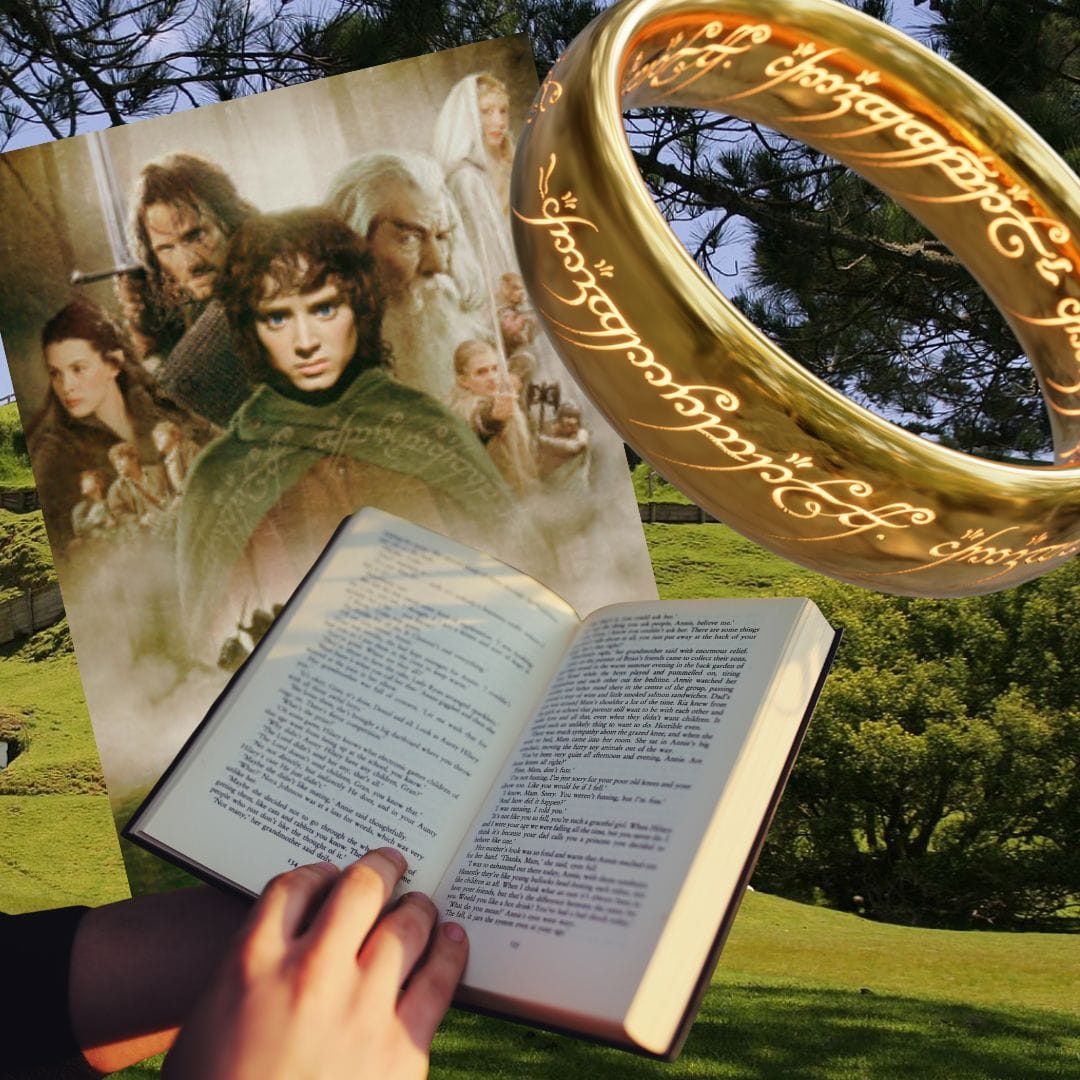
Advent has arrived, and we now begin a new liturgical year within the Catholic Church calendar. Fans of literature might consider a liturgical journey “there and back again” with a classic fantasy epic.
The Lord of the Rings is an all-time favorite book of many readers around the world. J.R.R. Tolkien’s masterful ability to weave the Catholic faith into the fabric of his storytelling—without ever becoming preachy or overt—is something that never stops mesmerizing me. I read the trilogy every year, and somehow, each time it feels like a brand-new book.
For fellow Catholics who love Tolkien’s work, I’d like to propose a fresh way of reading The Lord of the Rings: through the lens of the Catholic liturgical year. The story’s themes of light and darkness, death and resurrection, kingship and humility, temptation and triumph echo the very seasons we walk through at Mass.
Here’s a way to align your annual read-through of The Lord of the Rings with the sacred rhythm of the Church calendar.
Advent: Waiting in Darkness for the Light
Advent is a season of anticipation. It begins in darkness and moves toward the first rays of dawn. That’s partly why the liturgical color is violet—the faint color that appears in the sky just before sunrise. Christ is coming, but not yet visible.
A parallel moment in Tolkien’s tale is the Fellowship’s descent into Moria. The road is uncertain, danger is near, and they must move forward in trust.
Recommended chapters:
- Book II, Chapter 4 – “A Journey in the Dark”
- Book II, Chapter 5 – “The Bridge of Khazad-Dûm”
Here, we encounter the darkness of the world, the death of Gandalf (a Christ figure), and the hope that leads the Fellowship onward. Just as the Church walks in hopeful longing for the coming King, the Fellowship arises from shadow into the beauty of Lothlórien—where the light glimmers faintly, but truly.
Christmas: Humility and Hidden Glory
Christmas celebrates the Incarnation—God entering the world not in grandeur, but in obscurity and humility. Tolkien subtly embeds this theme in the journey of the Ringbearer and the hidden power of the lowly.
Recommended chapters:
- Book I, Chapter 3 – “Three is Company”
- Book II, Chapter 3 – “The Ring Goes South”
Frodo departs from the Shire quietly and unnoticed, much like the Holy Family slipping into Bethlehem. And significantly, Tolkien notes that the Fellowship sets out from Rivendell on December 25. The journey of the Ring begins on the very day the Church celebrates Christ’s birth—a detail Tolkien chose intentionally. From hidden beginnings, salvation marches forth.
Lent: Suffering, Temptation, and the Path to Holiness
Lent is the Church’s great spiritual desert—a time of purification, self-denial, and inner struggle. The journey of Frodo and Sam through the barren lands of Mordor mirrors the soul’s battle against temptation and sin.
Recommended chapters:
- Book IV, Chapter 2 – “The Passage of the Marshes”
- Book IV, Chapter 9 – “Shelob’s Lair”
- Book VI, Chapter 1 – “The Tower of Cirith Ungol”
In these moments, Frodo endures exhaustion, isolation, and fear. Gollum’s deceit, Shelob’s attack, and Frodo’s capture all reflect the depths of human suffering. And yet, like Christ in Gethsemane, the path forward is one of surrender. Sam’s unwavering love reflects our call to love even in the darkest hour.
Holy Week: Betrayal and Sacrifice at Mount Doom
The climax of the Gospel is Christ’s Passion and Crucifixion. And Tolkien aligns the climax of his own story to it with striking precision: the Ring is destroyed on March 25—a date rich with layered meaning.
In Jewish tradition, March 25 was believed to be the day the world was created. The Church later associated it with both the Annunciation (Christ’s conception) and Good Friday (His crucifixion). Tolkien, a master of mythic timing, places the destruction of the Ring—and the fall of Sauron—on this same day.
Recommended chapter:
- Book VI, Chapter 3 – “Mount Doom”
Here, we see the moment of ultimate surrender, betrayal, and unlooked-for salvation. Frodo cannot finish the task; grace must intervene. Gollum, a figure of both corruption and grace, becomes the unexpected instrument of deliverance. As with Christ on the Cross, victory comes through sacrifice.
Easter: Resurrection, Renewal, and Joy
After the silence of Holy Saturday comes the joy of the Resurrection. Evil is defeated. Light breaks through. The King returns.
Recommended chapters:
- Book VI, Chapter 5 – “The Steward and the King”
- Book VI, Chapter 6 – “Many Partings”
Aragorn is crowned as the true king, bringing healing and peace to the land. Friends are reunited. Wounds are acknowledged but transformed. The entire realm breathes again. It is the season of joy—of Alleluia. The world, long held captive by darkness, has been reborn.
Ordinary Time: Faithfulness in the Everyday
Ordinary Time isn’t “ordinary” in the sense of mundane. It’s ordered time—days structured around growth, conversion, and daily discipleship. In The Lord of the Rings, we see this reflected in the hobbits’ return home.
The great battles have passed, but now comes the quiet heroism of rebuilding, forgiving, planting gardens, raising families, and remembering.
Recommended chapters:
- Book VI, Chapter 8 – “The Scouring of the Shire”
- Book VI, Chapter 9 – “The Grey Havens”
- Appendix B – “The Tale of Years”
Sam’s return to family life, Frodo’s contemplative retirement, and the slow working out of redemption echo the call of every Catholic in Ordinary Time: to be faithful in little things. To bear wounds with grace. To await the final journey West.
Conclusion
Tolkien never intended The Lord of the Rings to be an allegory. But as a deeply faithful Catholic, he infused his myth with the rhythms, values, and mysteries of the Christian life. By reading the story alongside the Church’s liturgical seasons, we uncover a new dimension of beauty and meaning.
So this year, as you journey from Advent to Easter, from darkness to light, from the Shire to Mount Doom and back again—consider bringing The Lord of the Rings along for the pilgrimage. Let Tolkien’s story illuminate the Church’s story. And let both draw your heart closer to the true King who has already triumphed.