

CATANIA, Sicily — Pope Leo XIV sent Cardinal Pietro Parolin as his Pontifical Legate to Catania for celebrations marking 900 years since the relics of Saint Agatha returned to the Sicilian city.
The August 17 anniversary commemorates the return of the relics in 1126, an event that gave rise to Catania’s summer feast of its patron saint, known as Sant’Agata d’Agosto (in English, Saint Agatha in August).
This year, the Church in Catania recreated that historic homecoming. After a prayer vigil on the evening of August 16, the faithful began a pilgrimage before dawn, accompanying Saint Agatha’s relics back toward the cathedral as church bells rang throughout the archdiocese.
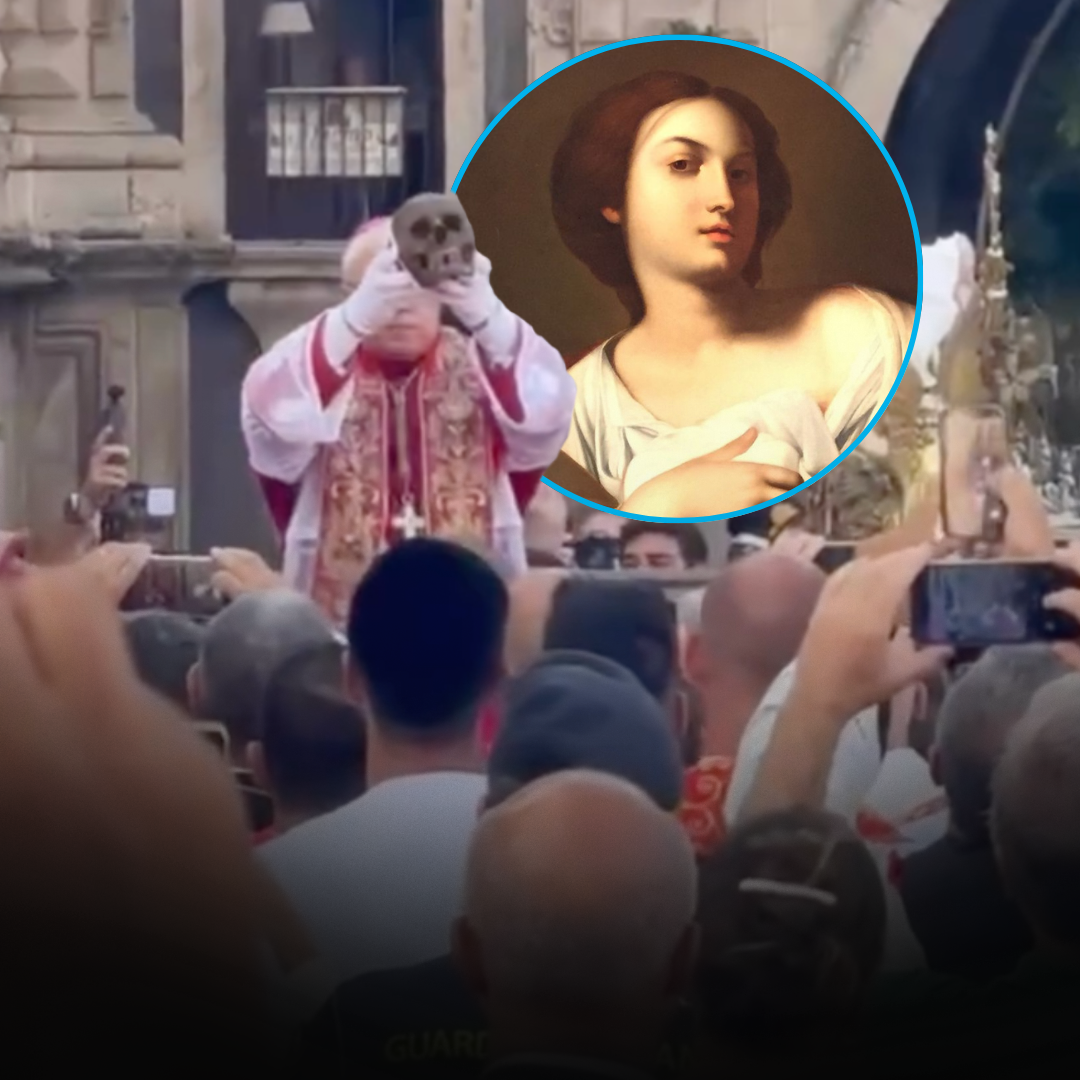
One of the most moving moments came when Saint Agatha’s skull was presented to the faithful by the Archbishop before being placed inside the Busto Reliquiario, the ornate reliquary bust in which it is traditionally venerated. Her other relics were returned to the scrigno, the silver reliquary casket.
Cardinal Parolin then solemnly crowned the reliquary bust of Saint Agatha as part of the ceremonies commemorating the nine-century anniversary.
Who is Saint Agatha?
Saint Agatha was a young Christian virgin and martyr who lived in Sicily during the third century. According to early Christian tradition, she remained faithful to Christ despite imprisonment and severe torture during the persecution under the Roman Emperor Decius. She died around the year 251.
Her cult spread throughout the Christian world, and she became one of the Church’s most honored early female martyrs. Her name remains part of the Roman Canon of the Mass, where she is invoked alongside Saints Agnes, Cecilia, Lucy and other women who gave their lives for Christ.
A Martyr Still Loved 1,775 Years Later
For the people of Catania, that ancient history remains deeply personal.
Agatha has been venerated for centuries as the city’s patroness and protector. The faithful have traditionally turned to her in times of danger, particularly during eruptions of nearby Mount Etna. Each February, enormous crowds fill Catania for the feast commemorating her martyrdom.
The August feast recalls something different: the return of their saint.
Agatha’s relics were taken from Catania to Constantinople in 1040. According to Catanese tradition, two soldiers, Gisliberto and Goselmo, recovered them and brought them back to Sicily 86 years later. On August 17, 1126, the relics returned to Catania.
Nine centuries later, the faithful retraced that homecoming.
The display of Agatha’s relics, the ringing of the bells and the return of her skull to the reliquary bust reenacted the ancient event. For the citizens (“cittadini”, in Italian) of Catania, it was an expression of a devotion that has been handed down through generations.
Pope Leo XIV’s decision to send Cardinal Parolin as his Pontifical Legate also connected the local celebration with the universal Church.
As Cardinal Parolin crowned the reliquary of the third-century martyr, Catania marked 900 years since Saint Agatha came home, and showed that the devotion surrounding her has remained alive across the centuries.
The traditional cry of the faithful continues to express that bond: