
September is traditionally dedicated to Our Lady of Sorrows because the Church celebrates her memorial on Sept. 15—immediately after the Feast of the Exaltation of the Holy Cross on Sept. 14.
The placement is no accident.
On Sept. 14, the Church lifts up the Cross of Jesus Christ: the instrument of His Passion, but also the sign of His victory over sin and death. The next day, Catholics turn their eyes to Mary, who stood faithfully at the foot of that Cross.
As the Gospel of John tells us:
“Standing by the cross of Jesus were his mother…”
—John 19:25
Mary did not run away. She remained with her Son in His suffering.
The Seven Sorrows of Mary
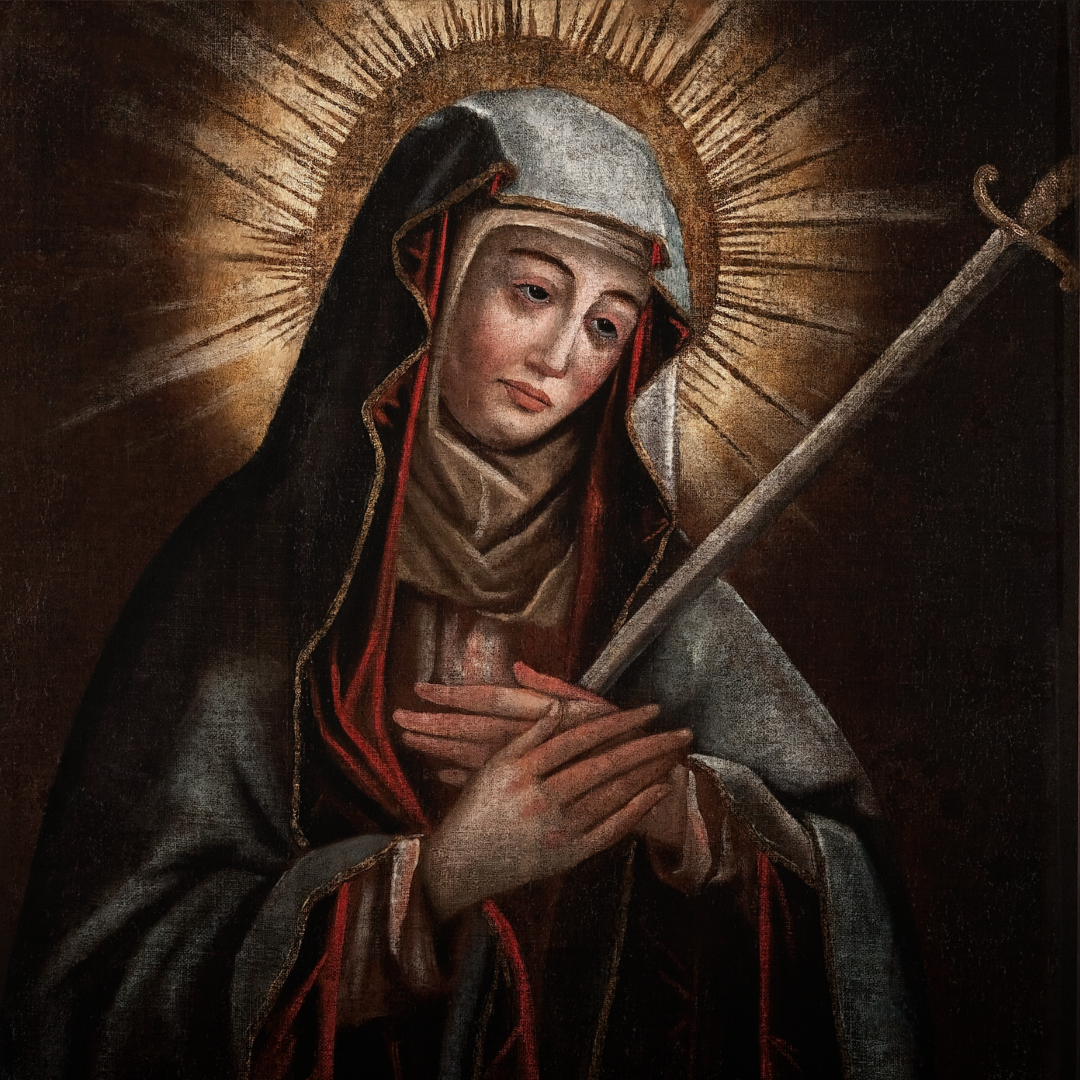
The title “Our Lady of Sorrows” honors the deep suffering Mary endured throughout the life and Passion of Jesus. Traditionally, Catholics meditate on her Seven Sorrows:
- The prophecy of Simeon, who told Mary that a sword would pierce her soul.
- The flight of the Holy Family into Egypt.
- The loss of the Child Jesus in the Temple for three days.
- Mary meeting Jesus on the way to Calvary.
- Mary standing at the foot of the Cross during Jesus’ Crucifixion.
- Mary receiving Jesus’ body after He was taken down from the Cross.
- The burial of Jesus.
Her sorrow was never hopeless despair. Mary suffered as a mother who loved her Son completely—and who trusted God even in the darkest moment imaginable.
Why the Church Gives Her This Month
The Church’s Sept. 15 memorial was fixed on the day following the Exaltation of the Holy Cross by Pope St. Pius X in 1913. It invites Catholics to contemplate Mary’s unique union with Christ, especially during His Passion and death.
September, then, becomes an opportunity to remember a consoling truth: Mary understands sorrow.
She knows what it is to receive frightening news, to flee in fear, to search anxiously for a child, to watch someone she loves suffer, and to remain faithful when answers seem impossible to find.
That is why Catholics do not honor Our Lady of Sorrows merely by looking back at what she endured. We ask for her intercession in our own grief, anxiety, illness, loss, and suffering.