
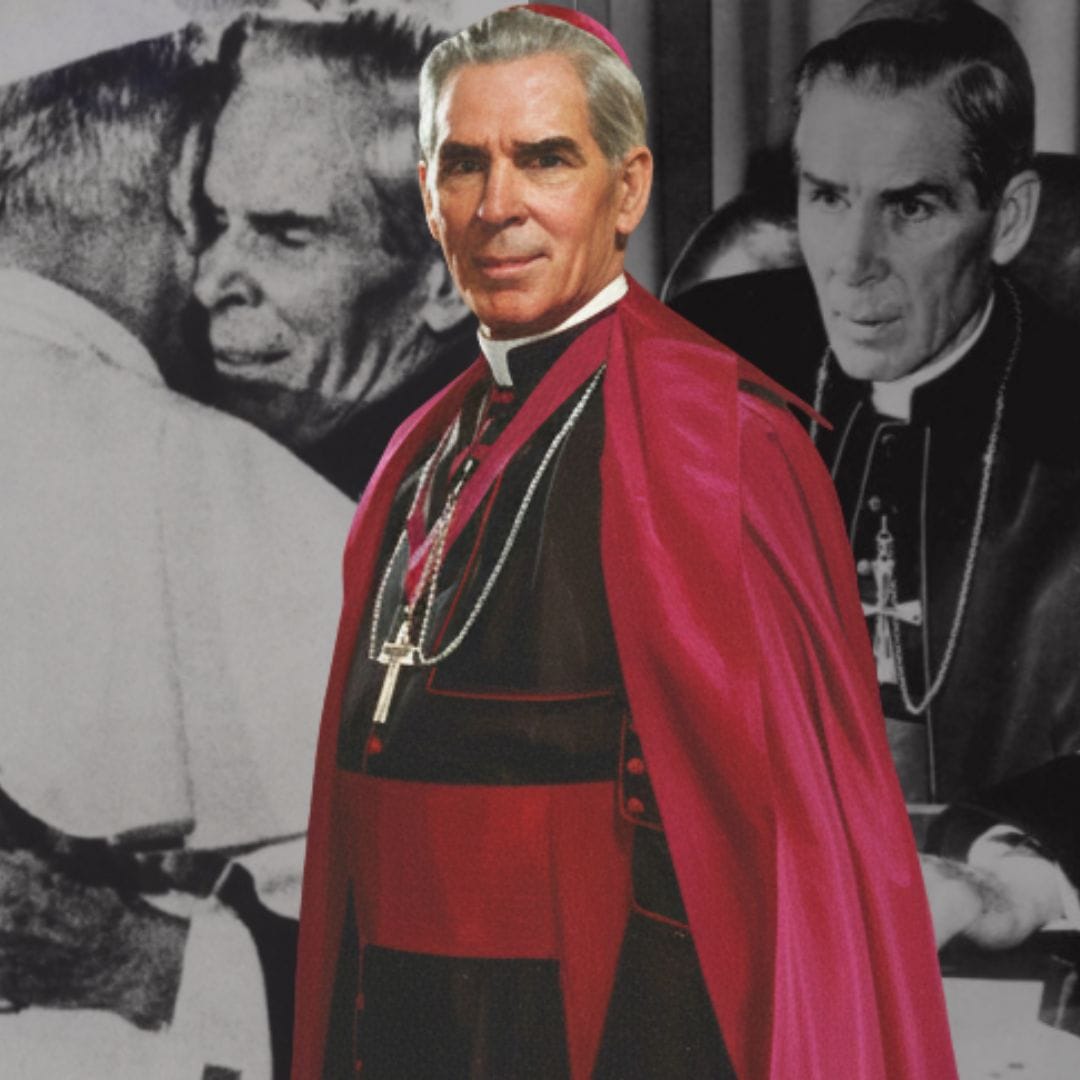
Archbishop Fulton Sheen was a “Catholic influencer” before influencers were even a thing.
An Emmy‑winning TV star, he pioneered Catholic media evangelization in the golden age of television, and just might be the future patron saint of Catholic content creators.
In the 1950s and 60s, Archbishop Sheen was one of the biggest names on primetime TV, and his show is often cited as the most widely watched religious series in history. Week after week, his catechesis reached an estimated 10–30 million viewers. His sainthood cause even highlights “new evangelization through mass media” as a key part of his path to holiness.
Here you have 12 things to know about Archbishop Fulton Sheen:
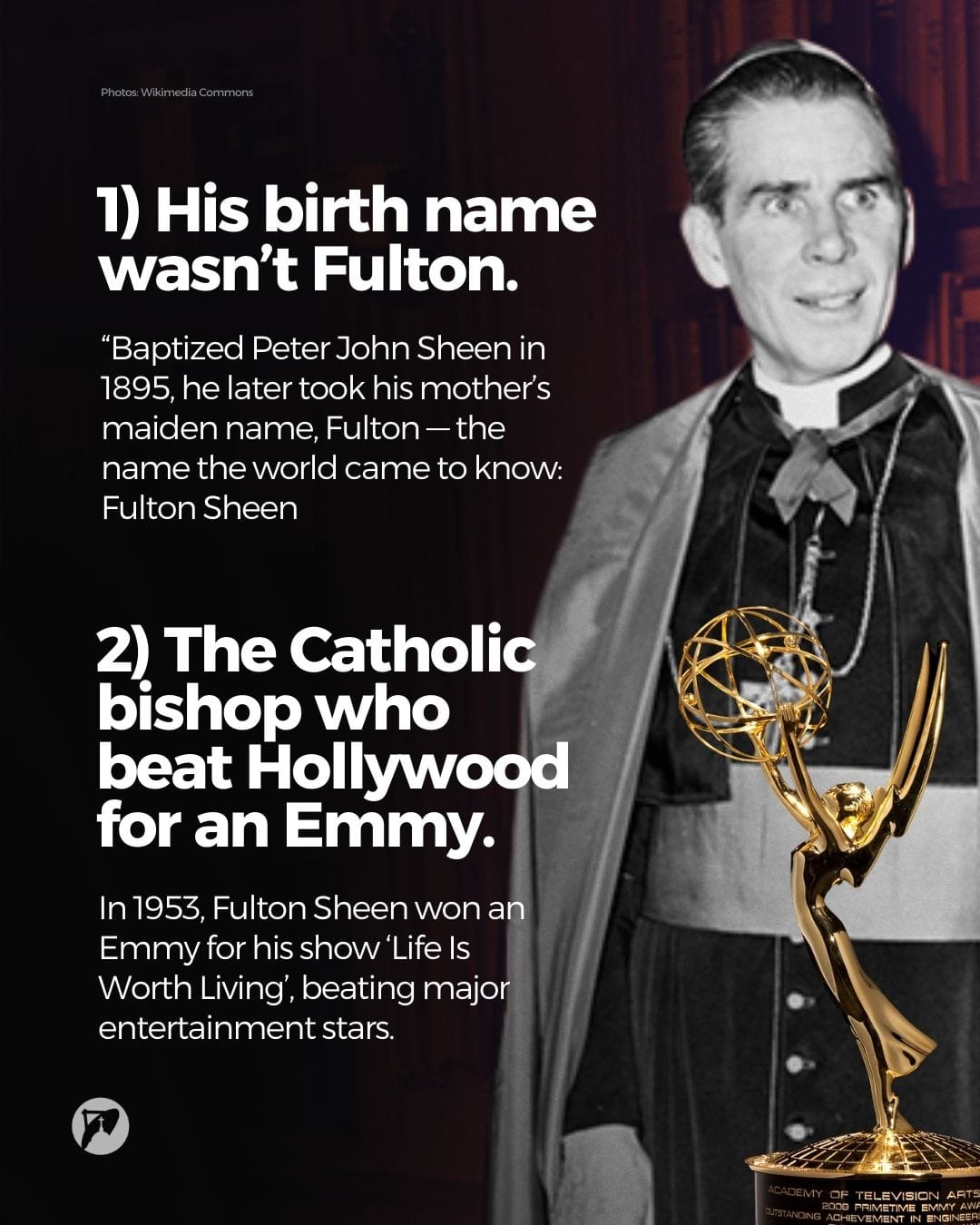
1) His birth name wasn’t Fulton.
He was baptized Peter John Sheen in 1895 in El Paso, Illinois; “Fulton” was his mother’s maiden name and later became the name the world knew him by. He was born on May 8, 1895, the eldest of four sons of Newton and Delia (Fulton) Sheen, on a farm near El Paso, Illinois. He grew up in a small Midwestern farm family and went on to become one of the most widely heard Catholic preachers in the world.
2) The Catholic bishop who beat Hollywood for an Emmy.
He’ll be the first U.S.-born Catholic bishop to be beatified — and the first Emmy-winning TV personality to reach the altars! In 1953, he won the Emmy for “Most Outstanding Television Personality” for his groundbreaking show, “Life Is Worth Living,” beating out some of the biggest names in entertainment at the time. And in true Fulton Sheen fashion, he kept his trademark humor, saying he wanted to thank his “writers”: Matthew, Mark, Luke, and John.
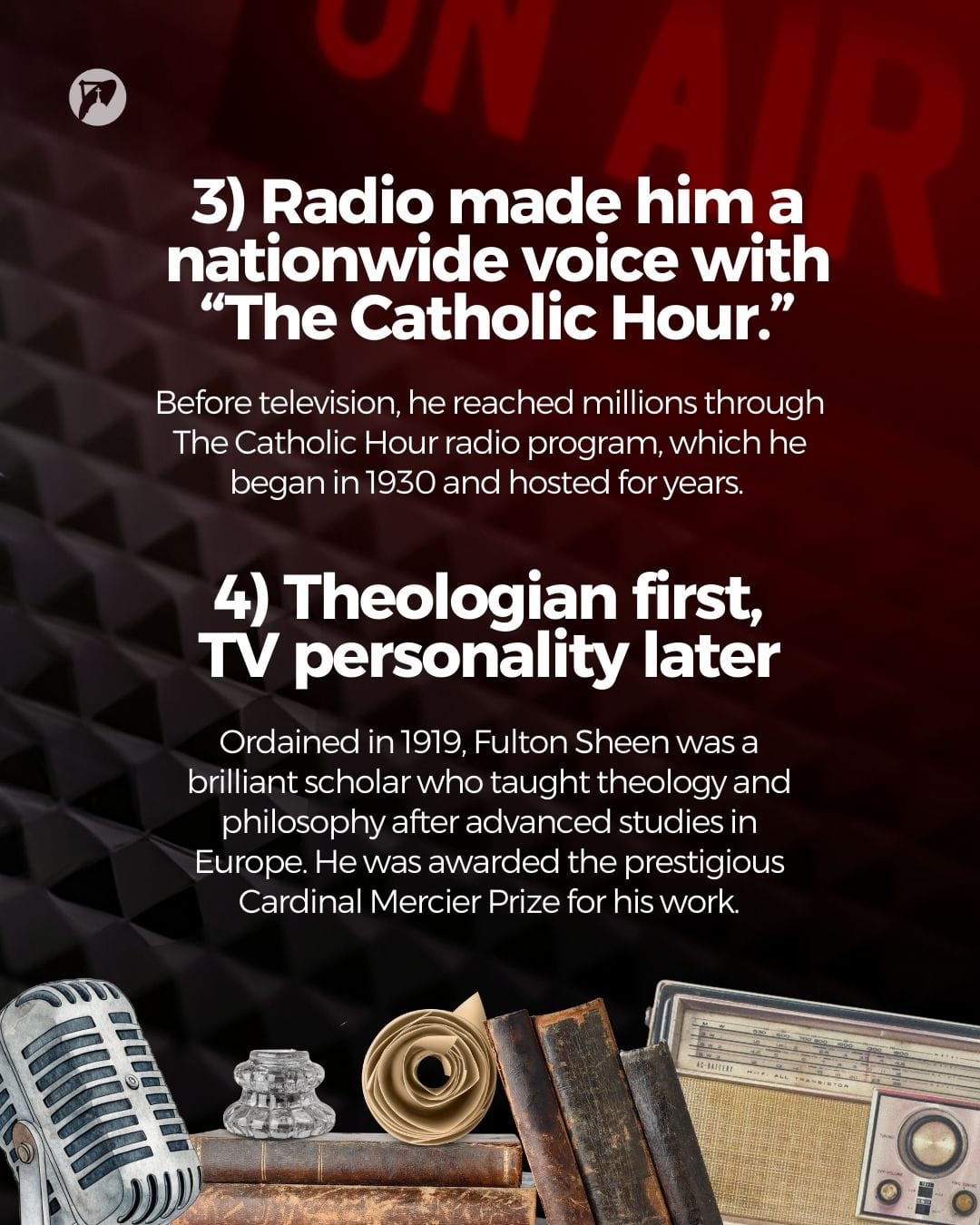
3) Radio made him a nationwide voice with “The Catholic Hour.”
Before television, Archbishop Sheen reached millions through The Catholic Hour radio program, which he began in 1930 and hosted for years. This show helped make him a household spiritual guide across the United States.
4) A genius theologian before he was a “TV celebrity.”
Ordained a priest of the Diocese of Peoria in 1919, he was a gifted intellect who used his learning to bring people to the faith. He earned advanced degrees in philosophy and theology, pursued further studies in Europe, and later taught philosophy and theology at The Catholic University of America. He received a doctorate in philosophy in Belgium and was awarded the prestigious Cardinal Mercier Prize for his work.
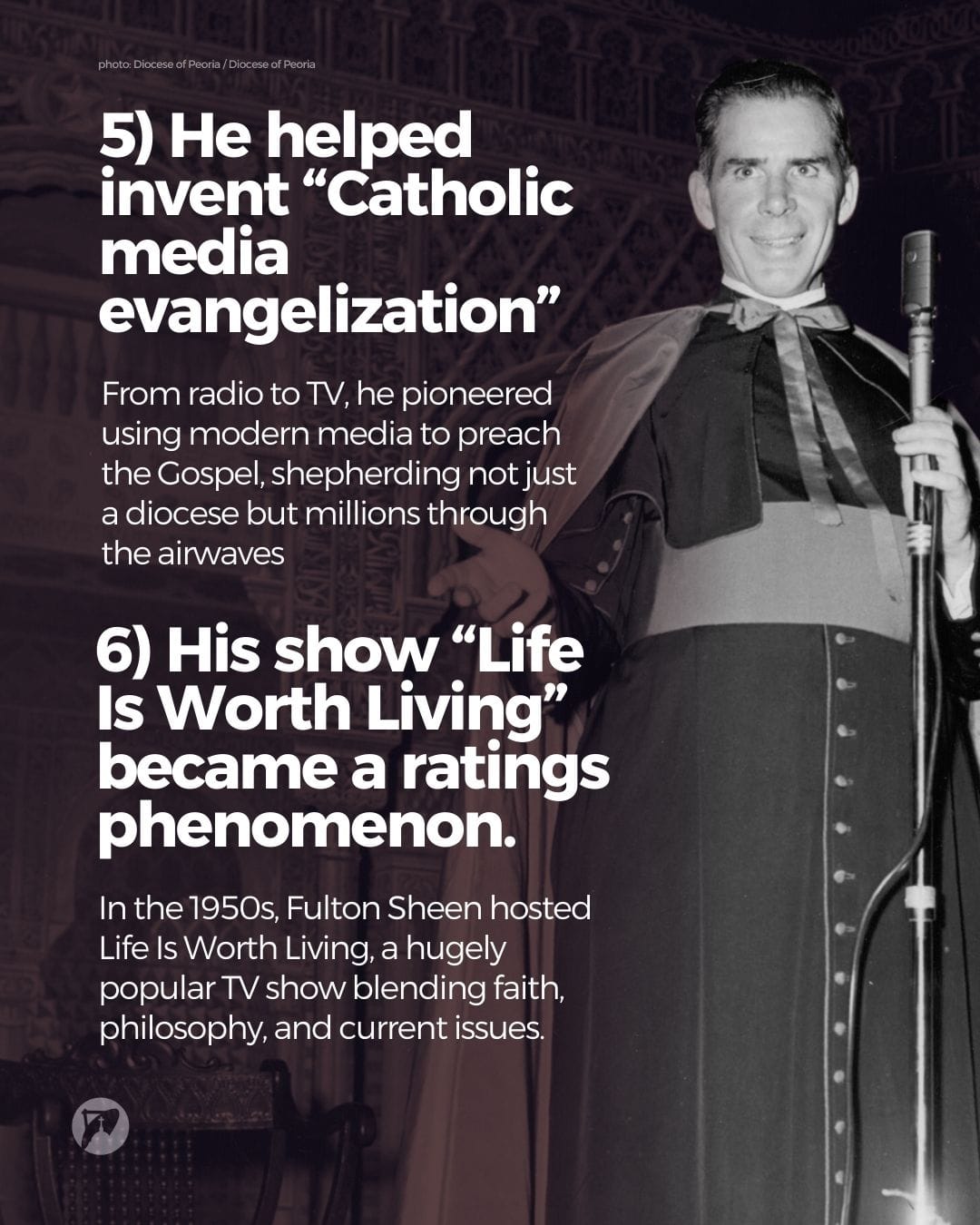
5) He helped invent “Catholic media evangelization” as we know it.
Starting on the radio and then moving to television, Sheen showed how modern media could be used to preach the Gospel, making him a true pioneer of the “new evangelization” decades before that phrase was popular.
As a priest of the Diocese of Peoria, later auxiliary bishop in New York, and eventually Bishop of Rochester, he brought his preaching, pastoral work, and media apostolate together, showing how a bishop could shepherd his flock not only in a geographic diocese, but also through the airwaves to millions around the world.
6) His show “Life Is Worth Living” became a ratings phenomenon.
In the 1950s, Sheen hosted “Life Is Worth Living” (1951–1957), a weekly TV program that mixed theology, philosophy, and current issues with his trademark chalkboard and cape. It quickly became one of the most popular programs on the airwaves, not only among religious shows but in primetime television overall.
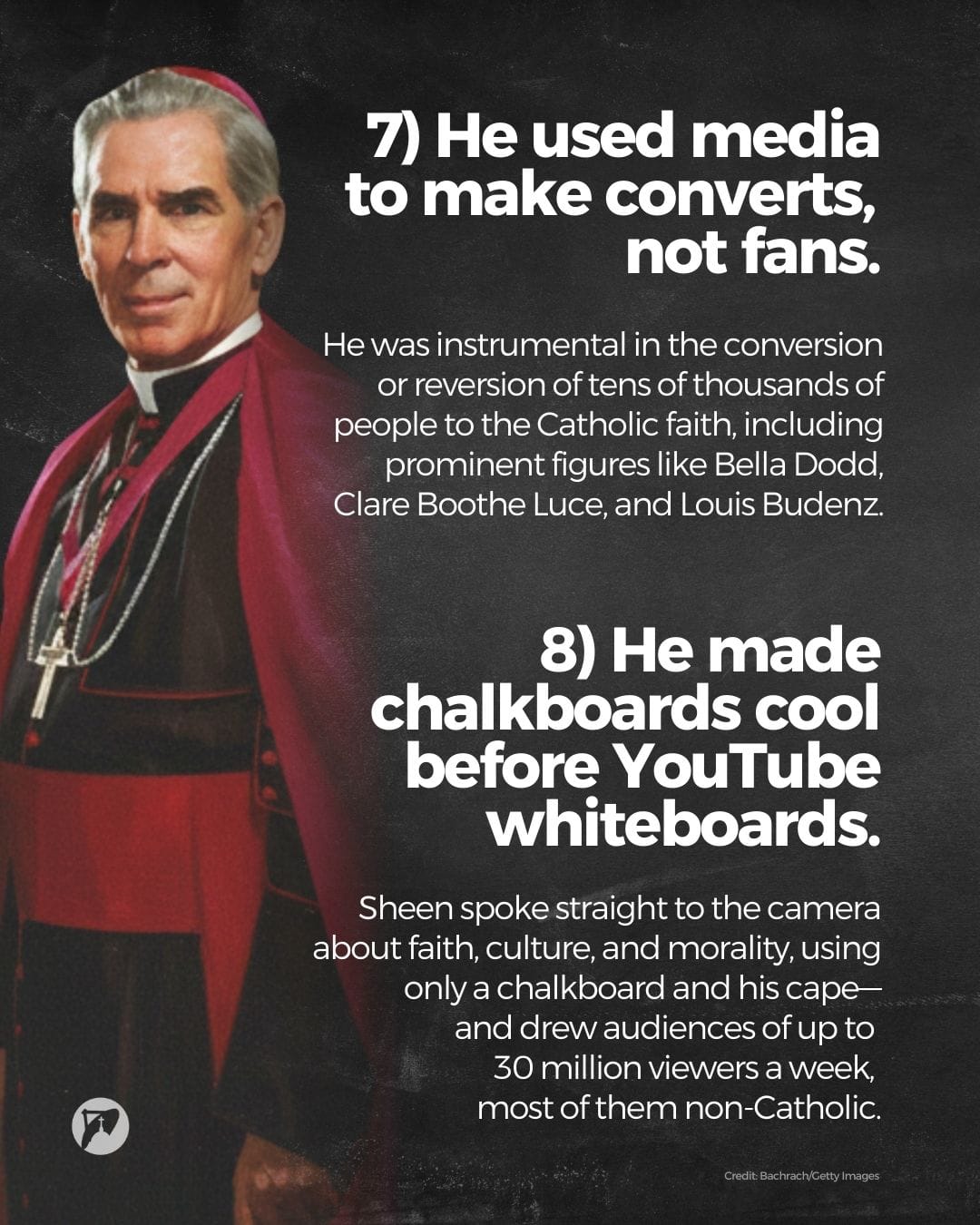
7) He used media to make converts, not fans.
His goal was always conversion and holiness, not celebrity. Stories include high‑profile converts and little‑known souls whose lives were changed after encountering Sheen’s preaching. He was instrumental in the conversion or reversion of tens of thousands of people to the Catholic faith, including prominent figures like Bella Dodd, Clare Boothe Luce, and Louis Budenz.
8) He made chalkboards cool before YouTube whiteboards.
On “Life Is Worth Living,” Sheen spoke straight to the camera about faith, culture, and morality, using only a chalkboard and his cape—and drew audiences of up to 30 million viewers a week, most of them non‑Catholic.
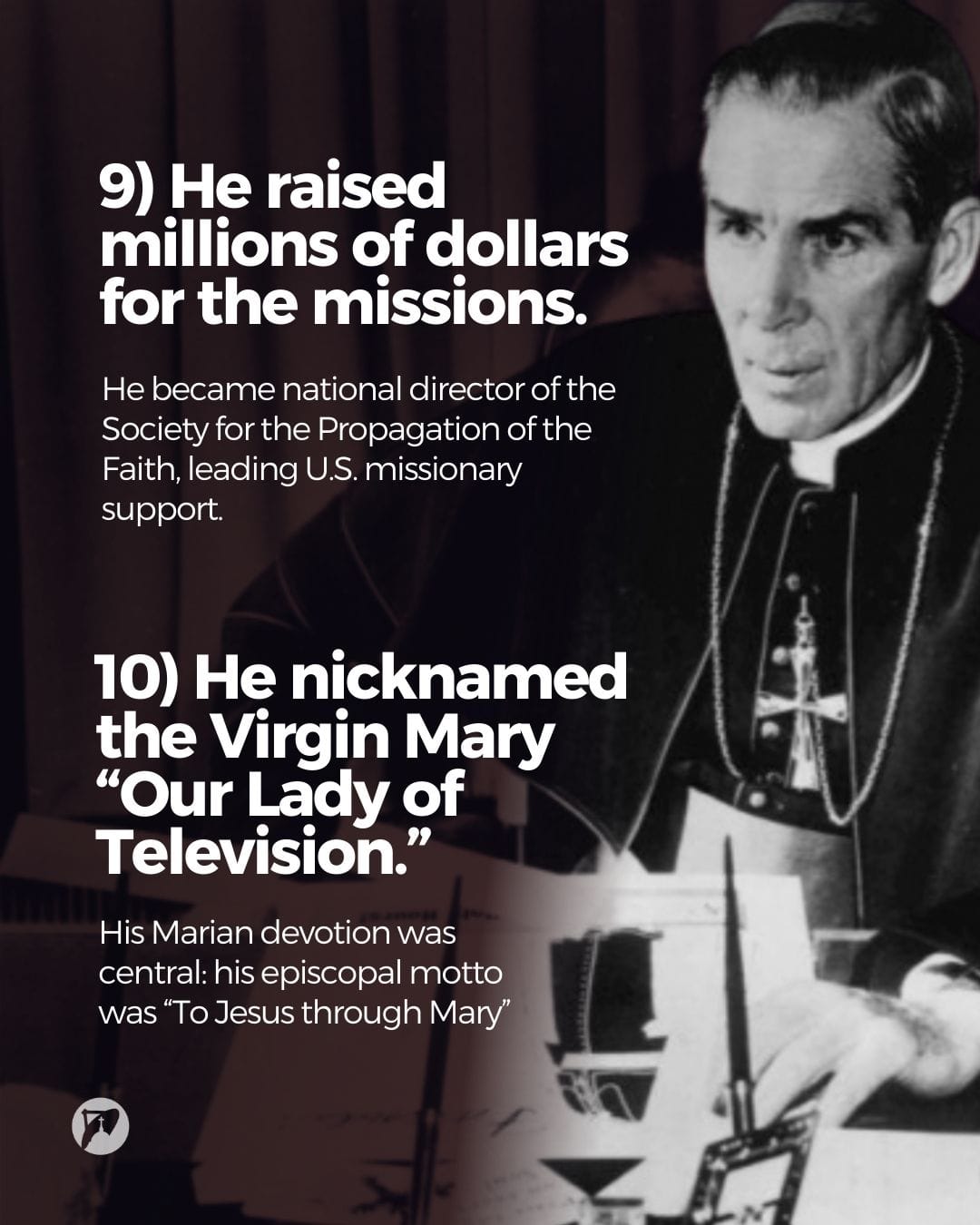
9) He raised millions of dollars for the missions.
In 1958, Sheen became national director of the Society for the Propagation of the Faith, coordinating missionary support across the United States. This was one of his favorite roles, where he used his platform to raise funds and awareness for missions worldwide. He spent 16 years raising money that supported missionary work around the globe, helping countless people encounter Christ and His Church.
10) He nicknamed the Virgin Mary “Our Lady of Television.”
His Marian devotion was central: his episcopal motto was “To Jesus through Mary,” he considered The World’s First Love his favorite book, nicknamed the Madonna and Child statue on his TV set “Our Lady of Television,” and made frequent pilgrimages to Lourdes.
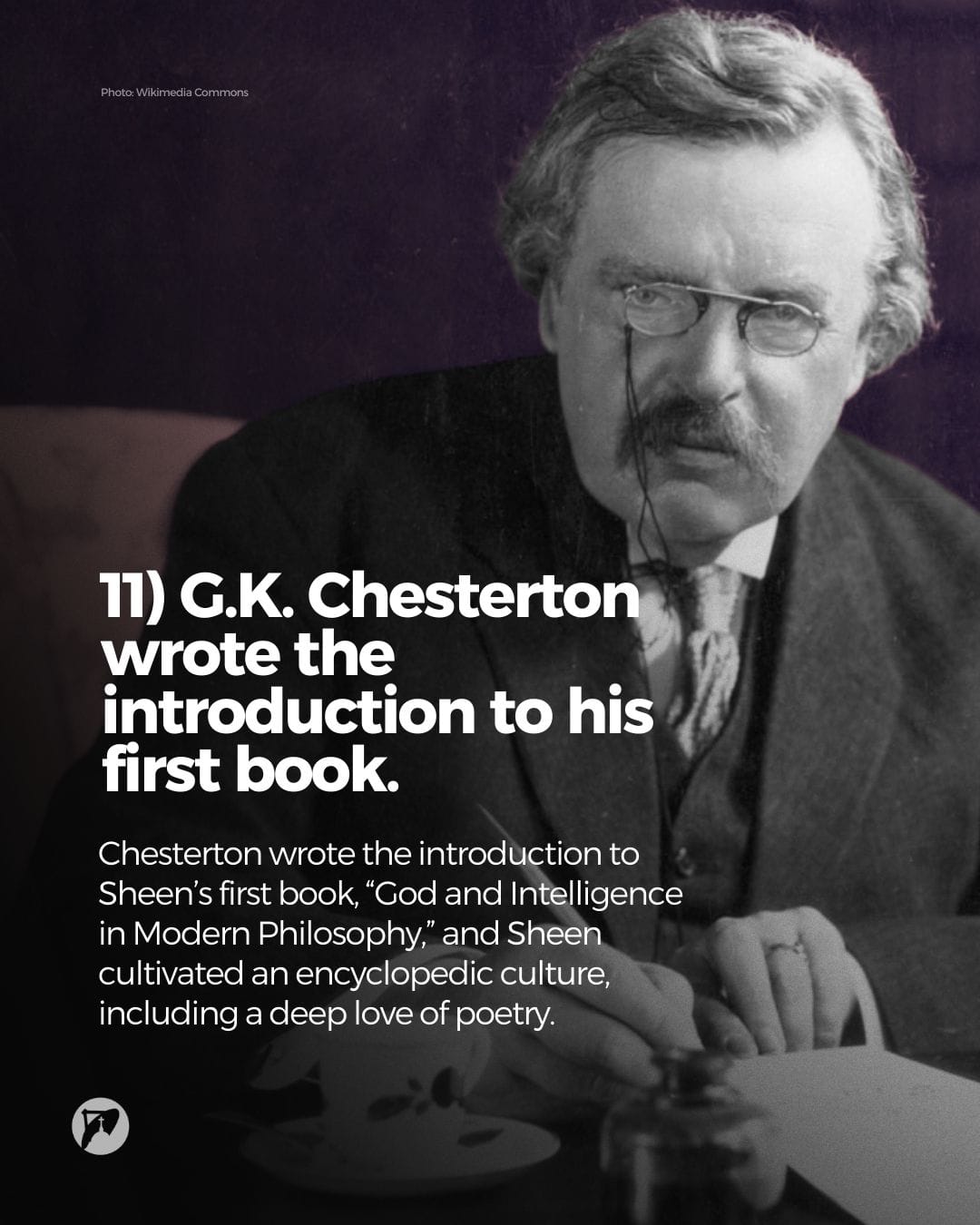
11) G.K. Chesterton wrote the introduction to his first book.
Intellectually, Sheen was deeply shaped by G.K. Chesterton, whom he credited as the greatest influence on his writing. Chesterton wrote the introduction to Sheen’s first book, “God and Intelligence in Modern Philosophy,” and Sheen cultivated an encyclopedic culture, including a deep love of poetry.
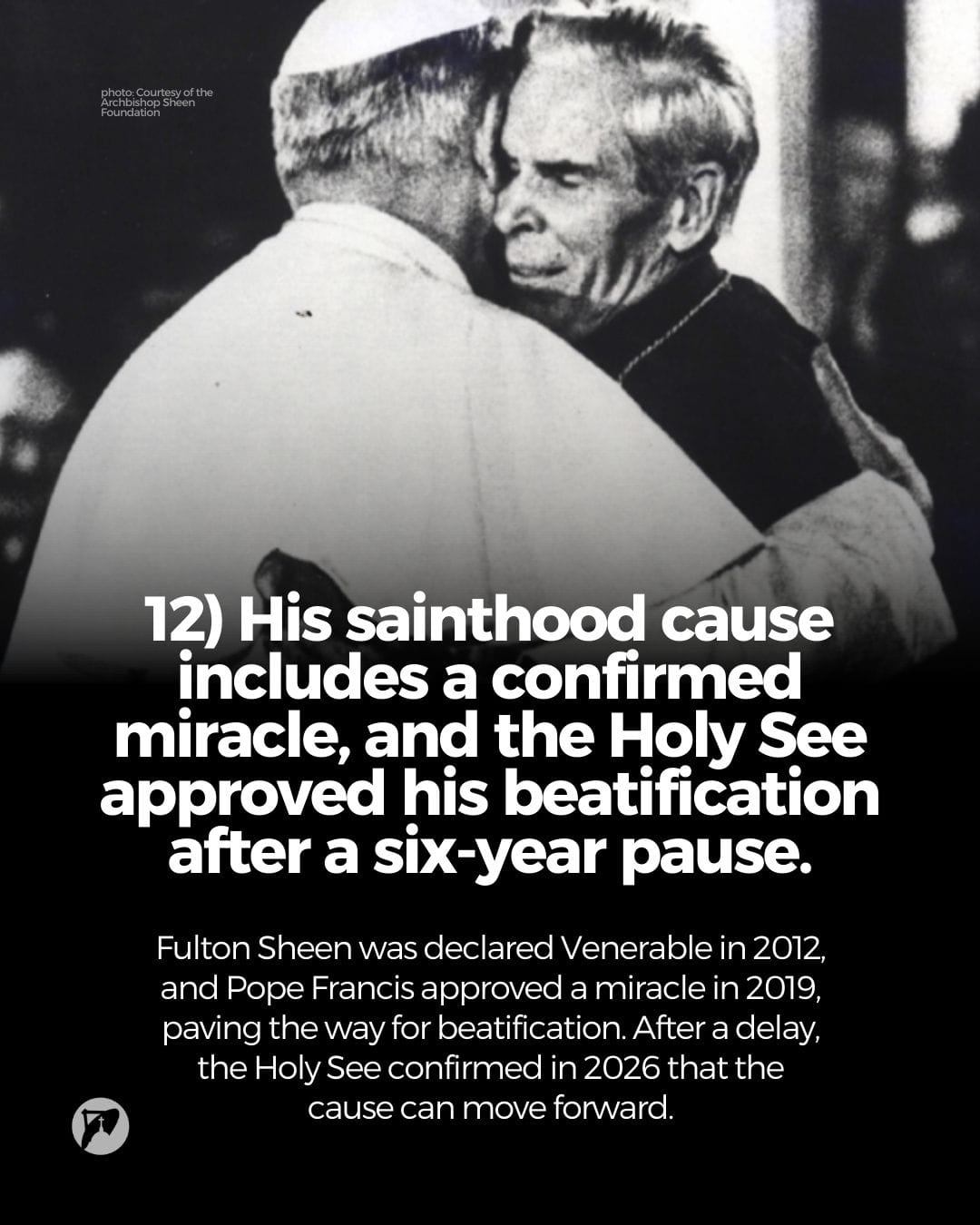
12) His cause for sainthood has a miracle, and the Holy See confirmed his beatification after a six-year pause.
In 2012, the Vatican declared Fulton Sheen “Venerable,” recognizing that he heroically lived the Christian virtues. Pope Francis approved a miracle attributed to Sheen’s intercession in 2019: the medically unexplained recovery of James Fulton Engstrom, a baby who had been stillborn. This healing cleared the way for his beatification, but the ceremony—once scheduled for December 21, 2019—was postponed while questions about his time in Rochester were reviewed. The Holy See confirmed on February, 9, 2026, that his beatification cause can officially move forward.
Fulton Sheen shows us that media and holiness can go together: a bishop who stepped into the spotlight not for himself, but to preach that life in Christ is truly worth living.