

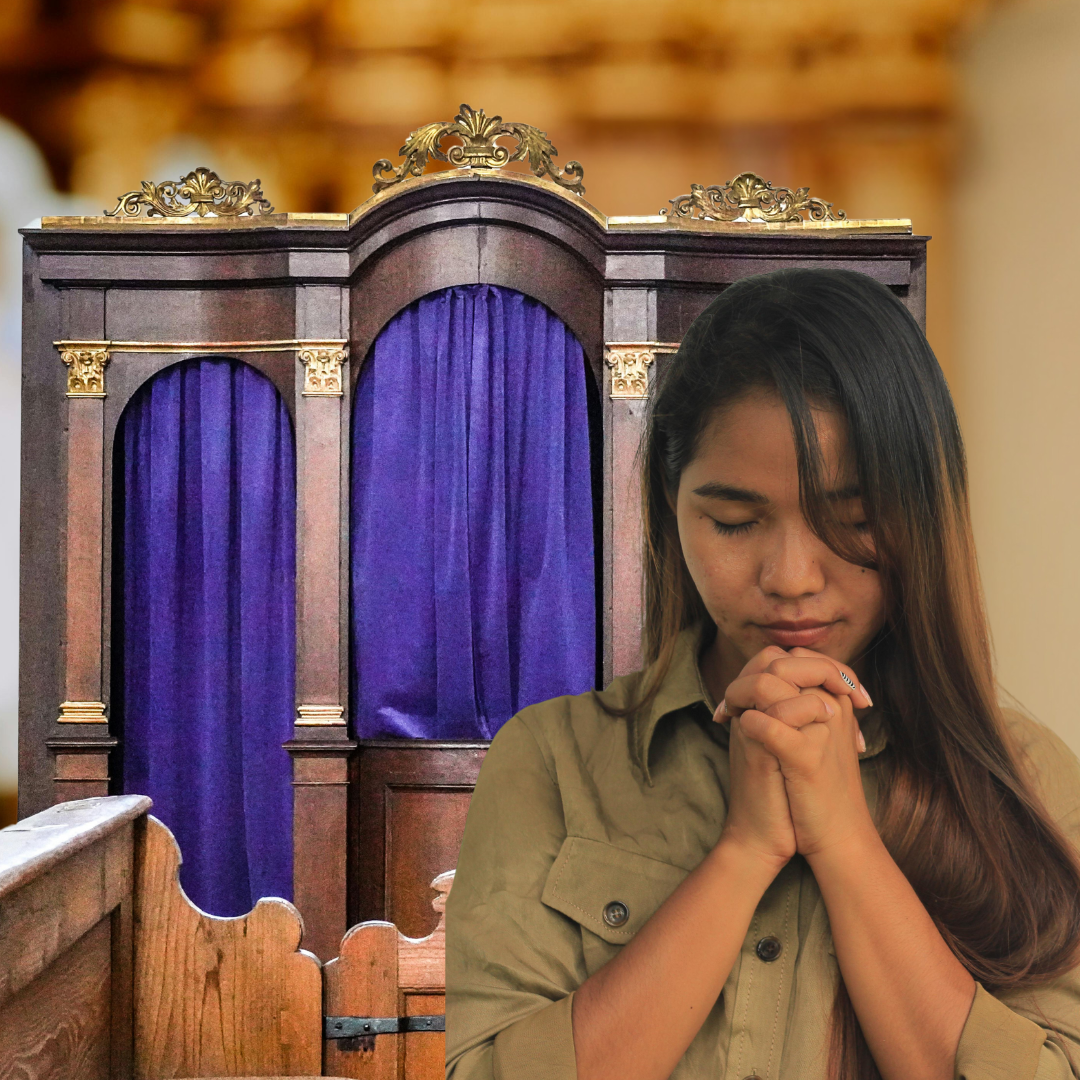
Sometimes we hesitate to go to confession. It’s not always easy—it takes preparation and a willing heart.
Pope Francis reminds us that “the Sacrament of Reconciliation is a sacrament of healing.”
“When I go to confession,” he said, “it’s to heal myself—to heal my soul, my heart, and something in my life that isn’t working well. (…) The forgiveness of our sins is not something we can give ourselves. I can’t say: I forgive my sins. Forgiveness is something we ask for—something we ask of another—and in confession, we ask Jesus for forgiveness. Forgiveness isn’t the fruit of our own effort, but rather a gift—a gift of the Holy Spirit.”
A good confession requires courage, sincerity, humility, and a true desire to be reconciled with God.
Below are some signs of a good confession, along with tips for improvement if you’re still unsure about how to approach it:
1) Examine your conscience sincerely.
Am I doing it right? Take time before confession to reflect on your actions, thoughts, and what you’ve failed to do. Use tools such as the Ten Commandments, the Beatitudes, or a set of examination questions to guide your reflection. Setting aside a few minutes each day for self-reflection will make each confession clearer and more thorough.
Do I need to improve? If your examination of conscience is rushed or superficial, you may forget important sins or overlook patterns of behavior that keep leading you into the same sins.
2) Sorrow for our sins (contrition).
Am I doing it right? Be sorry for having offended God—not just out of fear of punishment, but out of love for Him and a desire to grow in that love.
Do I need to improve? If your main concern is avoiding hell or preserving your image, your focus is still on yourself rather than on God.
3) Confess with clarity and honesty.
Am I doing it right? Once you’ve prepared, find a priest and a confessional. Confession is a dialogue in which the priest listens and offers guidance and counsel. Name your sins without justifying, hiding, or downplaying them.
Do I need to improve? Deliberately omitting a serious sin renders the confession invalid. If you feel embarrassed, remember that the priest acts in persona Christi (in the person of Christ) and he, too, goes to confession.
4) Complete your penance.
Am I doing it right? Carry out the penance the priest assigns as soon as possible, with a spirit of reparation and reconciliation.
Do I need to improve? If you forget or delay, do it as soon as you remember, even if some time has passed.
5) Have a firm purpose of amendment.
Am I doing it right? Even if you might fall again, approach confession with the genuine intention to change your habits and avoid situations that lead you to sin.
Do I need to improve? If you confess without any real desire to change, your confession loses sincerity and becomes empty.
A quick self-check before you leave the confessional:
- Did I prepare with prayer and a thorough examination of conscience?
- Was I honest and clear about my sins?
- Did I feel sincere repentance?
- Do I truly want to change and avoid sin?
- Did I complete my penance?