

On Via Giulia in Rome stands a church with a crypt decorated with human skulls, bones, and skeletons. It looks like something out of a horror film. But this is no haunted house, and the bones are not Halloween decorations. This is the Church of Santa Maria dell’Orazione e Morte — Our Lady of Prayer and Death — and its story reveals a profound truth about the Catholic understanding of death, human dignity, and eternal life.
It is also the perfect place to rediscover the Christian meaning of Halloween, All Saints’ Day, and All Souls’ Day.
A Church for the Forgotten Dead
The Confraternity of Prayer and Death was founded in Rome in 1538 to recover and bury the bodies of people who had died without anyone to claim them.
Bodies were found along roadsides, in the countryside, and in the Tiber River. Many belonged to the poor, travelers, and unidentified individuals who had no family to arrange a funeral. Without the confraternity, they might never have received a proper Christian burial.
Its members ensured that these forgotten individuals were laid to rest and that prayers were offered for their souls. Their work embodied two works of mercy: burying the dead and praying for the departed.
The church became the spiritual home of this mission. The confraternity is traditionally associated with the burial of more than 8,000 bodies. Although its original cemetery was largely lost during the nineteenth-century construction of Rome’s embankments along the Tiber, the crypt preserves a striking reminder of its work.
The Bone Crypt: Memento Mori
Inside the crypt, human bones have been arranged into crosses, decorative patterns, and chandeliers. The sight may seem macabre, but its purpose is not to frighten visitors. Instead, it reflects a longstanding Christian tradition: memento mori, Latin for “remember that you must die.”
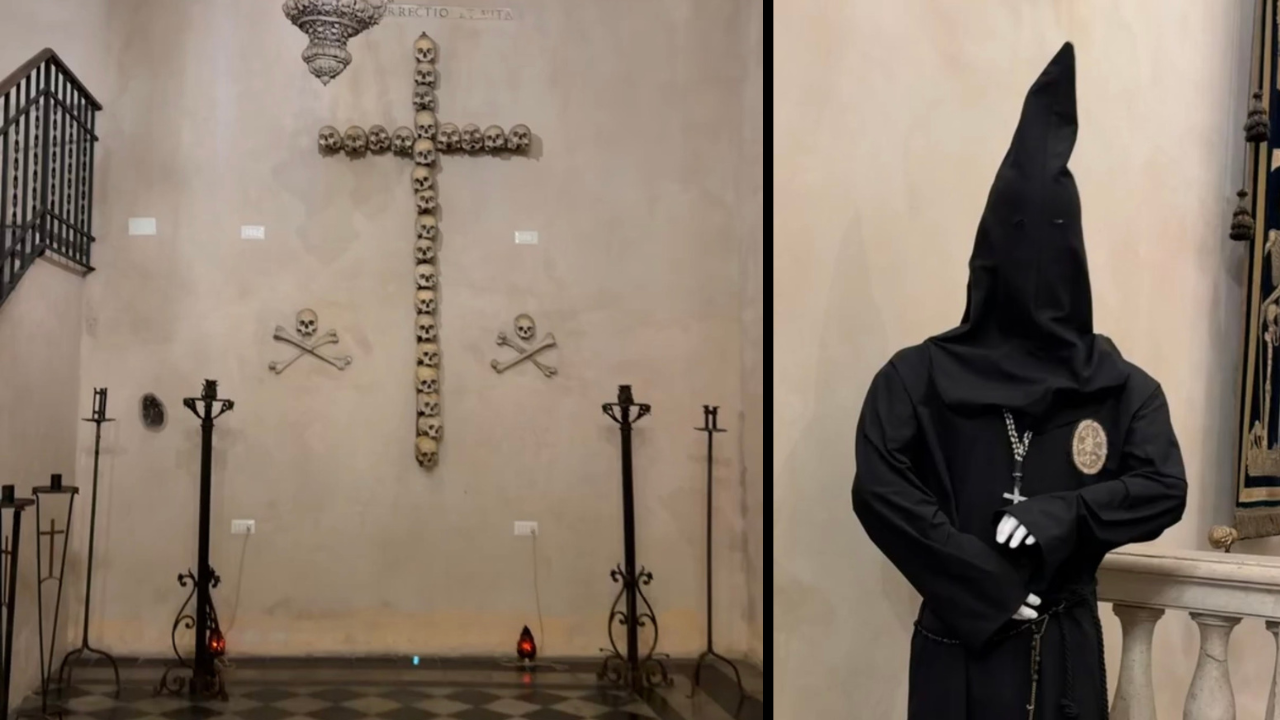
For centuries, Christian art and spirituality have used skulls to remind the faithful that earthly life is temporary. Death comes to everyone, regardless of wealth or social status. Our time on earth is limited, and we must prepare to meet God.
The church’s façade expresses this message through a Latin inscription:
Hodie mihi, cras tibi.
“Today it is my turn; tomorrow it will be yours.”
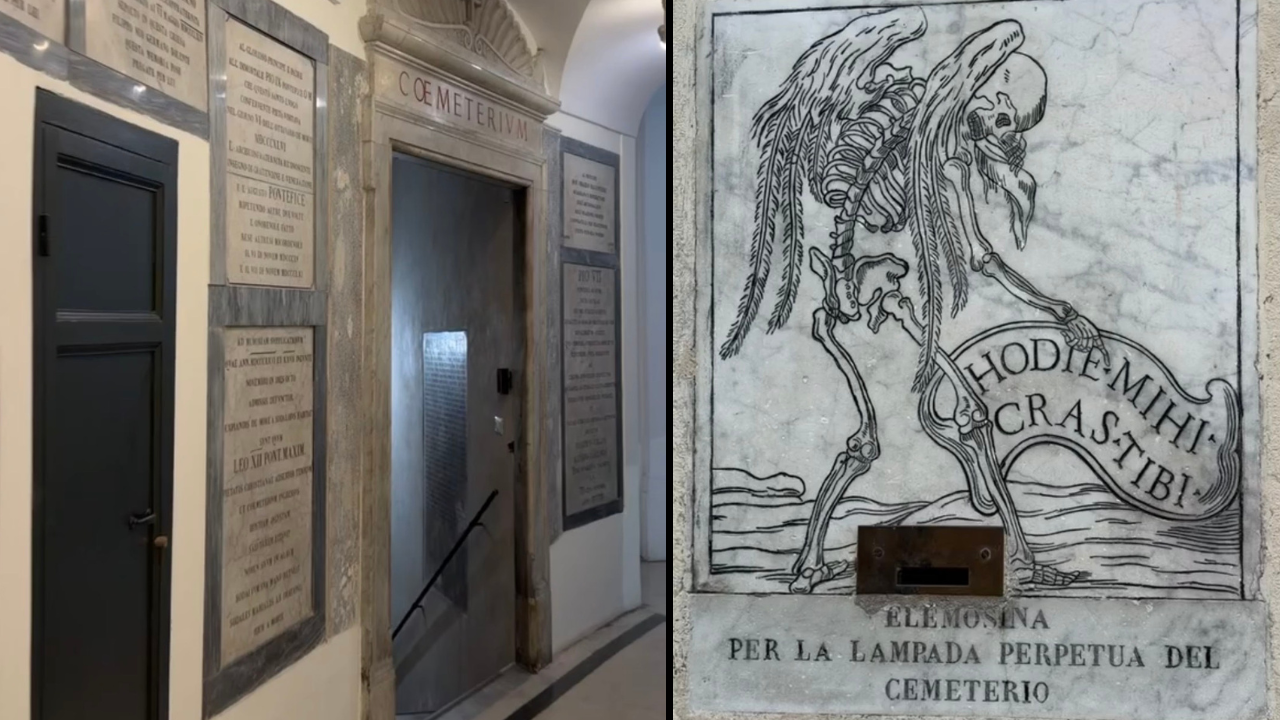
The bones belonged to real people, each created in the image of God. By burying them and praying for their souls, the confraternity affirmed that even those forgotten by society deserve dignity.
The crypt offers a distinctly Catholic response to death: acknowledge its reality, pray for the departed, and place our hope in the Resurrection.
October 31: All Hallows’ Eve
The word Halloween comes from “All Hallows’ Eve,” the evening before All Saints’ Day. “Hallow” is an old English word meaning a holy person or saint.
Although modern Halloween traditions include secular and commercial elements, its name points toward the Christian solemnity that follows. For Catholics, October 31 is an opportunity to reflect on holiness, mortality, and eternity.
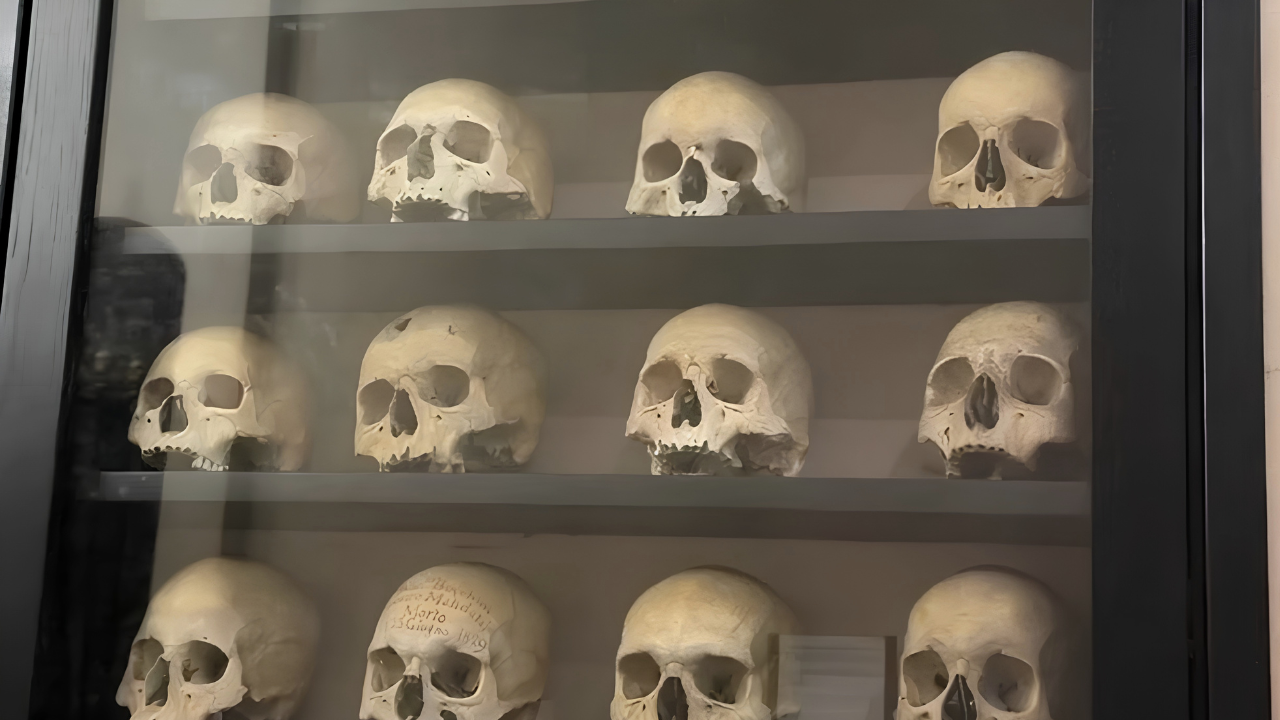
The Church traditionally speaks of the “four last things”: death, judgment, heaven, and hell. These remind us that our choices have eternal consequences and that our earthly lives have a purpose beyond this world.
The question is not simply whether death frightens us. It is whether we are prepared to meet God.
November 1: All Saints’ Day
The Solemnity of All Saints celebrates everyone who has attained the glory of heaven, including canonized saints and countless holy men and women known only to God.
Some were martyrs who gave their lives for Christ. Others were parents, priests, religious, and ordinary people who pursued holiness in everyday life.
The feast reminds us that holiness is not reserved for a privileged few. Every Christian is called to become a saint.
All Saints’ Day also celebrates the communion of saints: the spiritual union of the faithful on earth, those undergoing purification in purgatory, and the saints in heaven.
The crypt on Via Giulia reminds us that our earthly pilgrimage will end. All Saints’ Day points us toward our ultimate destination.
We were not made for the grave. We were made for God.
November 2: All Souls’ Day
The Commemoration of All the Faithful Departed turns our attention to those who have died and are undergoing purification in purgatory before entering the fullness of heaven.
Catholics believe that death does not destroy our communion in Christ. We can pray for the faithful departed, which is why the Church celebrates Masses for the dead, encourages visits to cemeteries, and offers prayers and sacrifices for deceased family members and friends.
The confraternity behind Santa Maria dell’Orazione e Morte put this belief into practice. Its members often did not know the identities of those they buried, yet they cared for their bodies and prayed for their souls.
We pray for the dead because we believe that love does not end at the grave.
How to Gain Indulgences for the Souls in Purgatory
The days surrounding All Souls’ Day offer a special opportunity to pray for the faithful departed through the Church’s ministry of indulgences.
An indulgence is the remission before God of temporal punishment due to sins whose guilt has already been forgiven. A plenary indulgence remits all such punishment when the required conditions are fulfilled. It can be applied to a deceased person by way of suffrage.
Two particular opportunities are available at the beginning of November:
1. Visit a cemetery from November 1–8.
A plenary indulgence applicable to the souls in purgatory may be gained by devoutly visiting a cemetery and praying for the departed, even silently.
2. Visit a church or public oratory on November 2.
A plenary indulgence applicable to the souls in purgatory may be gained by devoutly visiting a church or public oratory and reciting the Our Father and the Creed.
For either indulgence, the usual conditions must also be fulfilled:
- Sacramental confession.
- Reception of Holy Communion.
- Prayer for the intentions of the Pope.
- Complete detachment from all sin, including venial sin.
One confession can suffice for several indulgences, while Holy Communion and prayer for the Pope’s intentions are required for each plenary indulgence. Ordinarily, only one plenary indulgence can be gained per day. If the necessary conditions are incomplete, the indulgence is partial.
These practices express the Church’s faith in God’s mercy and the communion of saints. Through prayer, we can assist the faithful departed.
This Halloween, Remember Eternity
Our world often treats death as something to hide or avoid. The Catholic tradition takes a different approach: it acknowledges death, mourns the departed, prays for their souls, honors the saints, and proclaims the Resurrection of the body and life everlasting.
Halloween leads us toward All Saints’ Day, which points us toward heaven. All Souls’ Day reminds us to pray for those who have gone before us.
This Halloween, remember that the Catholic Church does not need a haunted house to remind us of death. Sometimes, all it takes is a crypt full of bones, a prayer for the forgotten dead, and the words memento mori.
Because the point is not simply that we will die.