

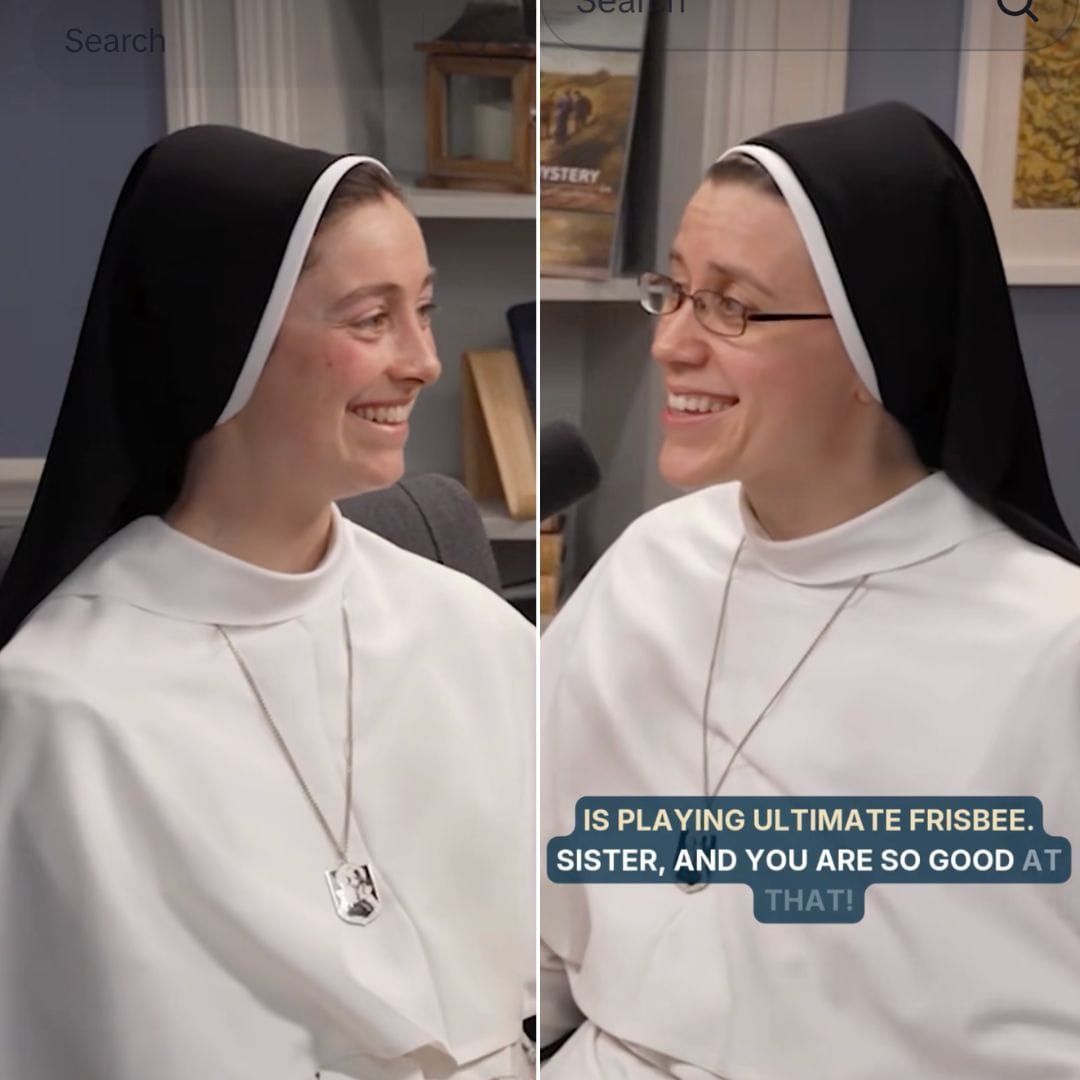
There’s something special about religious life, and as social media has recently shown, the online world has taken notice.
Reels featuring the Dominican Sisters of Mary, Mother of the Eucharist chatting all about faith, friendship, and even ultimate frisbee on their podcast are hitting millions of views on Instagram and TikTok. The wholesome, holy joy of convent life is reaching the world through little bits of the sisters’ content—and Gen Z can’t seem to get enough.
“Maybe for some it’s a bit of refreshment in the desert,” Fr. Mark-Mary Ames, CFR, suggests.
This truly seems to be the case because the internet’s newest obsession has become a real-life movement, too.
Many Gen Z women now consider convent stays as the new ideal way to spend “summer vacay,” and they’re on TikTok talking about it. On their bucket lists? Not a week at the beach, but a few days of silence, steeped in an atmosphere of simplicity and prayer.
It sounds like “nun summer is loading” for 2026, as Isabel Brown says in a reel about this trend.
What’s the secret draw behind this new cultural interest in the rhythm of Catholic consecrated life? What do religious sisters have that this generation is seeking?
Doing the Lord’s Work
While they may have gained attention through the algorithm, orders like the Dominican sisters are living much more than a microtrend.
The peaceful and sincere personalities of these religious sisters spring from a way of life informed by a timeless and treasured rhythm of Catholic prayer and relationship with God.
One of the most fundamental prayers these sisters participate in is the Liturgy of the Hours.
The Liturgy of the Hours is basically the “pray without ceasing” verse of Scripture put into practice (1 Thessalonians 5:17). Also known as the “Divine Office” or work of God, the Liturgy of the Hours allows those who pray it––whether a priest or the pope, missionaries or lay Catholics––to participate in God’s saving work, sanctifying their days with prayer and worship.
The Divine Office is Catholicism’s most ancient tradition and even predates the existence of the Church. In Old Testament times, there were set times every day when psalms were prayed and sacrifices made in the temple. When the first monasteries were established in the early centuries of Christianity, the monks prayed all 150 psalms daily. Finding this overwhelming, they soon spread them out over a week. Now, the Church observes a rotating liturgical cycle of scriptures, canticles, intercessions, and antiphons, which has become the Liturgy of the Hours.
The Divine Office holds a special place in the communal life and spirituality of religious orders.
What many young women are turning to as a refuge from the stress of the outside world is actually one of the central pillars of a religious vocation. Cloistered contemplative nuns may pray all seven daily hours, while sisters active in the outside world keep the major ones.
Inside the Secret Prayer Life of Religious Sisters
In reality, it’s not classified information at all–it’s one of Catholicism’s most important public prayers.
Although there are a total of seven daily prayer times in the Liturgy of the Hours, communities such as the Dominican Sisters of Mary, Mother of the Eucharist typically gather to pray the principal hours together: Lauds and Matins (Morning Prayer and the Office of Readings) around sunrise, Vespers (Evening Prayer) before dinner, and Compline (Night Prayer) before retiring for the night.
The rhythm of prayer sustains religious orders in the Lord’s grace so that they can serve the Lord with faithfulness and joy. At the same time, their intercessory prayer strengthens and supports the entire Church.
Help Religious Communities Participate in the Prayer of the Church
In 2027, the Catholic Church in the United States will officially begin praying with the Second Edition of the Liturgy of the Hours, featuring a new translation.
Beginning July 1, Ascension will open preorders for this new edition of the Divine Office, making it easier for Catholics to enter more deeply into a spiritual tradition that has nourished the Church for centuries.
To help prepare for this historic transition, Ascension has established the Liturgy of the Hours Assistance Fund, a need-based program designed to help clergy, seminarians, and religious communities throughout the United States obtain copies of the new Divine Office.
To learn more about supporting religious sisters and others who rely on the Liturgy of the Hours, visit Ascension's Liturgy of the Hours Assistance Fund page.