

A hidden marvel south of Rome
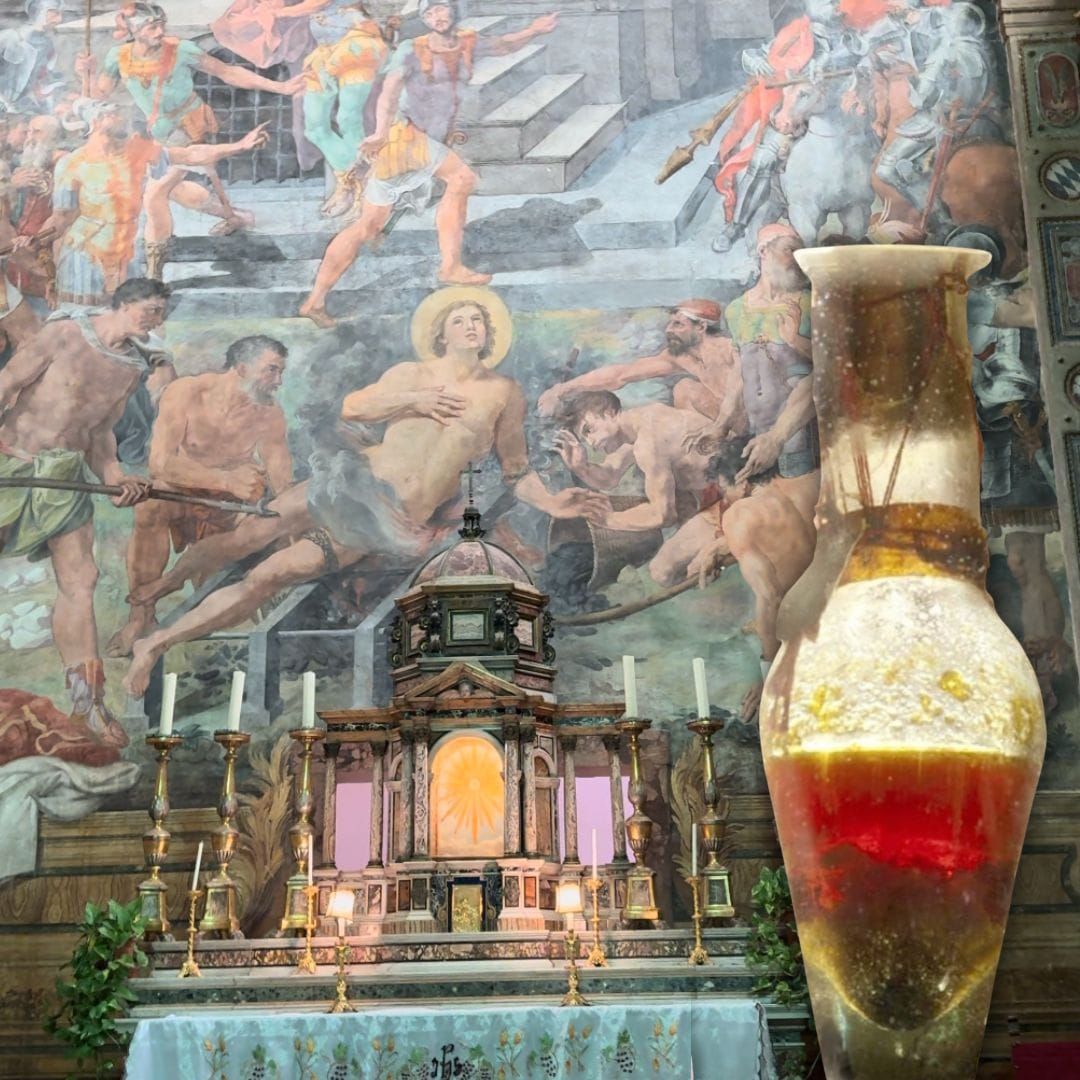
In the Collegiata di Santa Maria Assunta in Amaseno, a small town south of Rome, there’s a simple glass ampulla containing a dark, coagulated substance traditionally identified as the blood of St. Lawrence.
St. Lawrence—the Roman deacon and martyr—was executed on August 10, traditionally dated to the year 258. And this relic is no recent discovery: it has been documented in Amaseno since at least the consecration of the church in 1177.
The consecration documents describe it in Latin as de pinguedine S. Laurentii Martyris—literally, “of the fat of St. Lawrence the Martyr.” That detail is important. The relic has not historically been described as a tidy vial of pure blood, but as a mixture of material associated with the saint’s martyrdom.
Inside are what appear to be blood, fat, ashes, and even a small fragment of skin.
The extraordinary liquefaction
Here’s where it gets really fascinating.
For most of the year, the contents of the ampulla appear solid, dark, and coagulated. But around St. Lawrence’s feast on August 10, the substance traditionally undergoes a dramatic transformation: the dark mass becomes liquid and bright red, with the blood becoming visibly distinguishable from the other material in the ampulla.
Historical accounts say the phenomenon has occurred repeatedly over the centuries—and not only on August 10. It has reportedly occurred on other particular occasions, including when the relic traveled outside Amaseno on pilgrimage to Florence, Milan, and Malta.
One especially notable witness was Paolo Aringhi, a 17th-century Oratorian scholar and archaeologist, who recorded seeing the liquefaction in 1649.
A martyrdom written in the relic
The contents of the ampulla have a striking connection to St. Lawrence’s famous martyrdom.
Tradition holds that the saint was executed by being burned on a gridiron. Along with the reddish material identified as blood, the relic contains ashes, charcoal-like material, and a fragment of skin. For generations, Catholics have seen these elements as a physical connection to the way this heroic deacon gave his life for Christ.
There is also an intriguing historical twist: although the relic was already associated with St. Lawrence, accounts from the early modern period suggest its annual liquefaction around his feast made that connection especially powerful for the faithful.
August 10th Feast Day
Today, August 10, the Church celebrates the feast of St. Lawrence—and in Amaseno, it is the day of the anticipated prodigio della liquefazione del sangue di San Lorenzo: the prodigy of the liquefaction of St. Lawrence’s blood.
As the faithful gather to venerate the relic, this little-known tradition offers a powerful reminder of a martyr’s love for Christ: a faith that endured fire, crossed centuries, and continues to inspire wonder today.