
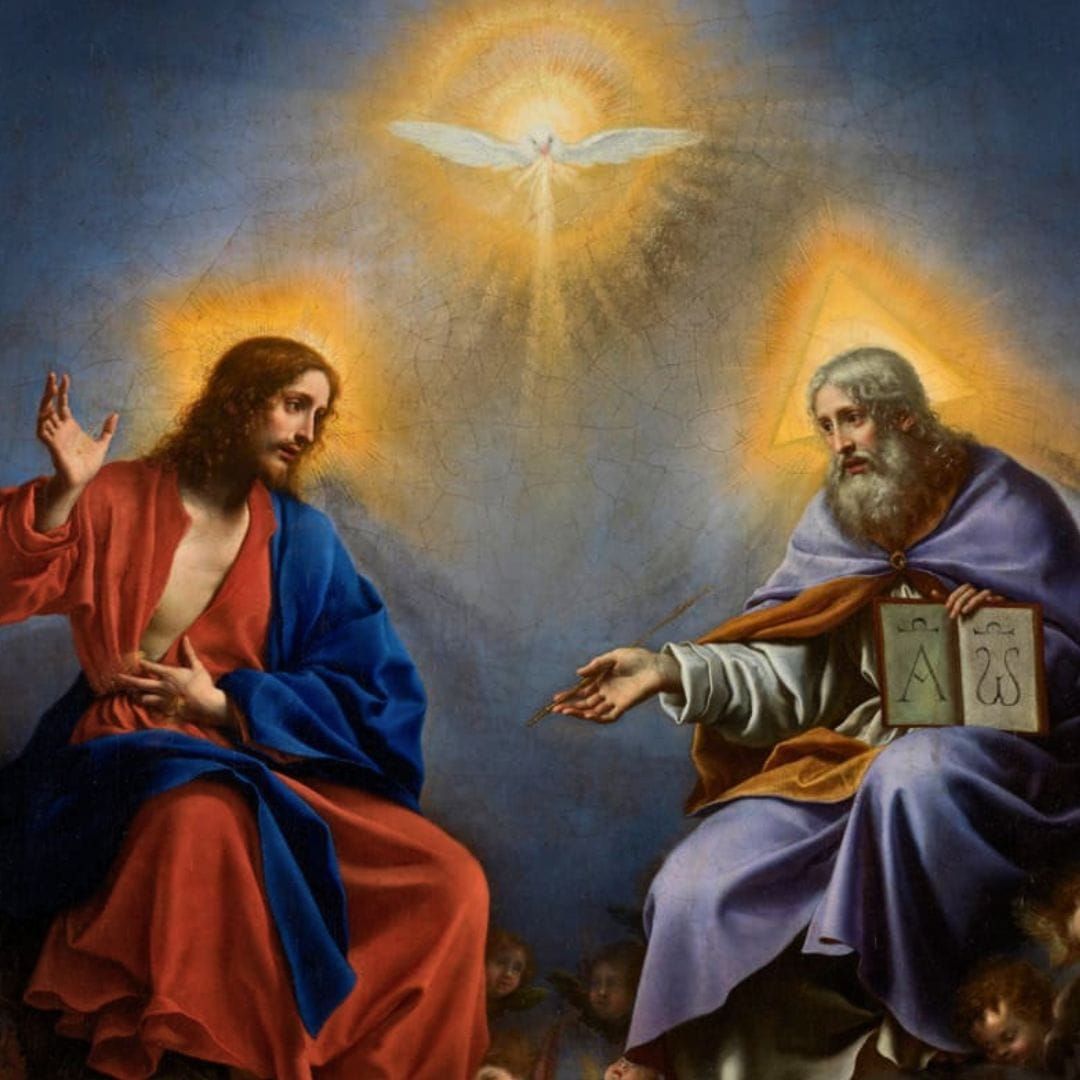
The Trinity is arguably the most important doctrine of the Church because it concerns the very nature of God — and it is also one of the most misunderstood!
Here are five of the most common misconceptions about the Trinity:
Myth 1: The Trinity did not exist in the Old Testament.
Truth: God has always existed as a Trinity. While the Old Testament does not reveal the Trinity as clearly as the New Testament does (though hints of it appear throughout), that does not mean God was not triune. The doctrine of the Trinity describes God’s eternal nature.
Myth 2: The persons of the Trinity are different forms God switches between.
Truth: People often unintentionally suggest this idea when they use oversimplified metaphors to explain the Trinity. One popular example compares the Trinity to water, which can exist as steam, liquid, or ice while still remaining water.
The problem? The three persons of the Trinity — the Father, the Son, and the Holy Spirit — exist simultaneously and have from all eternity. God does not switch between modes or forms. The Father, Son, and Holy Spirit are distinct persons who eternally exist in perfect unity.
Myth 3: The persons of the Trinity operate independently of one another.
Truth: Christians often say the Father is the Creator, the Son is the Savior, and the Holy Spirit is the Sanctifier — and rightly so, according to the principle of appropriation. Strictly speaking, however, the persons of the Trinity always act together in complete unity.
Yes, the Father created the world — but so did the Son and the Holy Spirit, equally and inseparably. The Incarnation can make this difficult to understand since only the Son assumed a human nature. Even then, however, the three persons remained perfectly united in will.
Myth 4: The Catholic Church invented the Trinity, and it does not come from the Bible.
Truth: Scripture clearly teaches the doctrine of the Trinity. While the word “Trinity” does not appear in the Bible, the reality it describes certainly does.
Many passages point to this truth. In Genesis, God speaks using the plural in the creation account. In the Gospel of Matthew, Jesus commands His Apostles to baptize “in the name of the Father, and of the Son, and of the Holy Spirit.” St. Paul also frequently invokes the Trinity in his letters, including in 2 Corinthians 13:13.
Myth 5: Belief in the Trinity is optional.
Truth: Some people dismiss the doctrine of the Trinity because they find it confusing or difficult to understand. But Christians cannot treat this teaching as optional.
The Trinity is a dogma of the faith, meaning the Church has taught it infallibly, and Christians must believe it. Obstinately rejecting this doctrine can place a person’s soul in serious danger.
More importantly, the doctrine of the Trinity concerns the very nature of God Himself. If we love God and dedicate our lives to Him, we should desire to know Him more deeply — even when His mysteries surpass our understanding.
After all, should we really expect the infinite God to be anything less than mysterious?