

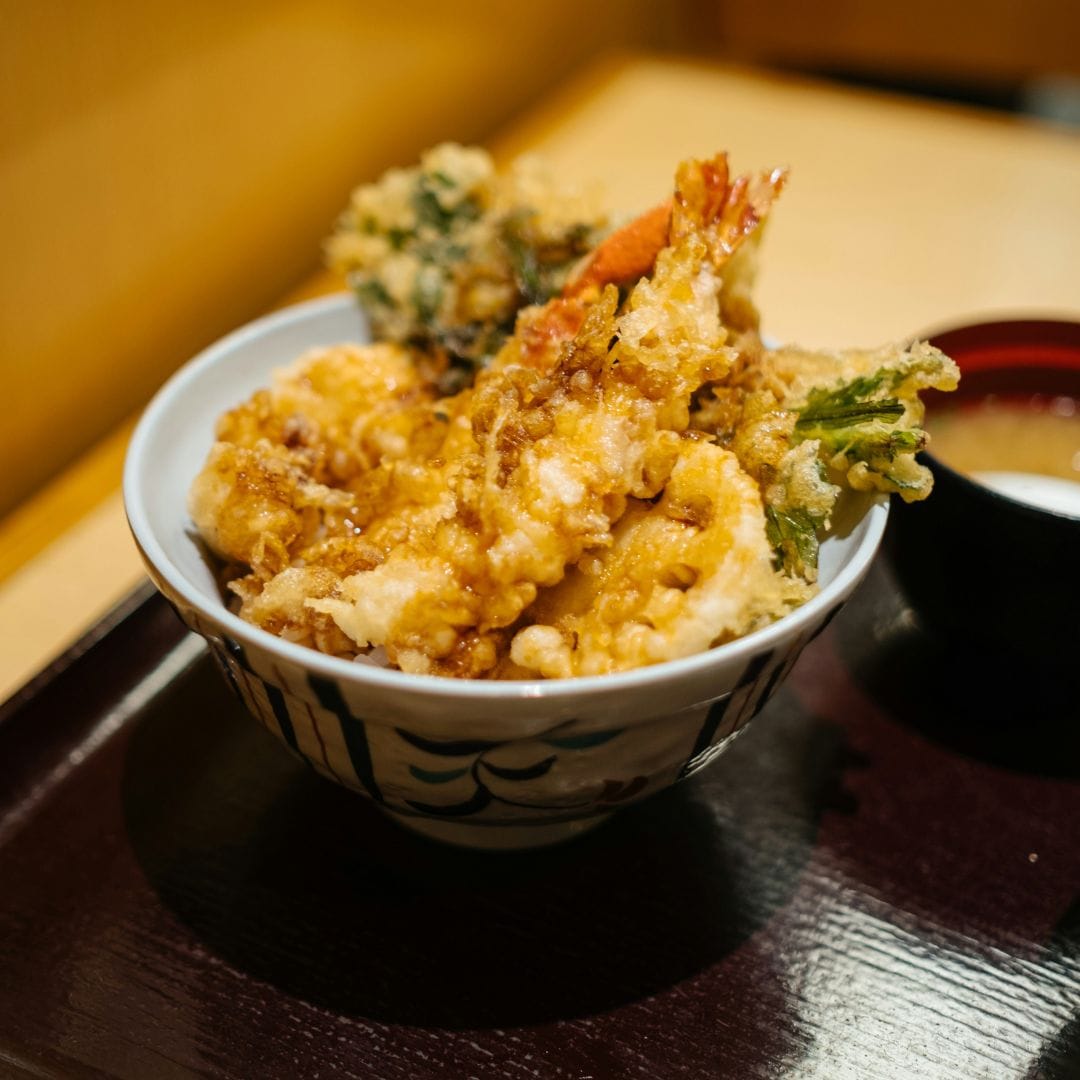
The arrival of Portuguese missionaries in Japan marked not only a turning point in the life of faith but also in gastronomy. From this cultural encounter, tempura is believed to have emerged — a fried dish originally associated with Lent.
The story dates back to the 16th century, when the first Portuguese Jesuit missionaries arrived in the Japanese archipelago to spread the Gospel. Along with their faith, they brought various European customs, including particular ways of preparing food during the liturgical seasons.
During Lent — especially on Fridays — the Church invites the faithful to practice abstinence, refraining from eating the meat of mammals and birds as a sign of sacrifice and conversion. As a result, many turn to dishes made with fish, seafood, and vegetables.
In Portugal, it was common to prepare these foods battered and fried, giving rise to a culinary style known as peixinhos da horta (“little fish from the garden”): a simple recipe of vegetables coated in a light batter and fried in oil, typical of days of fasting and penance.
While the exact origin of the name is not entirely clear, one of the most widespread theories suggests it comes from the Latin ad tempora quadragesimae, meaning “toward the time of Lent,” referring to the liturgical season when this type of dish was eaten. Over time, the expression was adapted into the local language, eventually becoming simply “tempura.”
As the years passed, this cooking technique was adopted by the local population and adapted to Japanese ingredients and tastes. In this way, tempura was born — a dish that, centuries later, would become a symbol of Japanese cuisine.
The Other Possible Origin of the Name "Tempura"
There is another possible explanation for the origin of the word.
Some sources indicate that the term may derive from the Portuguese tempero, meaning “seasoning” or “condiment,” referring to the way the food is prepared.
Although the precise origin of the name cannot be determined with absolute certainty, what is clear is that a practice born in the context of Lent ultimately became a recipe beloved throughout the world.