

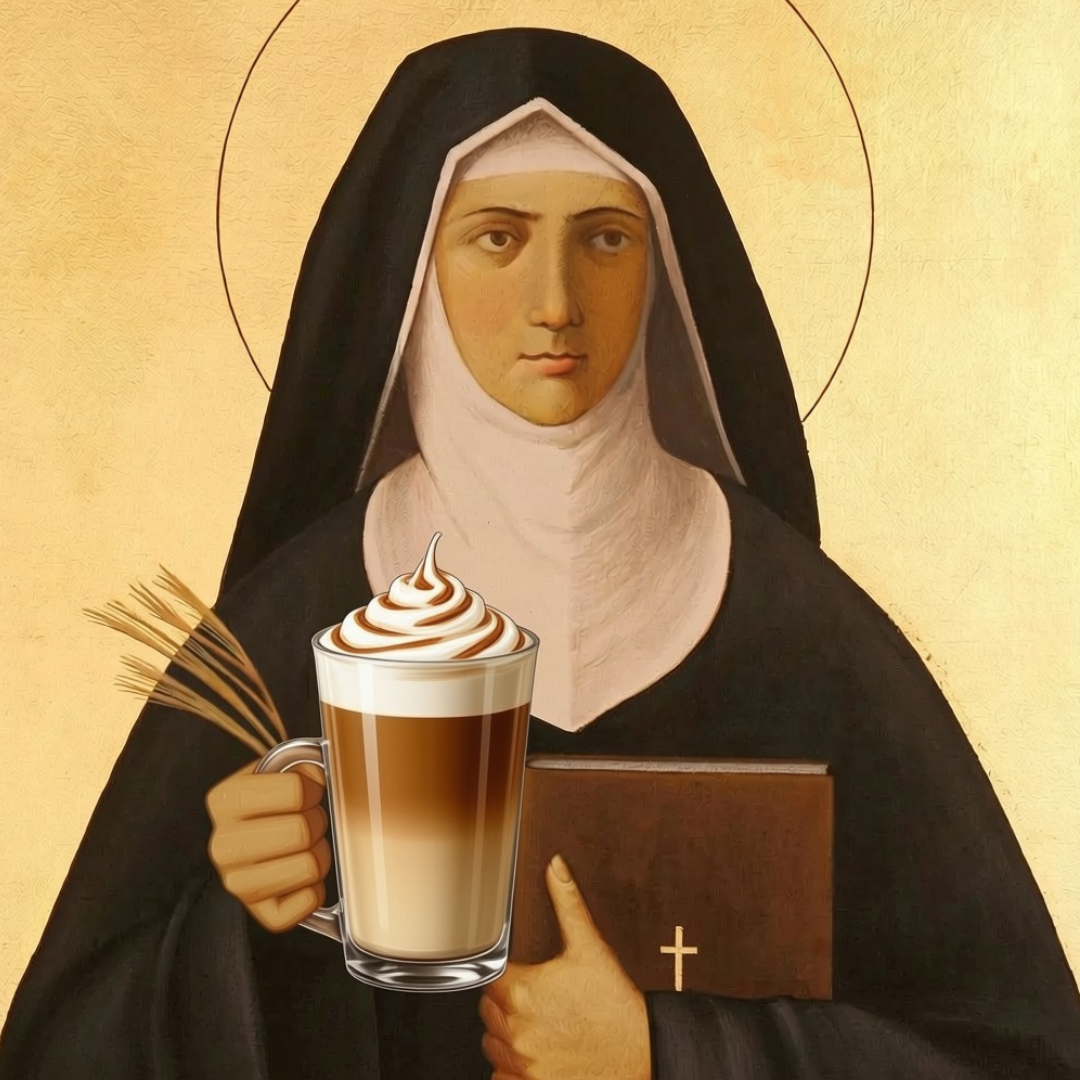
So many beloved drinks carry traces of Catholic connections. The cappuccino takes its name from the Capuchin friars; Trappist monks have brewed beer in monasteries for centuries; and the Carthusian monks of France are famously associated with Chartreuse. It also seems that a female Doctor of the Church was making history with pumpkin-spice flavors centuries before they ever trended.
St. Hildegard of Bingen is a 12th-century Benedictine abbess, mystic, and later one of the 4 female Doctors of the Church. Born in 1098 in Germany, St. Hildegard entered religious life as a child and eventually led her own convent. She said she experienced vivid visions of God from an early age, and eventually began recording them in works such as Scivias. Her writings and preaching made her a remarkable public voice in a world where women rarely held that kind of influence.
But St. Hildegard was not only known for visions. She composed sacred music, wrote about the natural world and healing plants, advised popes and emperors by letter, and developed her own practical wellness wisdom, including praise for warming spices such as nutmeg, cinnamon, and cloves.
Doesn’t that sound familiar? A warm blend of spices, nutmeg, cinnamon and cloves… Mmmm…
While Starbucks takes the credit for inventing the Pumpkin Spice Latte after debuting the drink back in 2003, the ingredients of the world-renowned fall latte are in fact nutmeg, cinnamon, cloves and spices such as ginger. The drink did not actually contain any real pumpkin until 2015. But centuries before the latte became a fall staple, St. Hildegard was already writing about some of its signature spices.
St. Hildegard Walked So Pumpkin Spice Lattes Could Run
In her natural-history work titled Physica, which she compiled between 1151 and 1158, she describes the medicinal properties and health benefits of many plants. Hildegard’s entry for nutmeg offers a prescription to “calm all bitterness of the heart and mind, open your heart and impaired senses, and make your mind cheerful. It purifies your senses and diminishes all harmful humors in you. It gives good liquid to your blood, and makes you strong…”
The saint recommended mixing nutmeg and cinnamon with a little clove, flour, and water into small cakes. She described the mixture almost as a medieval predecessor to the modern “cozy fall drink”. She was centuries ahead (literally) of the fall-flavor trend. And fittingly, her feast day is September 17th! That’s right at the beginning of fall and cozy sweater season!