

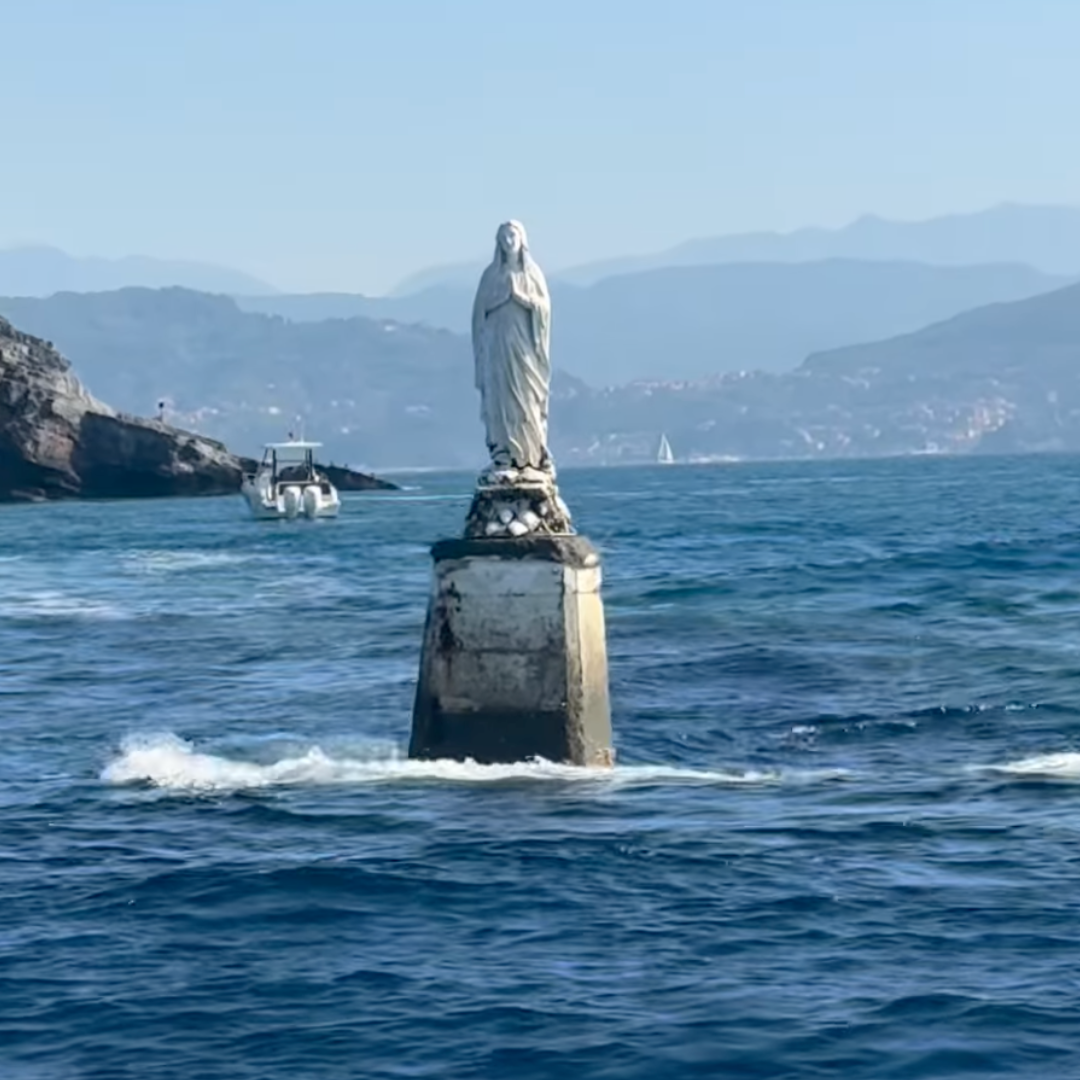
A statue of the Virgin Mary appearing to rise from the Ligurian Sea off of the Italian coast has drawn renewed attention online for the dramatic scene of the waves crashing against it, but the image tells a story deeper than a viral coastal view. Known as Stella Maris, the white marble Madonna stands near the small island of Tinetto, off Portovenere, as a Marian sign of protection and a vital warning to those navigating the waters.
A Madonna above the water
The statue stands about 6 feet tall on the Scoglio del Diavolo, or “Devil’s Rock,” a dangerous submerged shoal just south of Tinetto Island in the Gulf of La Spezia. From a boat, the figure can seem to emerge directly from the sea: the Virgin is depicted with her hands folded, facing the open waters.
The statue was installed on August 17, 2003, the feast day of Portovenere’s Madonna Bianca, as part of an initiative from volunteers connected with Stella Maris, the church serving the Port of La Spezia. In 2008, the statue was damaged by a storm, later recovered, and returned to its place as a sign of protection over the gulf.
Yet Stella Maris is not only devotional. Her placement also marks the shallow waters beneath her, alerting sailors of the long posed risk to passing vessels.
Stella Maris “Star of the Sea”
The title Stella Maris is one of the Church’s oldest and most beloved Marian invocations. For centuries, Catholics — especially those whose lives depend on the sea — have turned to Mary as a spiritual guide amid uncertainty, danger, and distance from home.
For fishermen, sailors, and families living along Italy’s coast, the image of the Blessed Virgin Mary reminds them that the Mother of God may accompany those who leave shore, guide them through storms, and bring them safely home.
Connection to the Madonna Bianca of Portovenere
The modern statue also belongs to Portovenere’s much older Marian story. According to local tradition, devotion to the Madonna Bianca grew after an event in 1399. During a plague, a local man named Lucciardo prayed before a faded parchment image of the Virgin and Child. The image was said to have become luminous and regained its color; the people later attributed the event with the end of the plague. The icon, believed in tradition to have arrived by sea inside a cedar log with relics in 1204, is preserved at the Church of San Lorenzo.
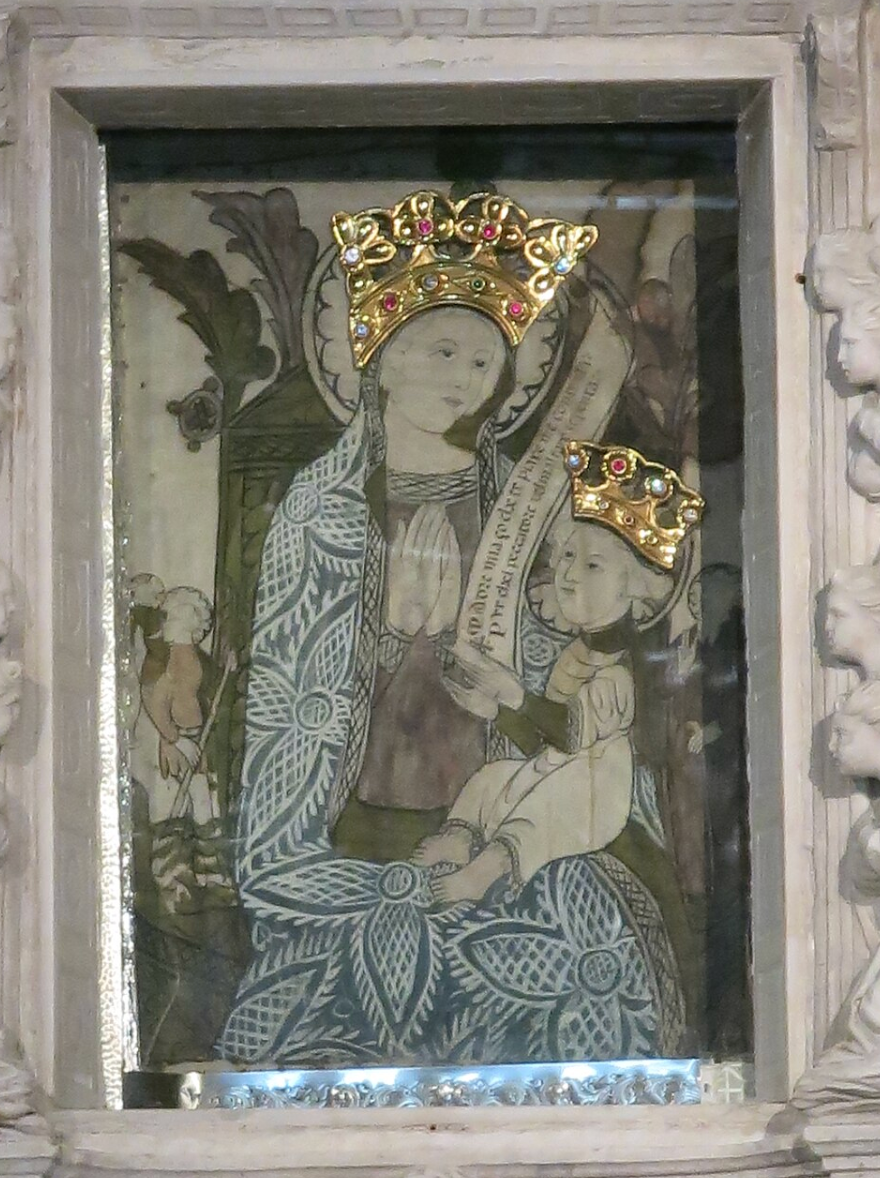
That history helps explain why the sea statue resonates so strongly. The Stella Maris near Tinetto and the Madonna Bianca venerated in Portovenere are not the same object, but both express the town’s enduring Marian identity: a people of the coast entrusting their village, its waters, and those who travel upon them to the care of the Virgin Mary.
More than a viral image
In Portovenere, Mary is not portrayed as distant from daily life. She is present at the edge of the sea: a guardian for sailors, a warning at a dangerous shoal, and a reminder of the hope Christians place in the one they call the Star of the Sea. While the world learns of this statue through social media, the locals have always known she is there to help protect them.