

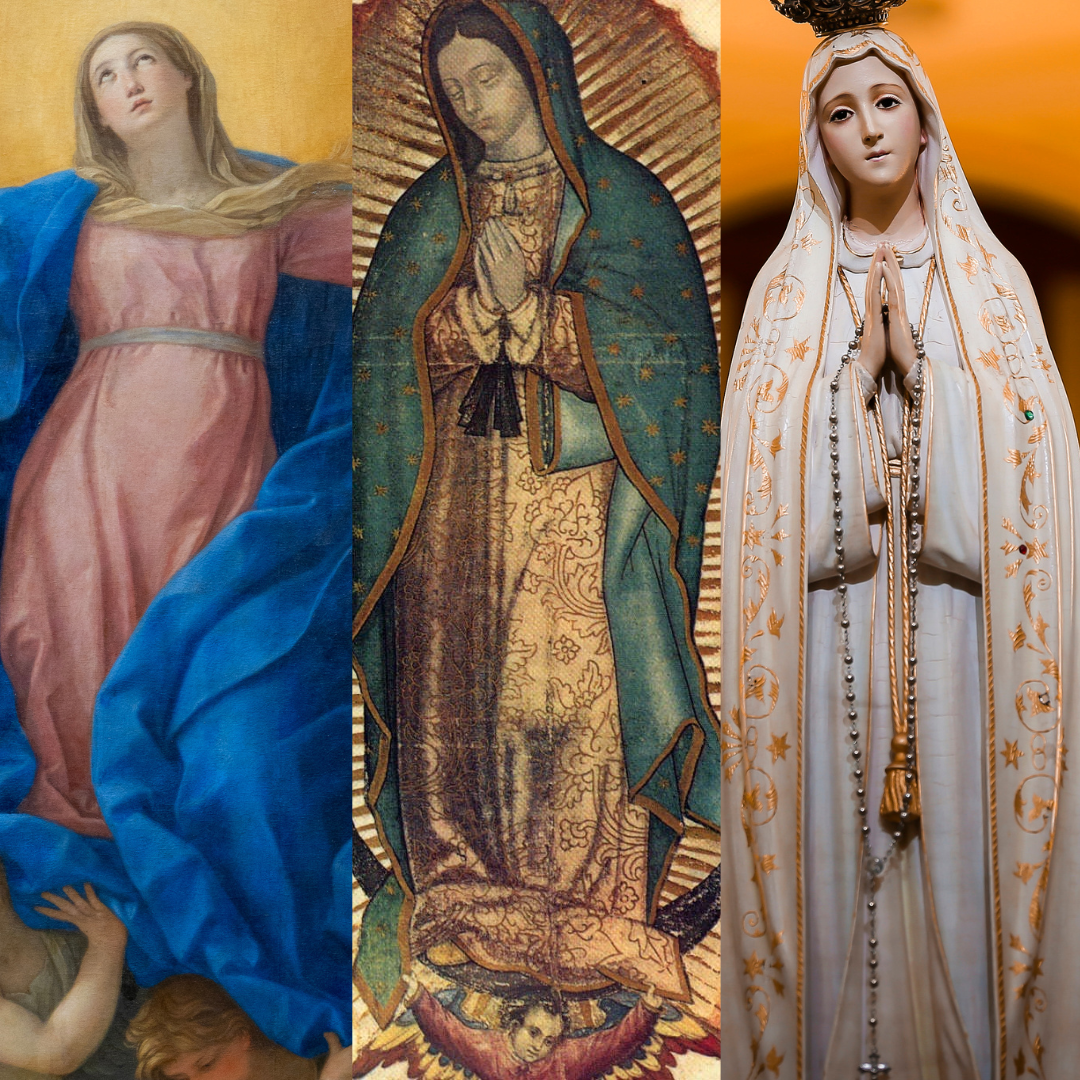
Throughout more than two thousand years of Christian art, the Virgin Mary has been portrayed in different garments. Far from simply reflecting the fashion of a particular era, these depictions express a profound symbolic and spiritual language. Every color, mantle, crown, and accessory conveys a virtue, a mystery of the faith, or a specific moment in her life.
Although the Gospels do not describe the clothing Mary wore, Christian tradition, Byzantine iconography, and Western art developed a series of representations now recognized around the world. Many Marian titles retain these symbolic elements, making each “outfit” a true visual catechesis.
Inspired by a video from the account Sary | Outfit Diary of the Saints, we share these five iconic outfits of the Virgin Mary and the spiritual meaning of each:
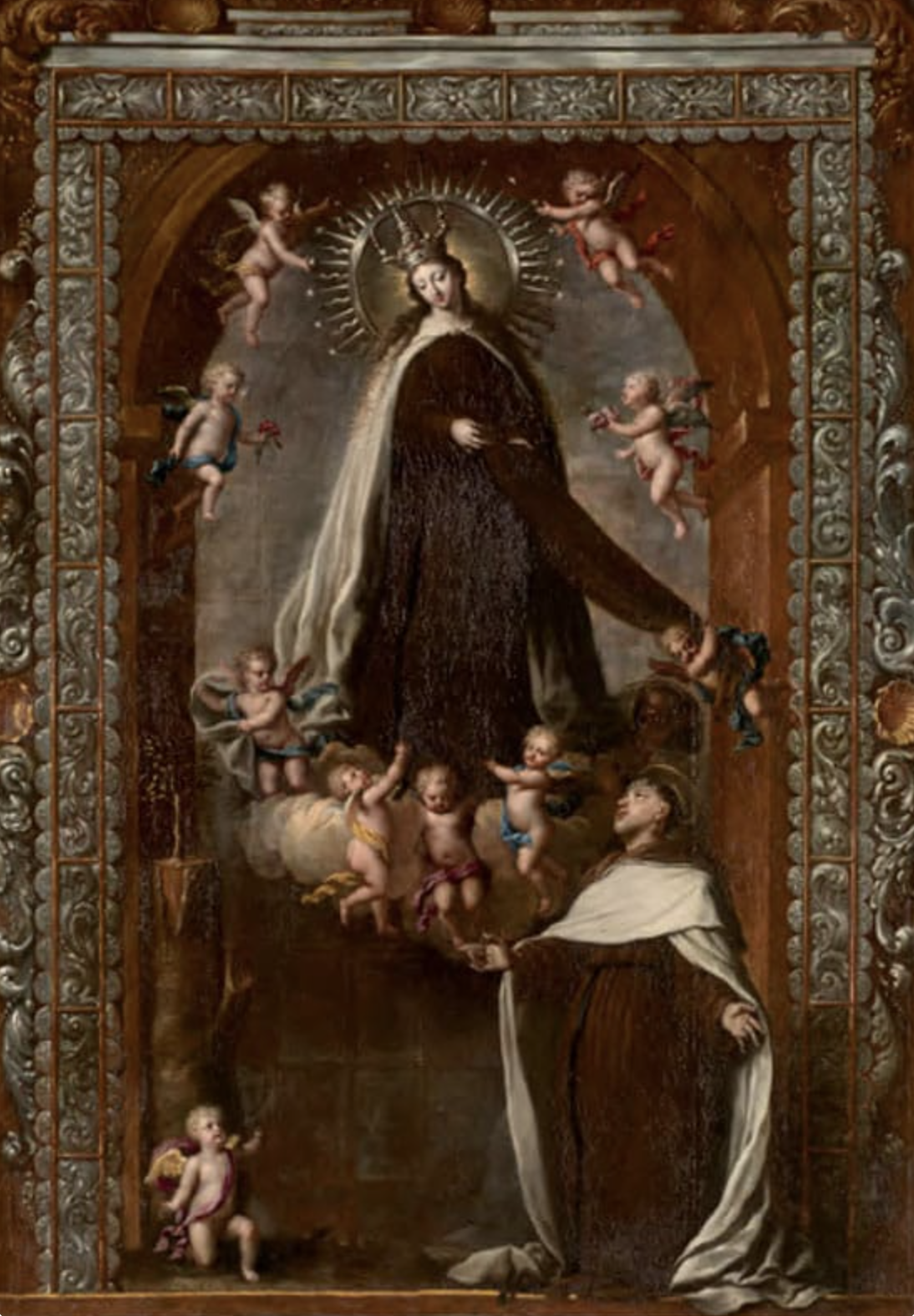
1. Our Lady of Mount Carmel
Since the apparition of the Virgin to St. Simon Stock in 1251, Our Lady of Mount Carmel has become one of the Marian titles most venerated by Catholics. In art, she is often portrayed with:
A brown scapular, shown either held in her hand or being given to St. Simon Stock.
The Child Jesus in one arm, emphasizing her role as the Mother of Christ.
A crown, expressing her status as Queen of Heaven.
A wide white, cream, or golden mantle, a sign of Mary’s purity, protection, and heavenly dignity.
A long brown tunic, symbolizing the simplicity, humility, and life of prayer characteristic of Carmelite spirituality.
Taken together, the attire of Our Lady of Mount Carmel communicates a message of protection, humility, and maternal closeness. It has inspired Catholics who live Carmelite spirituality, as well as countless others who seek refuge under her care.
2. The Immaculate Conception
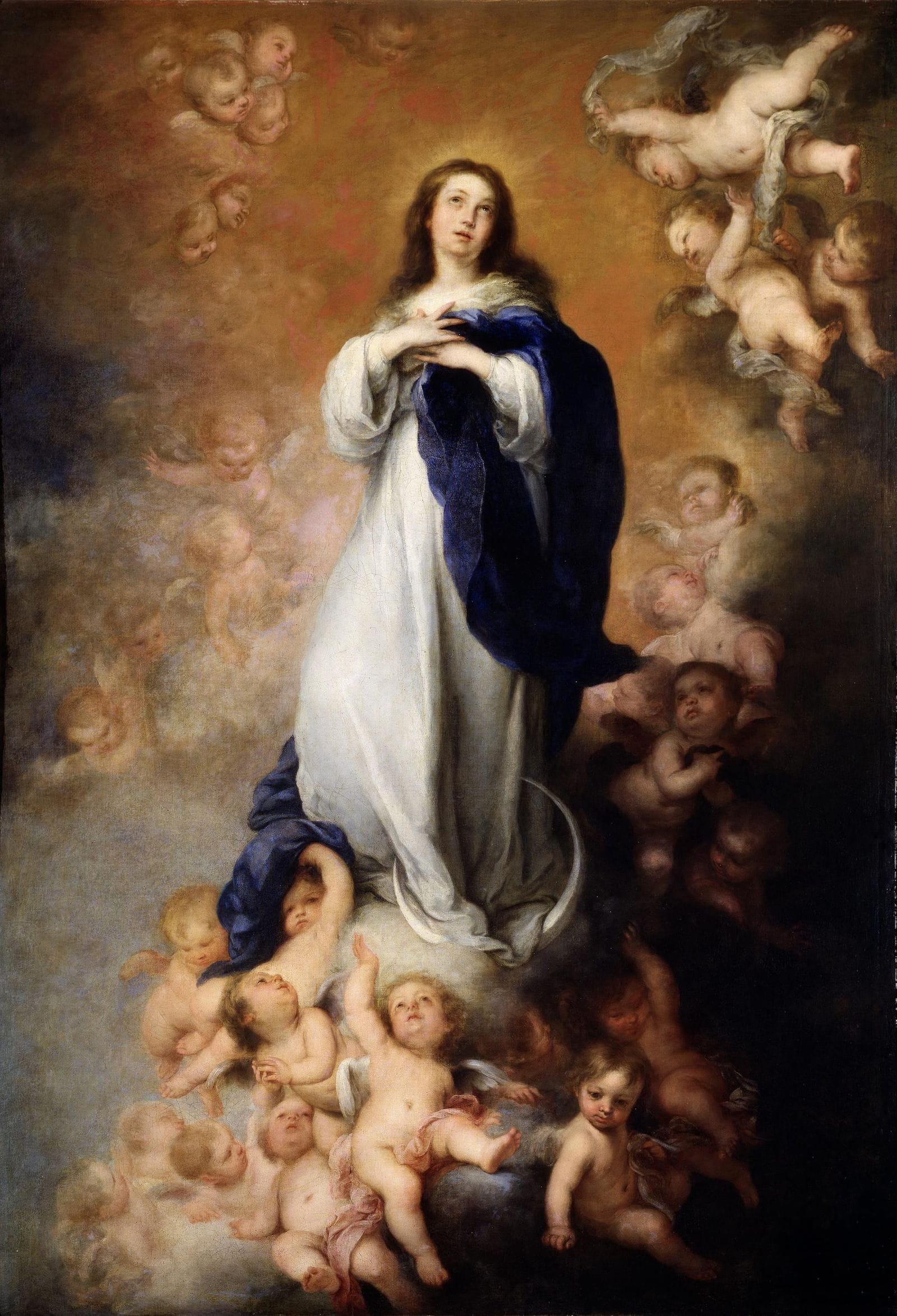
Inspired especially by 17th-century Spanish painting and by the apparition to St. Bernadette in the grotto of Lourdes, Our Lady wears one of her most recognizable and beautiful “outfits.” Her traditional white tunic, sky-blue mantle, crown of twelve stars, moon beneath her feet, cloud with angels, and folded hands are particularly notable.
Each element has a biblical reference. The crown of twelve stars comes from the Book of Revelation (12:1): “A woman clothed with the sun, with the moon under her feet, and on her head a crown of twelve stars.” It represents triumph over sin, spiritual royalty, the twelve tribes of Israel, and the twelve Apostles. The moon symbolizes that Mary reflects the light of Christ just as the moon reflects the light of the sun, while her white garment refers to her Immaculate Conception.
It is one of the most recognized and frequently depicted images in art, highlighting the essential features of Marian devotion.
3. Our Lady of Guadalupe
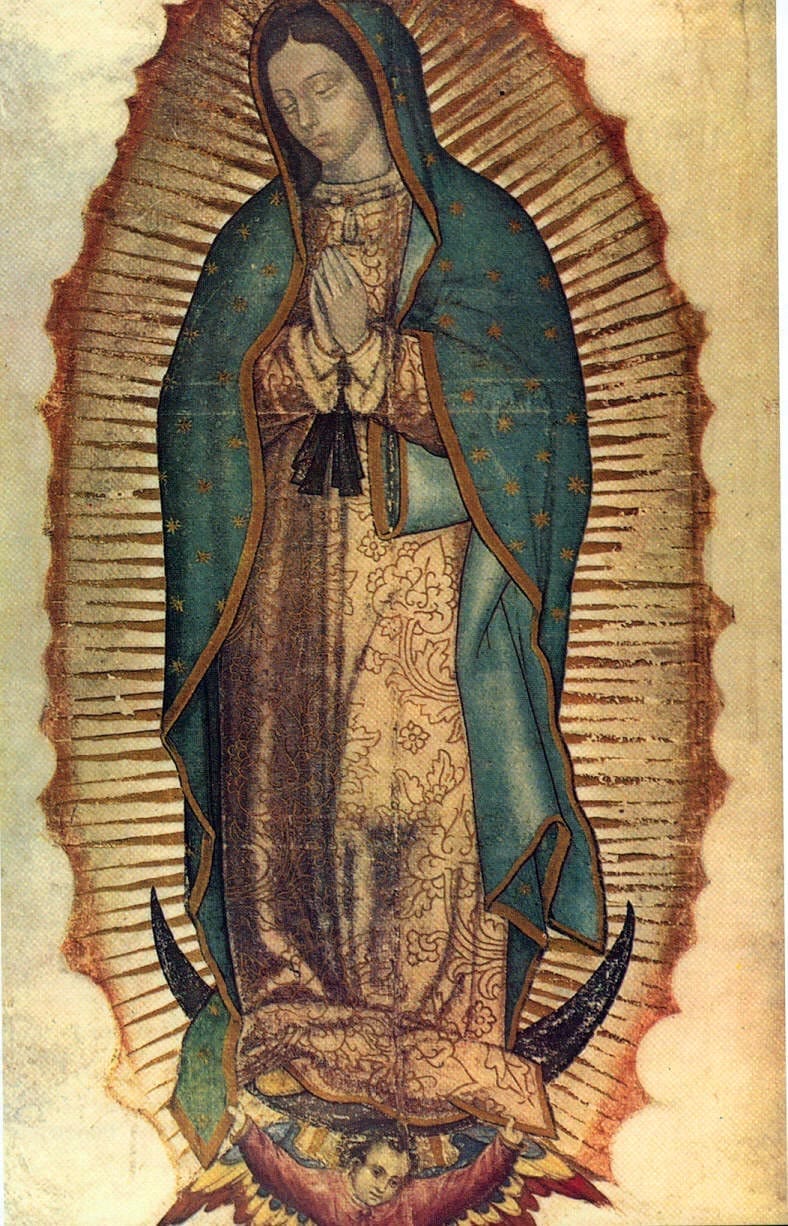
The Guadalupan image’s “outfit,” filled with Indigenous and Christian symbols, is among the most studied symbolic ensembles in history. She appears in a rose-colored tunic, a blue-green mantle covered with stars, a black sash around her waist, and golden rays. Behind her, an angel holds up the mantle, whose color carried particular meaning for the people living in Mexico at the time of the apparition: it represented the divine and was worn only by emperors.
According to various iconographic studies, the stars correspond to celestial configurations visible on the days of the apparitions. The black sash is an Indigenous symbol of pregnancy: Mary appears as the Mother carrying Jesus in her womb, clothed in God’s glory while pointing to Christ as the source of light.
Our Lady of Guadalupe is one of the most beloved and admired Marian titles because of her beauty and the profound richness present in every detail.
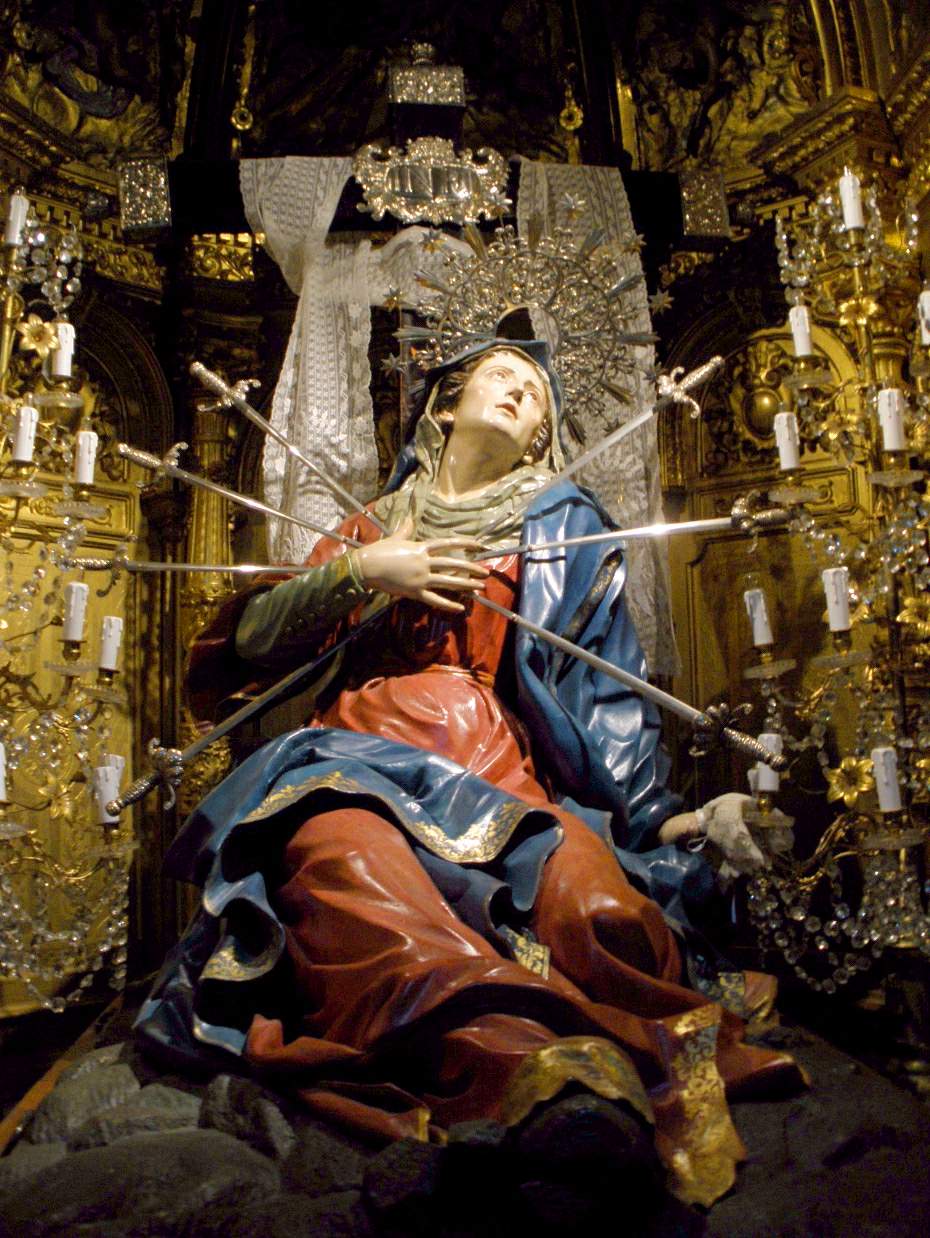
4. Our Lady of Sorrows
This attire of suffering and compassion portrays Mary during the Passion of her Son. The dark garment—either a black or blue mantle—the heart pierced by swords, and the tears on her bowed face signify a sorrow filled with silence and hope.
The most iconic image of Our Lady of Sorrows shows Mary’s heart pierced by seven swords, representing her Seven Sorrows: the prophecy of Simeon, the flight into Egypt, the loss of the Child Jesus in the Temple, the meeting on the road to Calvary, the Crucifixion, the descent from the Cross, and the burial of her Son.
The principal foundation of this traditional depiction is found in the Gospel of Luke. When Mary presents the Child Jesus in the Temple, the elderly Simeon tells her: “And you yourself a sword will pierce” (Luke 2:35). During the Middle Ages, especially in the 13th and 14th centuries, Christian spirituality began to reflect more deeply on Mary’s sufferings. The Order of the Servants of Mary, or Servites, founded in Italy in 1233, played a decisive role in spreading this devotion.

5. Our Lady of Fatima
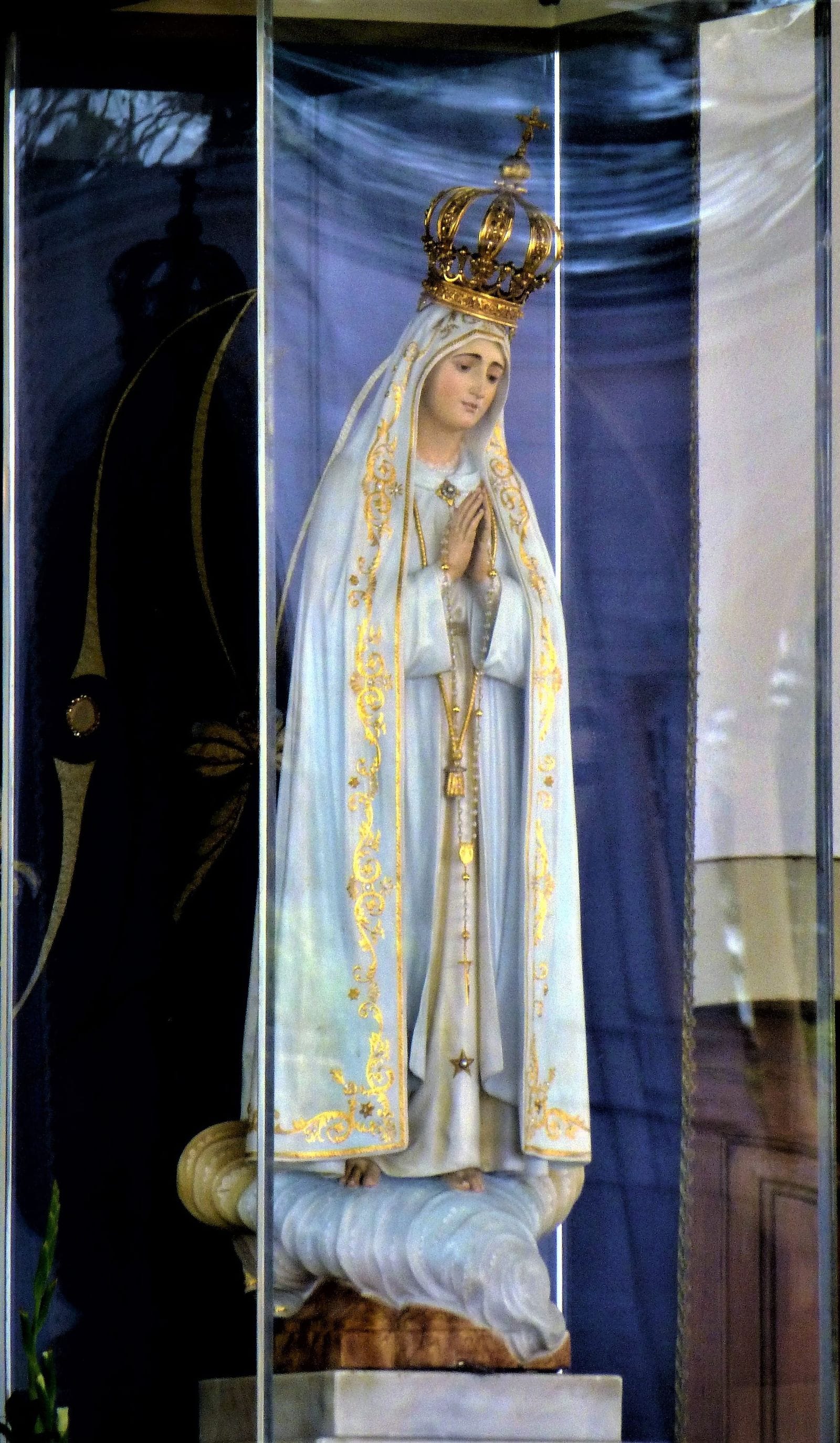
Since the 1917 apparitions, this representation has become one of the most widespread of the 20th century. Its distinguishing elements are a white dress, a white veil with golden details, a rosary, a heart surrounded by thorns, and a golden crown. Here, the Blessed Virgin Mary appears simply, elegantly, and beautifully dressed, revealing her purity.
This attire reminds us of the constant call to prayer and of Mary’s merciful love for humanity. She looks upon us with tenderness and invites us to conversion.

Why Does Mary Appear Dressed in Different Ways?
These various representations do not seek to portray how Mary historically dressed in first-century Palestine. Rather, they express aspects of her identity and of our faith. For this reason, both Marian apparitions and artists have adopted colors, symbols, and ornaments according to the cultural context and theological teaching of each era.
Thus, the same figure may appear in different attire to emphasize her motherhood, purity, compassion, or role in a particular Marian devotion.