

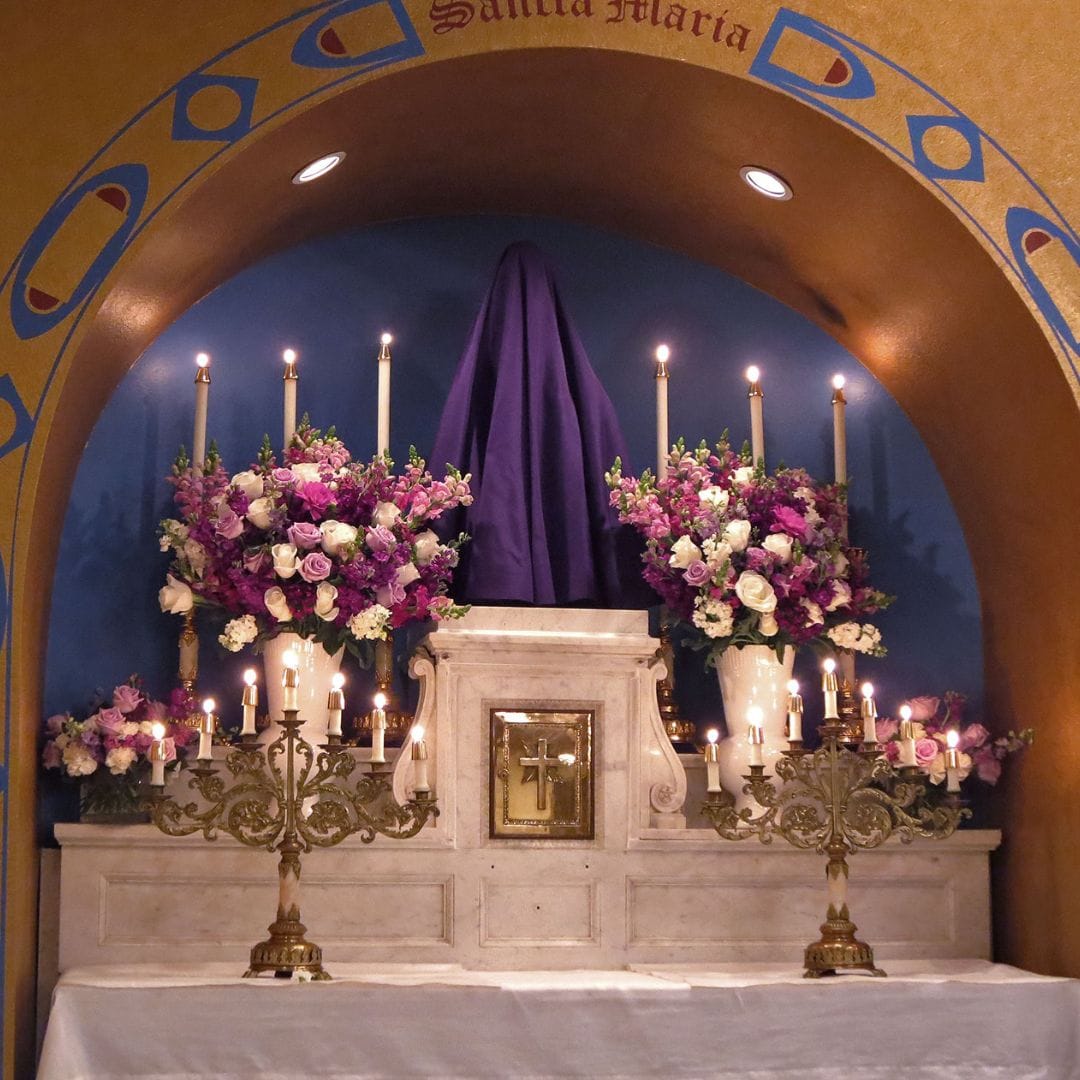
Following the Mass of the Lord’s Supper on Holy Thursday, there’s an ancient Catholic tradition to make a pilgrimage to seven churches.
Each of the seven churches mirrors the final seven places Christ visited – from the moment he entered his Passion to His Death at Calvary (listed at the end of this article).
We can trace the origins of this Lenten tradition to the mid-16th century in Rome.
Saint Philip Neri (1515–1595), also known as the "Second Apostle of Rome" after Saint Peter, led many devotees on a walking pilgrimage through the cobblestone streets of Rome, visiting the seven basilicas.
Born into a noble working family in Florence, Italy, Saint Philip was destined for a much greater purpose. He left everything behind to start a life in Rome as a missionary and healer of broken souls.
With the Church and the people of Rome in dire need of spiritual renewal and revival, Saint Philip sought to guide the flock entrusted to his care to live a holier, virtuous, and joyful life.
Saint Philip walked the path of a poor pilgrim, often roaming through the ancient streets of Rome each day and visiting the seven pilgrim churches, the forgotten catacombs, and the tombs of the great saints. He worked relentlessly for the salvation of souls.
With his infectious spirit of joy, profound ability to befriend others, and burning love for all souls – whether sinners, unbelievers, or the broken – Saint Philip won over souls and led many to Christ.
In the jubilant words of Saint Philip Neri:
“Cheerfulness strengthens the heart and helps us to persevere. A servant of God ought always to be in good spirits. Charity and cheerfulness, or charity and humility, should be our motto.”
And so, to bring hope, joy, peace, and unity to the people of Rome at a time when the vices of pride, corruption, and materialism were prevalent, and many Catholics were lukewarm, Saint Philip found creative ways to revive the faith.
From confraternities, community gatherings, evening prayers, the reading of Scripture, preaching, hymns, and the recitation of the Psalms and litanies, many gathered together in a spirit of joy and solidarity to walk together on the pilgrimage to eternity.
Saint Philip began the tradition of walking the Seven Churches in Holy Week in the dead of night, reflecting on the Passion of Christ.
As Our Lord fervently prayed before His Passion in the Garden of Gethsemane, He asked the disciples,
“Were you not able to keep watch with Me for one hour?” (Matt. 26:40).
Christ stood alone in this moment – abandoned and afraid. He then told Peter,
“Watch and pray so that you will not enter into temptation. For the spirit is willing, but the flesh is weak.”
In our fast-paced world, where work, fatigue, problems, busy schedules, spiritual laziness, excuses, social media, and distractions often stand in the way of the spiritual life, let us strive to keep Christ company this Holy Week and to walk in the ancient footsteps of Saint Philip Neri.
Let us not forsake Our Lord during the darkest hours of His life, and let us find creative ways to reignite our zeal, faith, and fiery love for Christ and others, so that we may help rebuild our Church today.
Following Christ’s call to stay awake and pray with Him during His agony in the garden, you are invited to make a pilgrimage to seven different churches this Holy Thursday and keep Christ company.
You can kneel before the Altar of Repose at each church and spiritually accompany Christ in adoration by reflecting on each of the final seven stations where Christ journeyed before His Passion and Death.