


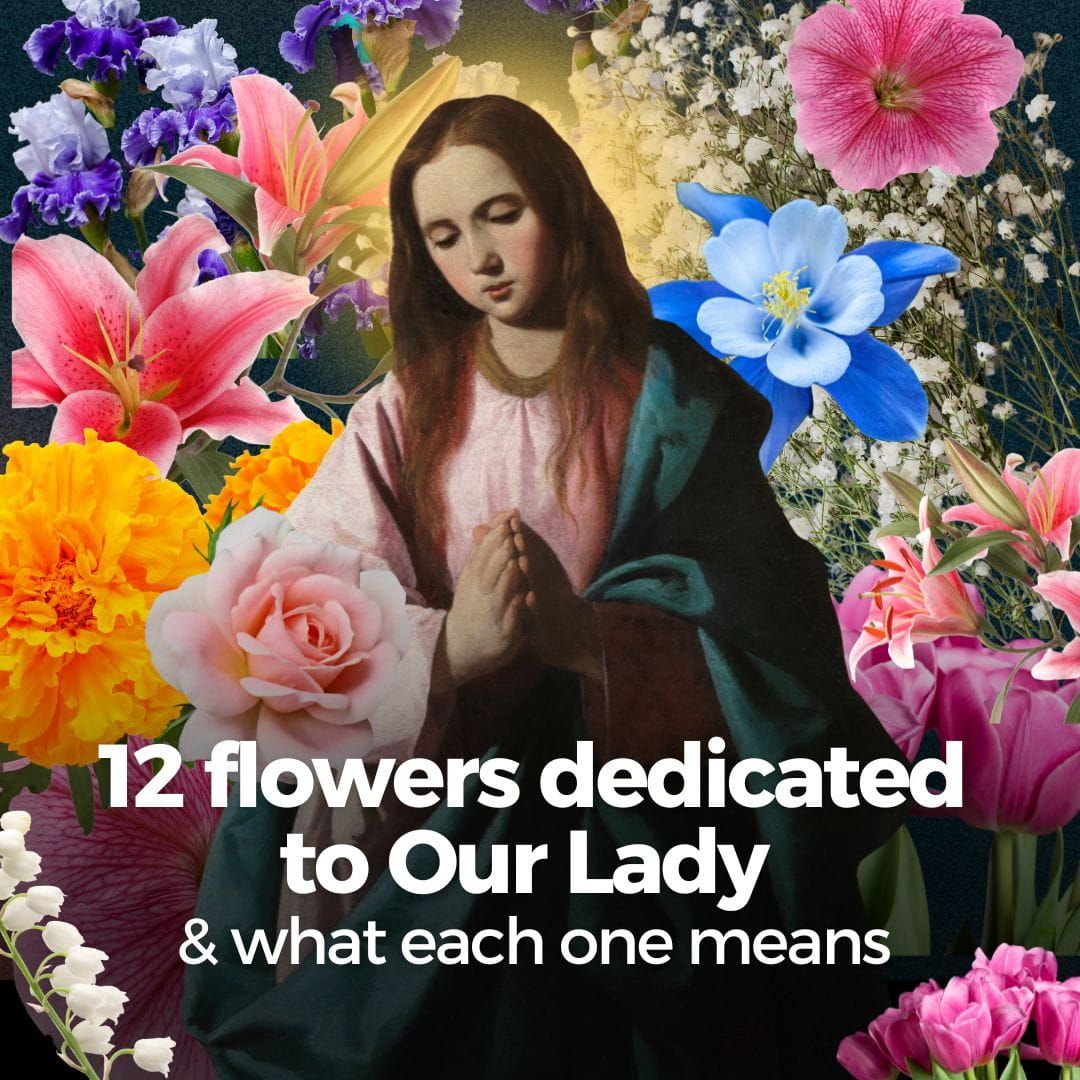
This is a beautiful way to honor our Blessed Mother!
You might not know it, but your flower garden could be a beautiful nod to Our Blessed Mother.
In Catholic tradition, each flower associated with Mary reflects a different aspect of her life and character, from her purity and humility to her maternal love and heavenly glory. They serve as gentle reminders of Mary’s closeness to God and her intercession for all her children.
Knowing the symbolism behind these flowers is a great reminder to pray for Our Lady’s intercession and a tool for evangelization.
The following list highlights just some of the flowers Catholic tradition dedicates to Mary:
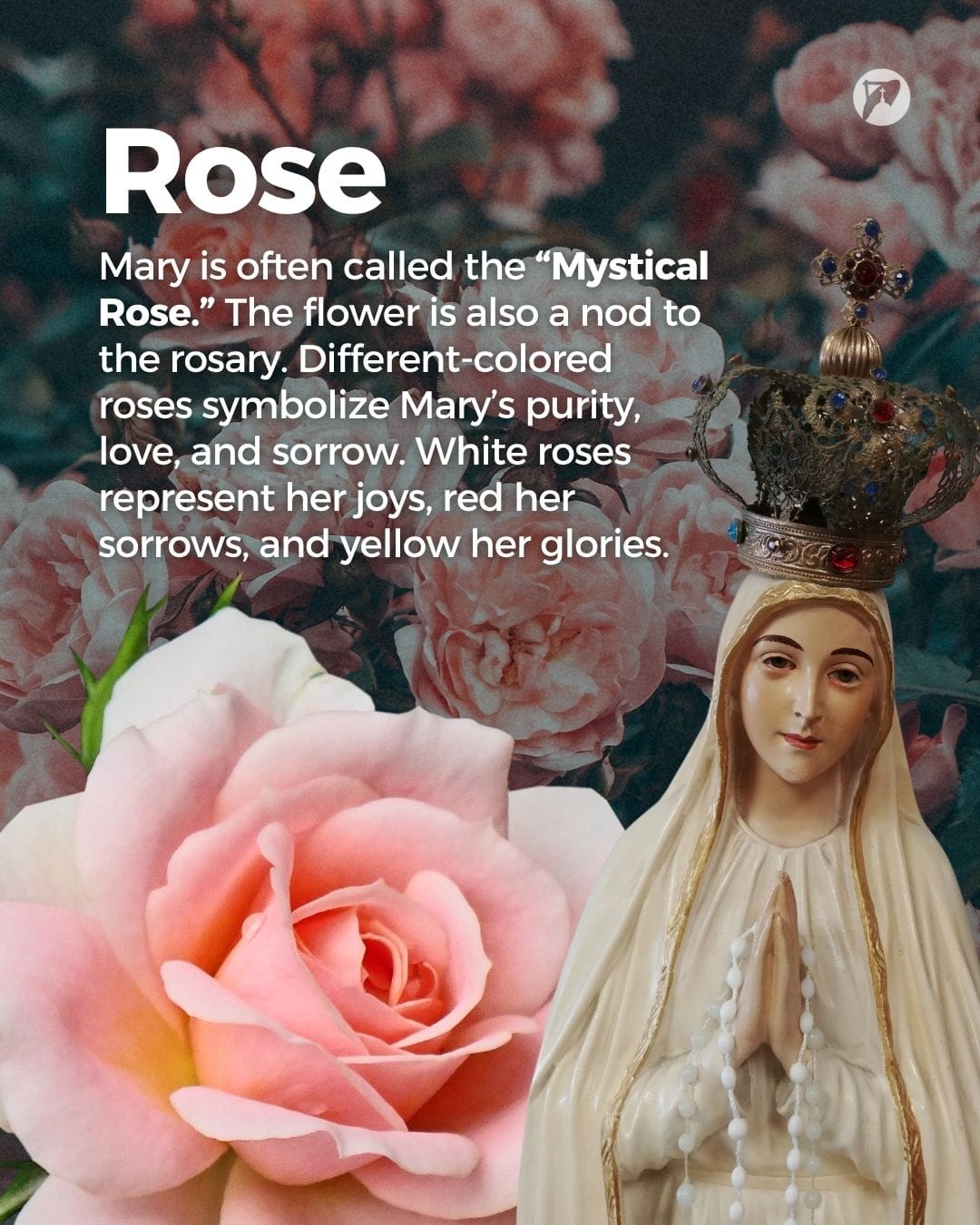
Rose: Mary is often called the “Mystical Rose.”
The flower is also a nod to the rosary. Different-colored roses symbolize Mary’s purity, love, and sorrow. White roses represent her joys, red her sorrows, and yellow her glories.
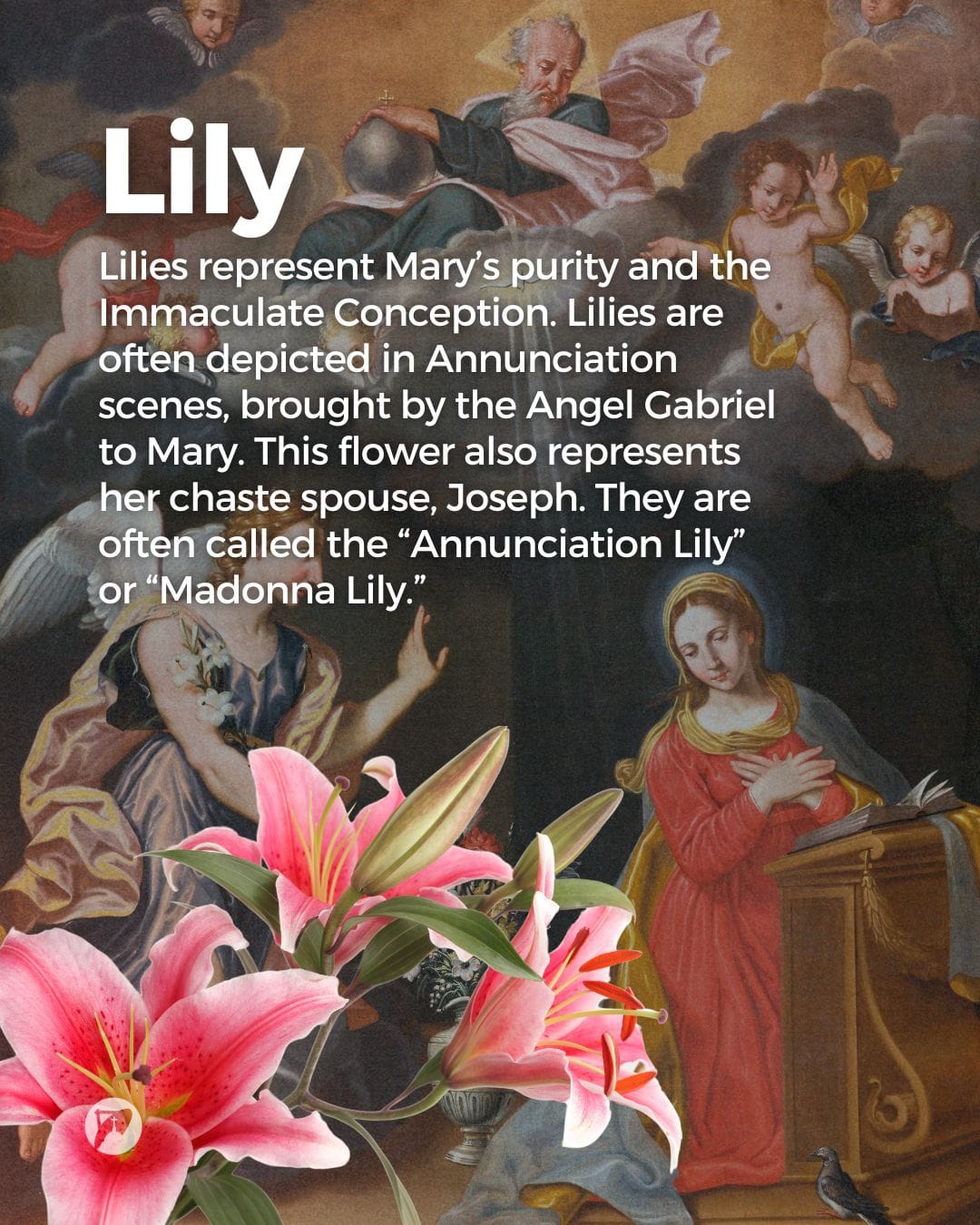
Lily: Lilies represent Mary’s purity and the Immaculate Conception.
In depictions of the Annunciation, the Angel Gabriel is often shown presenting lilies to Mary. This flower also symbolizes her chaste spouse, Saint Joseph.
They are often called the “Annunciation Lily” or “Madonna Lily.”
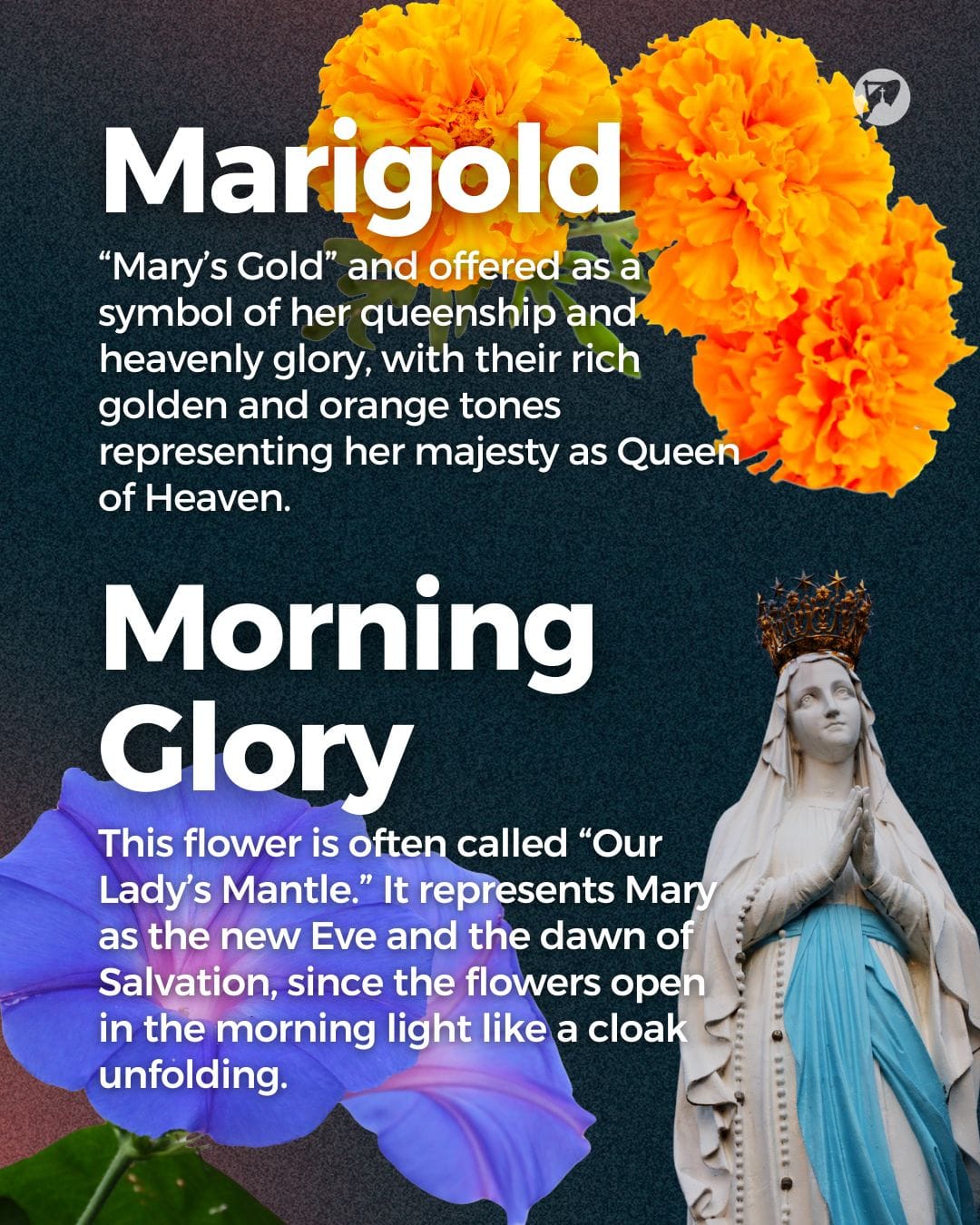
Marigold: “Mary’s Gold” symbolizes her queenship.
Marigolds are traditionally called “Mary’s Gold” and offered as a symbol of her queenship and heavenly glory, with their rich golden and orange tones representing her majesty as Queen of Heaven.
Morning Glory: This flower is often called “Our Lady’s Mantle.”
Morning glories are sometimes called “Our Lady’s Mantle,” symbolizing Mary as the new Eve and the dawn of salvation, since the flowers open in the morning light like a cloak unfolding.
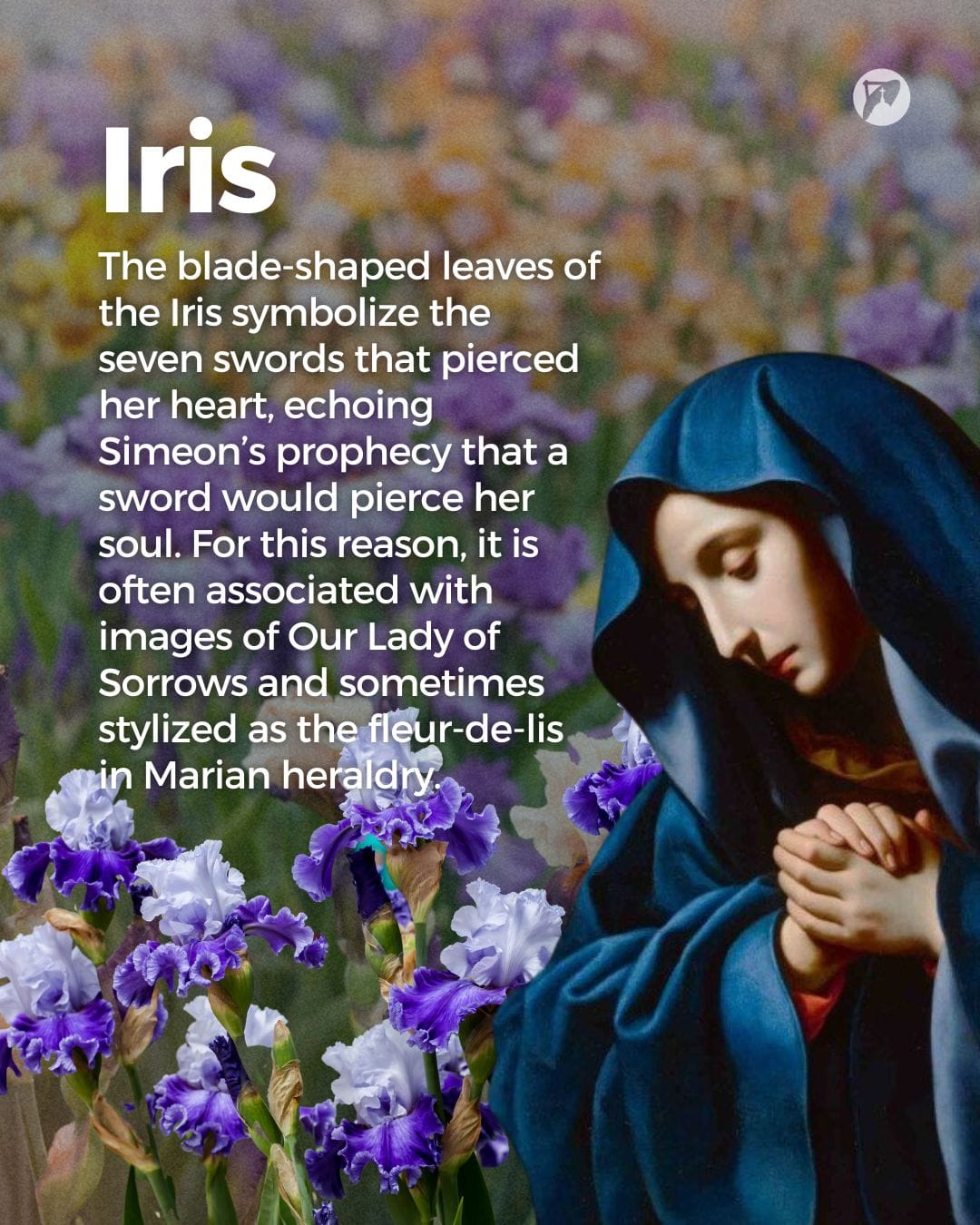
Iris: This flower represents Our Lady of Sorrows.
The blade-shaped leaves of the Iris symbolize the seven swords that pierced her heart, echoing Simeon’s prophecy that a sword would pierce her soul. For this reason, it is often associated with images of Our Lady of Sorrows and sometimes stylized as the fleur‑de‑lis in Marian heraldry.
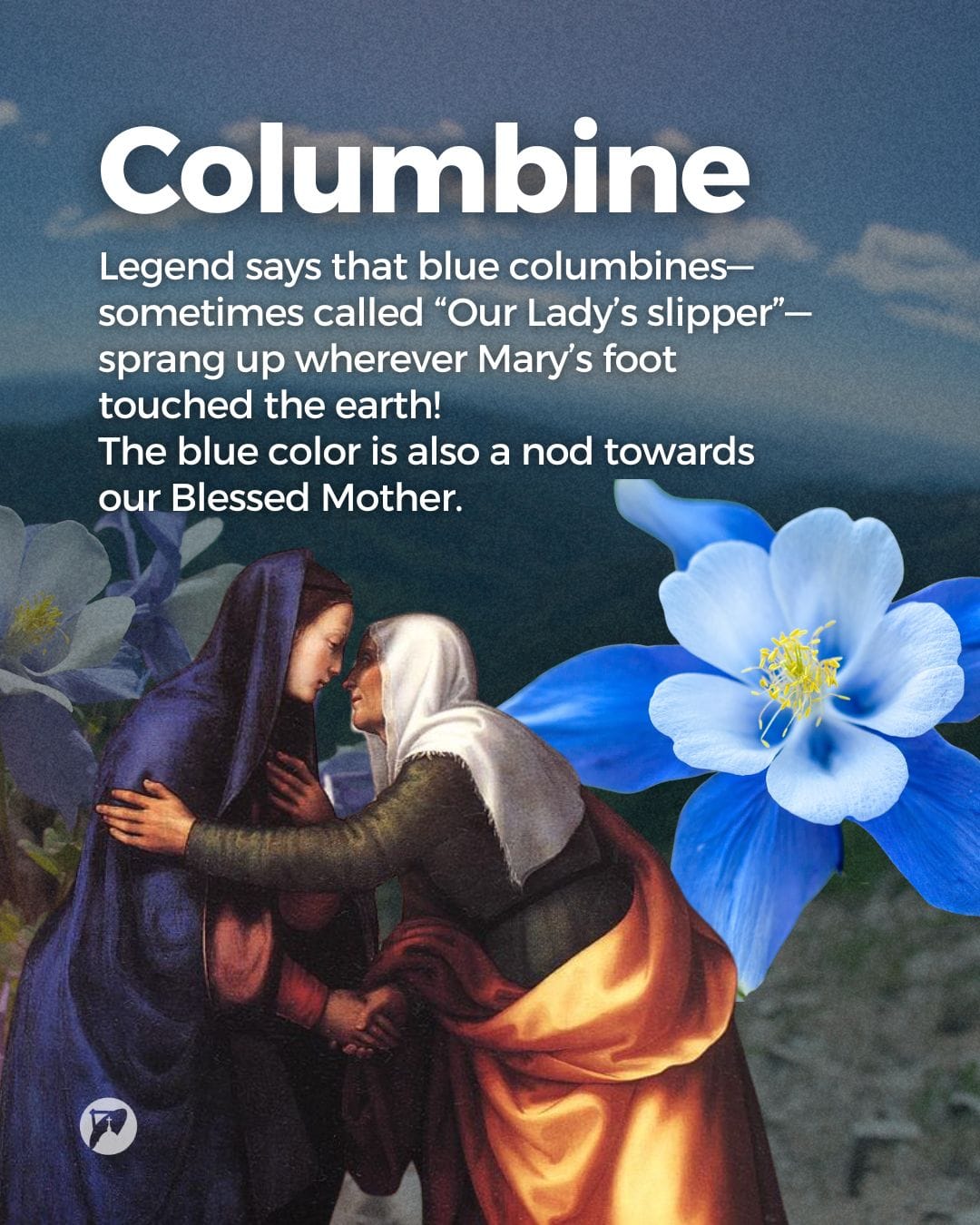
Columbine: This flower is also considered “Our Lady’s Slipper.
Legend says that blue columbines—sometimes called “Our Lady’s slipper”—sprang up wherever Mary’s foot touched the ground on her way to visit Elizabeth. Their blue color also recalls the traditional blue of Mary’s mantle in Christian art.
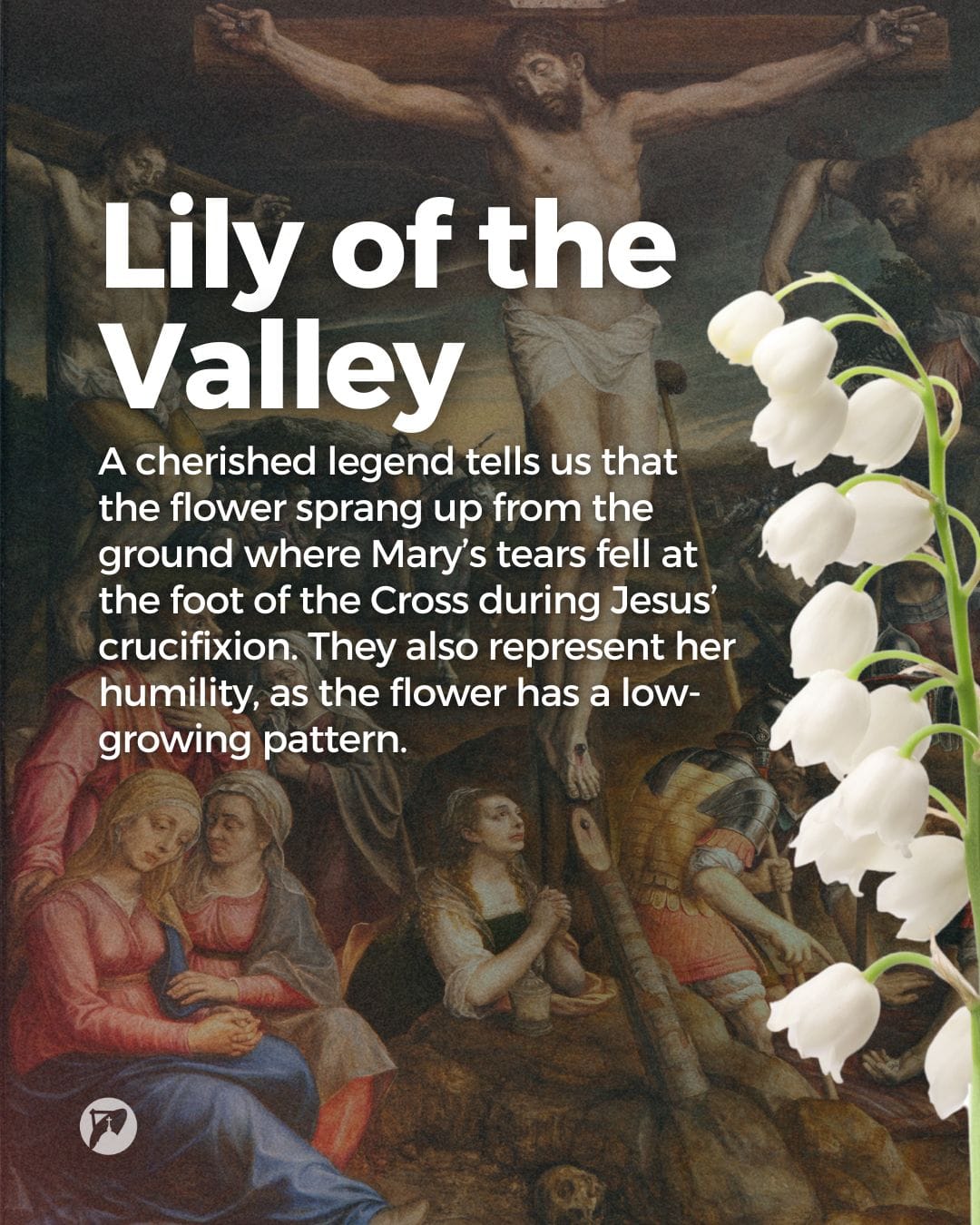
Lily of the Valley: This flower represents “Our Lady’s Tears.”
A cherished legend tells us that the flower sprang up from the ground where Mary’s tears fell at the foot of the Cross during Jesus’ crucifixion. They also represent her humility, as the flower grows low to the ground.
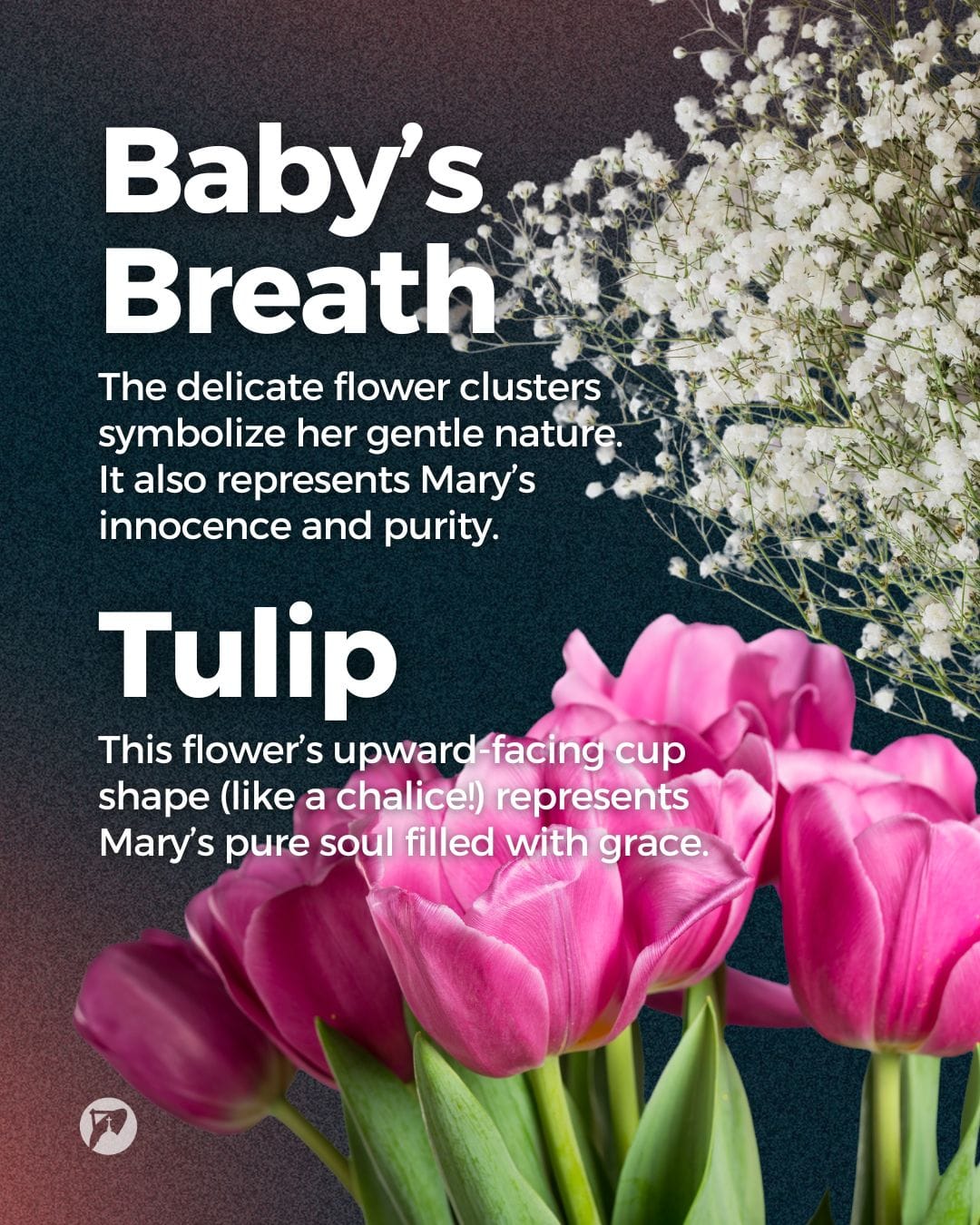
Baby’s Breath: This flower is often referred to as the veil of Mary.
The delicate flower clusters symbolize her gentle nature. It also represents Mary’s innocence and purity.
Tulip: Mary’s soul “full of grace.”
This flower’s upward-facing cup shape (like a chalice) represents Mary’s pure soul filled with grace.
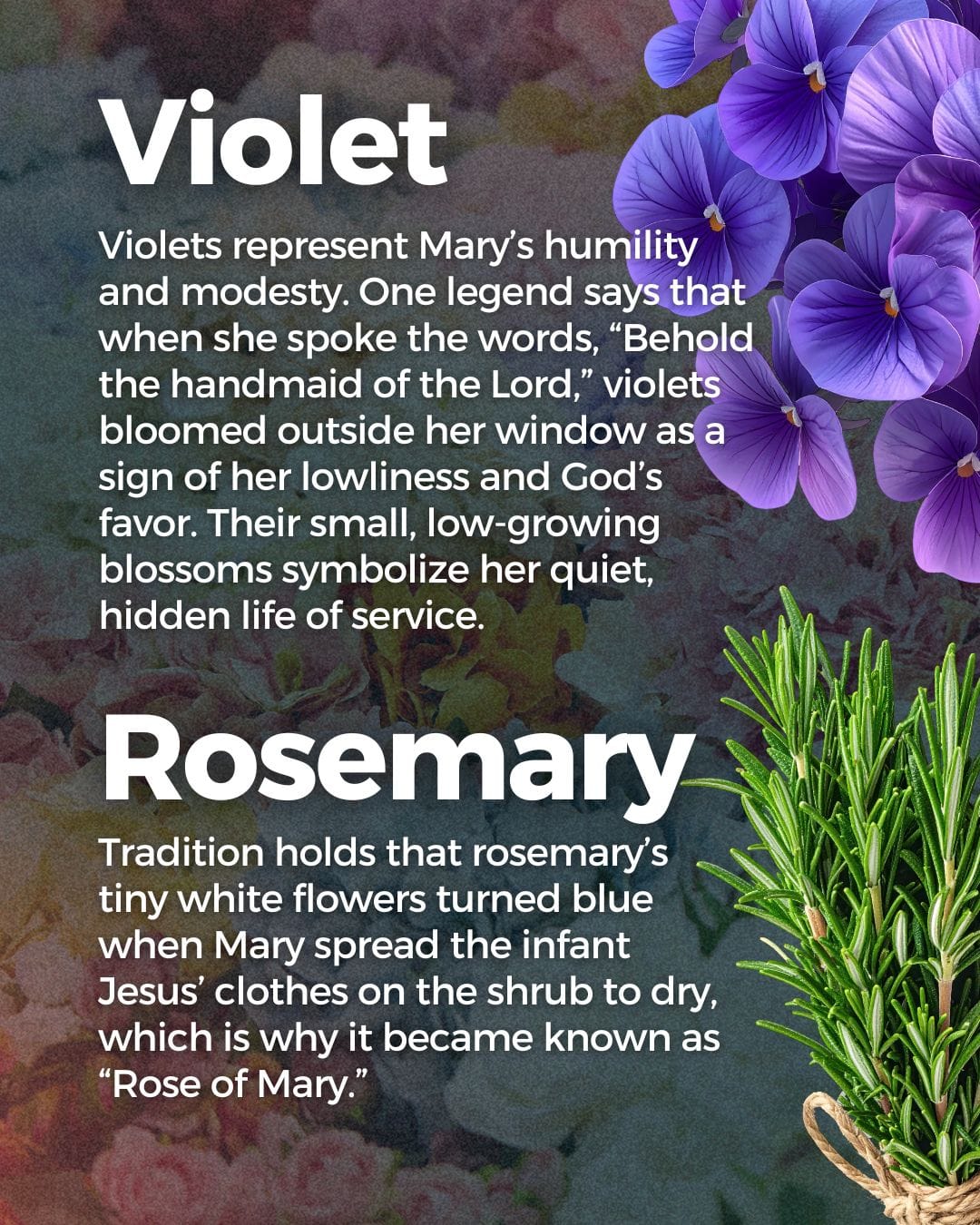
Violet: Mary’s humility and hidden life.
Violets represent Mary’s humility and modesty. One legend says that when she spoke the words, “Behold the handmaid of the Lord,” violets bloomed outside her window as a sign of her lowliness and God’s favor. Their small, low‑growing blossoms symbolize her quiet, hidden life of service.
Rosemary: This flower is known as the “Rose of Mary.”
Tradition holds that rosemary’s tiny white flowers turned blue when Mary spread the infant Jesus’ clothes on the shrub to dry, which is why it became known as “Rose of Mary.”
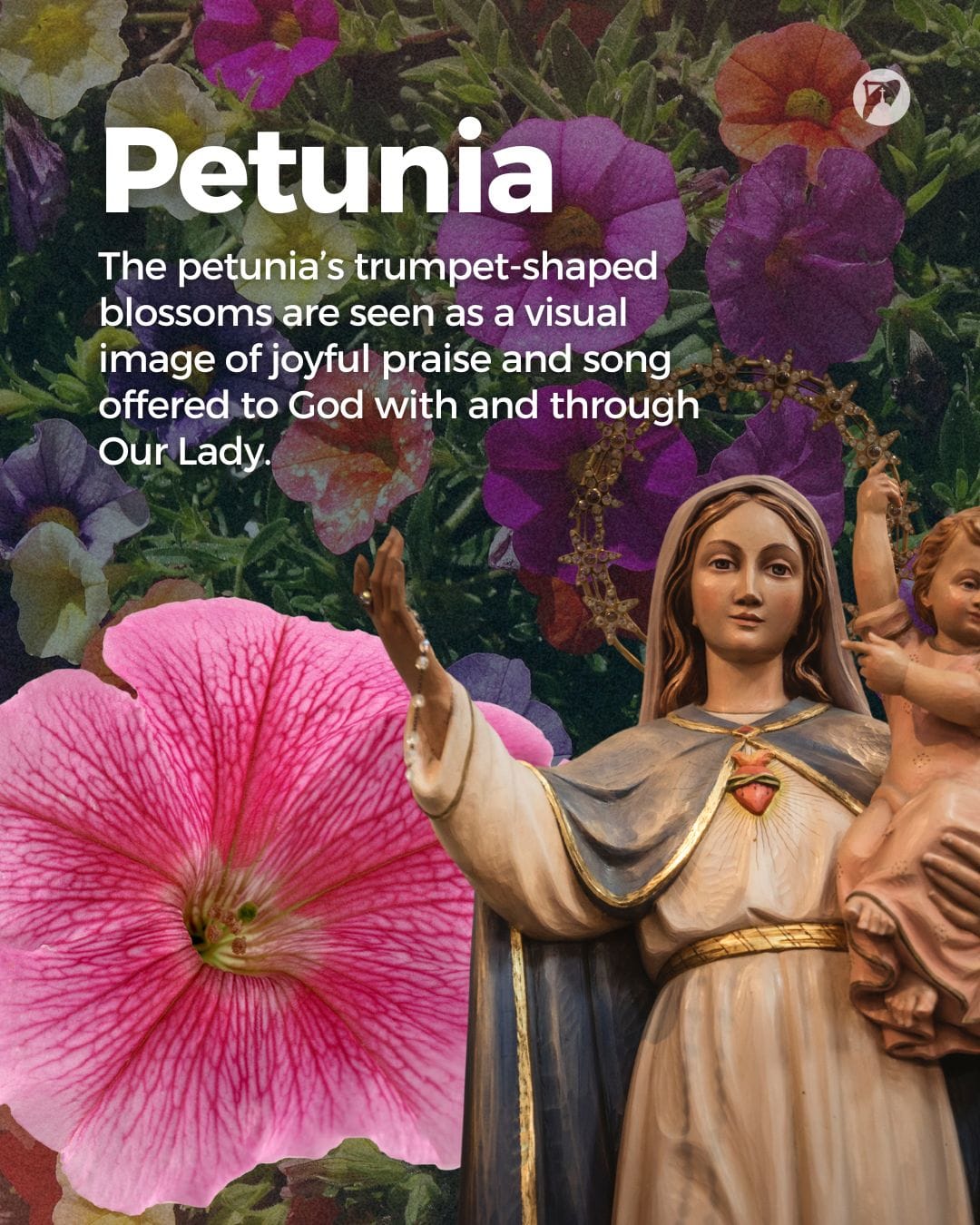
Petunia: The petunia is known as “Our Lady’s Praises.”
The petunia’s trumpet‑shaped blossoms are seen as a visual image of joyful praise and song offered to God with and through Our Lady.
If you feel called, why not plant a Marian flower garden—and pray a Rosary while you’re at it? 🌹