

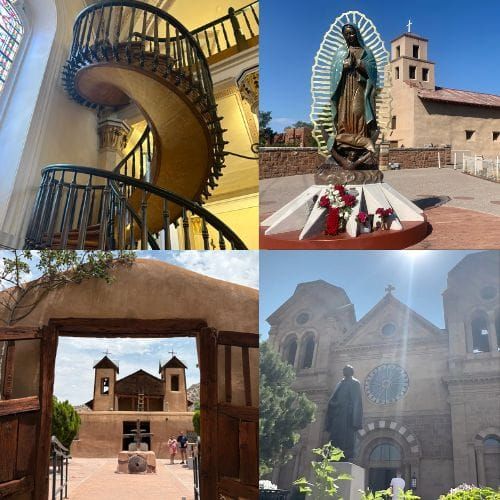
If you ever find yourself near Santa Fe, New Mexico, you could easily spend an entire day visiting Catholic sites in and around the city. While many are familiar with the miraculous staircase at the Loretto Chapel, Santa Fe is also home to a rich collection of lesser-known yet deeply spiritual and historic sites.
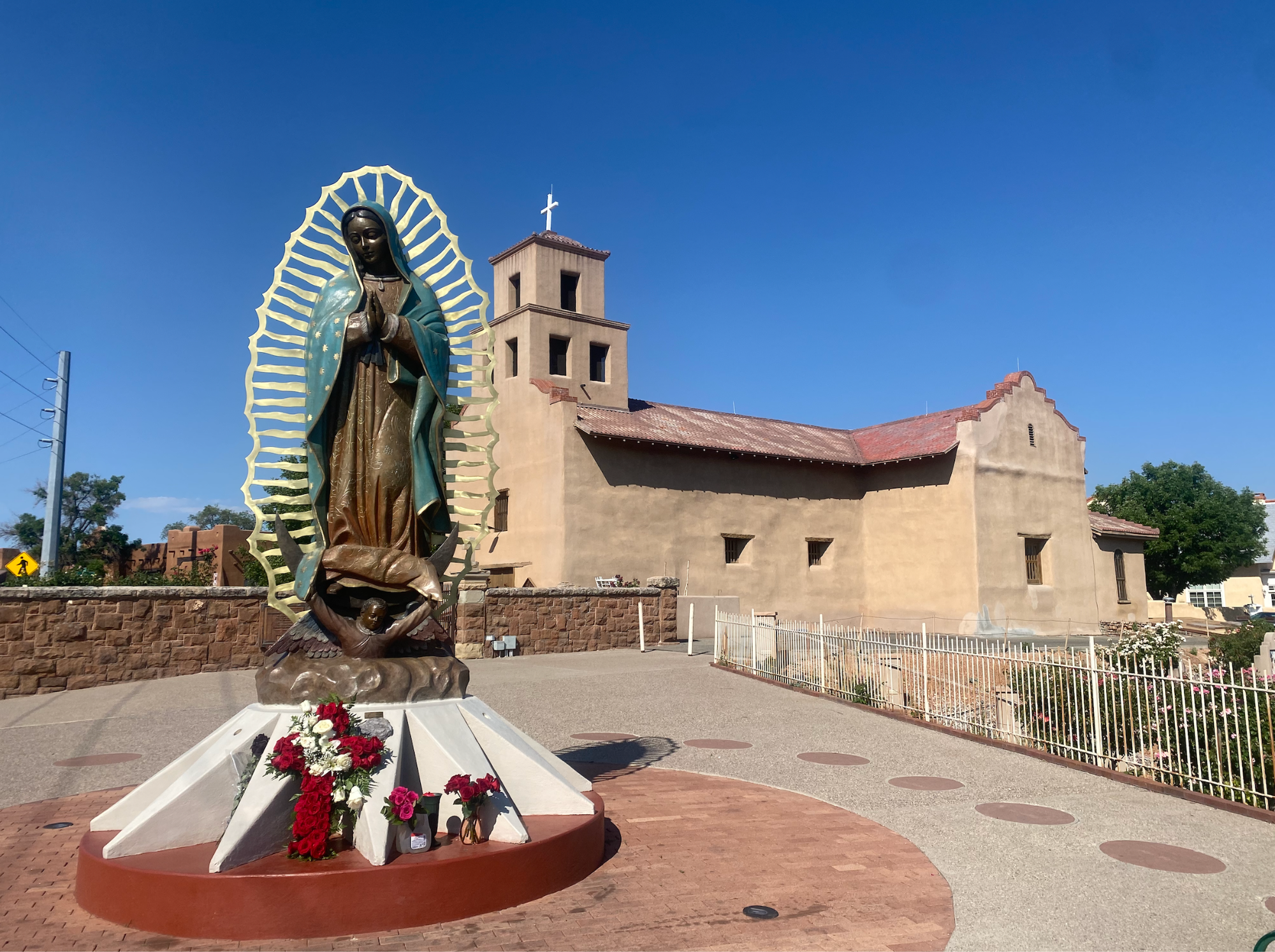
The Shrine of Our Lady of Guadalupe
During a cross-country road trip, my family set aside a full day to explore the area’s sanctuaries and venerate its relics. Our journey began with daily Mass at 8:30 a.m. at the Shrine of Our Lady of Guadalupe. Built between 1776 and 1795, the shrine served the growing 18th-century community along the Santa Fe River, just beyond the bustling Plaza at the end of the Santa Fe Trail.
Today, this historic area—known as the Guadalupe District—links the railyard to downtown Santa Fe and remains a defining part of the city’s identity. The church, along with a recently installed bronze statue of Our Lady of Guadalupe gazing across the Santa Fe River toward the Plaza, stands as a powerful testament to the city’s Catholic heritage. Notably, it is the oldest shrine dedicated to Our Lady of Guadalupe in the United States.
The Loretto Chapel
After Mass and a tour of the relics in the new church building, we made our way to downtown Santa Fe to visit the world-renowned Loretto Chapel. Once belonging to the Sisters of Loretto, the chapel is now privately owned by a family, yet it continues to welcome visitors as a fully operating museum.
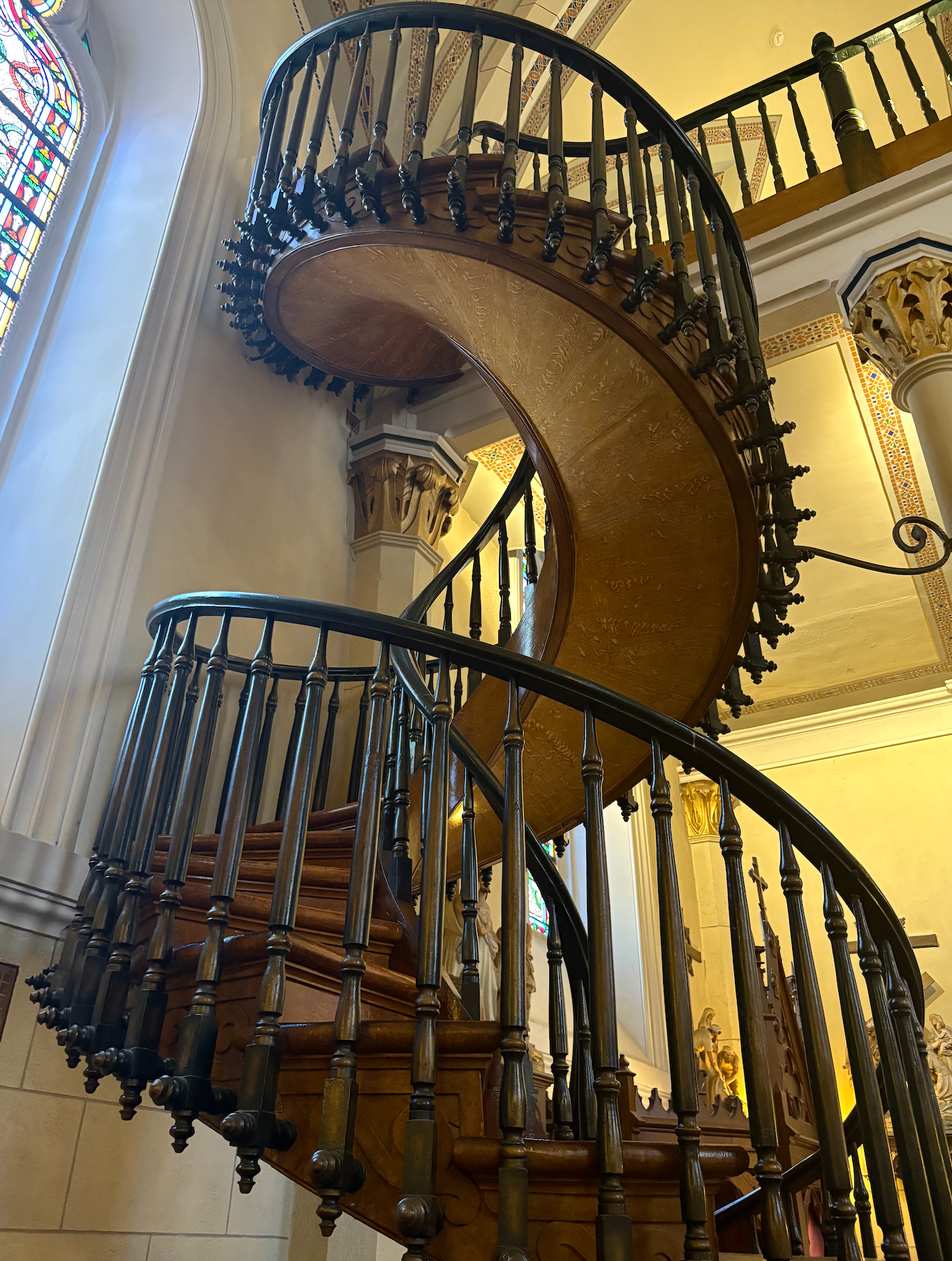
While the chapel features a breathtaking Gothic altar—hand-carved from wood and meticulously painted to resemble marble—it is the mysterious spiral staircase tucked into the back corner that draws pilgrims and tourists from around the world, each eager to witness its beauty and wonder firsthand.
For those unfamiliar with the story of the miraculous staircase, it begins in the mid-19th century, when Archbishop Jean Baptiste Lamy encouraged the Sisters of Loretto—who had come to New Mexico from Kentucky—to commission French architects Antoine Mouly and his son, Projectus, to build their long-awaited chapel.
The Moulys, originally from Paris, had been brought to Santa Fe to work on the Cathedral Basilica of St. Francis of Assisi. Over the course of 16 years, the sisters sacrificed and saved to cover the $30,000 cost of constructing the chapel, a striking example of Gothic Revival architecture.
During that time, Antoine returned to Paris as his eyesight began to fail, leaving Projectus to complete both the cathedral and the chapel. Tragedy struck in 1879 when Projectus fell ill and died, leaving the chapel finished—except for one critical element: there was no staircase to access the choir loft.
Having entrusted their project to the patronage of St. Joseph, the sisters began a nine-day novena, asking for his intercession. On the final day of prayer, an elderly, gray-haired carpenter arrived with a donkey and a simple set of tools, offering to build the staircase. Working in quiet solitude, he completed the structure and then disappeared without accepting payment or leaving any trace behind.
In the years since, the staircase has drawn both devotion and investigation. Experts, including longtime wood technologist Forrest N. Easley, have studied its materials and construction. After a 15-month analysis in 1996, Easley concluded that the wood used in the staircase does not match any known species. While it resembles spruce, it belongs to no identifiable subspecies and has since been informally named “Loretto spruce.”
The Cathedral Basilica of St. Francis of Assisi
Just a short walk from the museum and gift shop is Cathedral Park, where the Spanish-style Cathedral Basilica of St. Francis of Assisi rises at the edge, its origins dating back to 1610. The church is stunning both outside and in, with frescoes and stained glass windows depicting many saints and the San Damiano crucifix in the sanctuary.
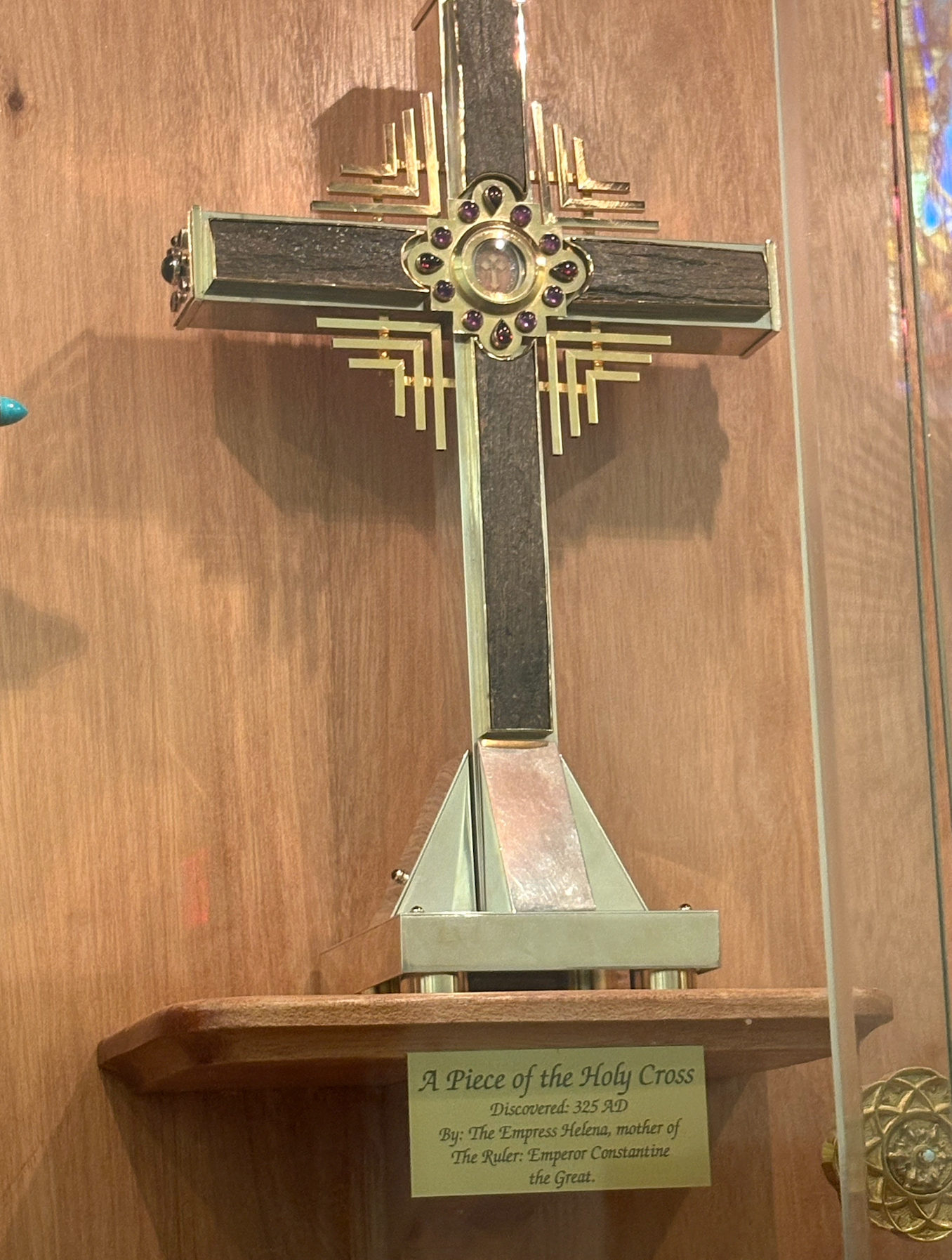
What left the deepest impression, though, was its remarkable collection of relics. From relics of St. Francis of Assisi, St. John Paul II, and St. Anthony of Padua to a relic of the Blessed Virgin Mary and a treasured fragment of the True Cross, the cathedral’s collection is truly extraordinary.
Before leaving the cathedral we were able to gain a plenary indulgence, as this is the Year of St. Francis declared by the Vatican, marking the 800th anniversary of St. Francis of Assisi’s death. With that, we headed to Chimayo, just 30 minutes outside of Santa Fe.
El Santuario de Chimayo
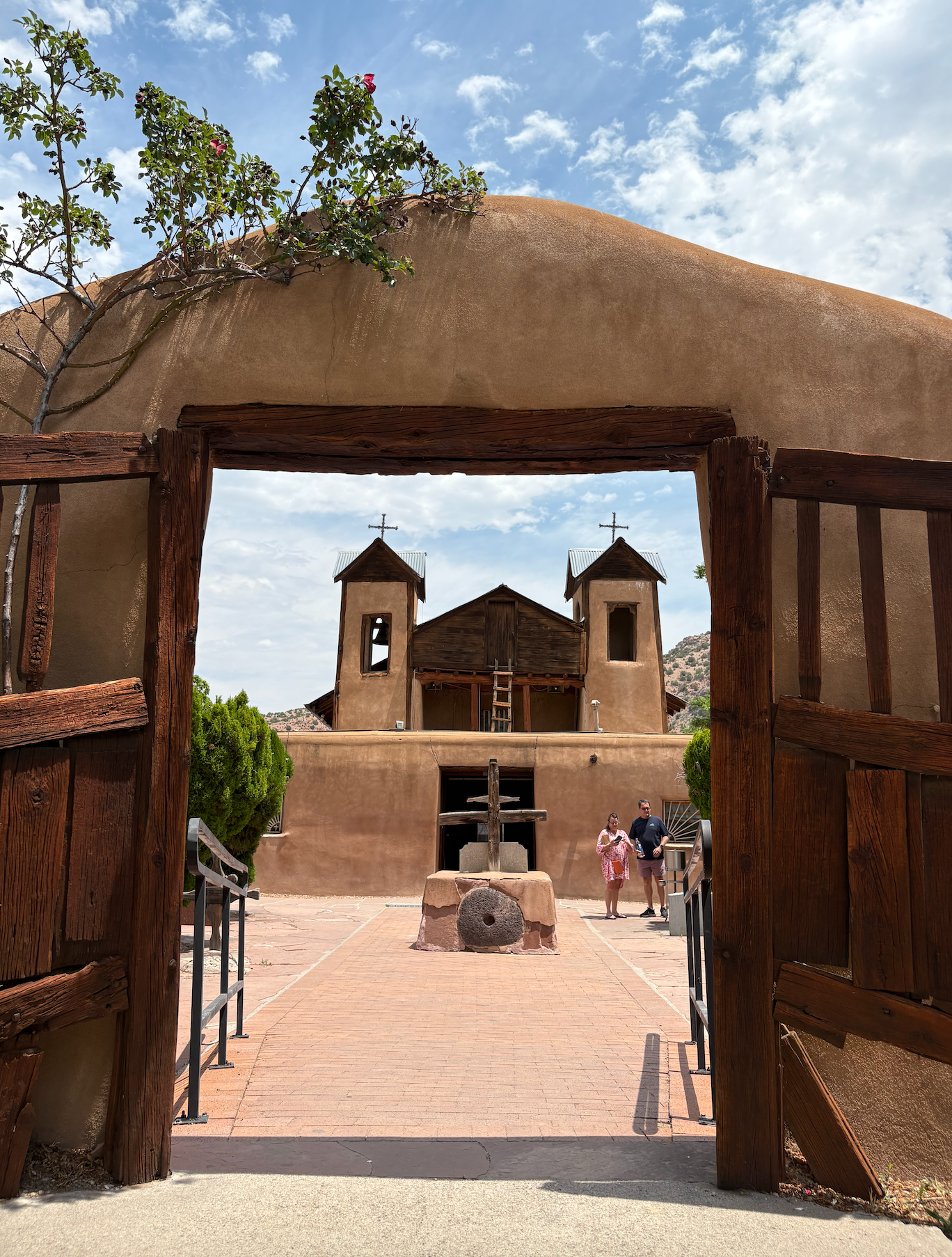
The sanctuary of Chimayo has been a pilgrimage site in the US for many generations, especially due to the healing properties of its holy dirt and the miraculous crucifix that was found. The crucifix of Our Lord of Esquipulas was found sometime around 1810. There are two accounts as told at the sanctuary of how the famous pilgrimage site came to be:
One tradition tells that during Holy Week, on the night of Good Friday, Don Bernardo Abeyta—a member of the Penitentes Brotherhood—was making the customary acts of penance around the hills near his small pueblo of El Potrero when he saw a light rising from one of the slopes near the Santa Cruz River.
He went to the spot and discovered that the glow was coming from the ground. Using his bare hands, he dug into the earth and found a crucifix. Rather than removing it immediately, he left it there and summoned his neighbors to venerate the sacred find. A group of men then went to Santa Cruz to inform Father Sebastián Álvarez.
By the time they arrived, the church in Santa Cruz was full of worshippers after the traditional Good Friday observance of El Santo Entierro (“The Holy Burial”). Hearing the extraordinary news, the priest and the people set out for Chimayó. When they reached the site, Father Sebastián lifted the crucifix and carried it back in a joyful procession to the parish church. But the next morning, the crucifix had disappeared and was found again at its original place.
A second procession was organized, and the crucifix was once more brought back to Santa Cruz. Yet it vanished again. The same thing happened a third time. By then, everyone understood that El Señor de Esquipulas wanted to remain in Chimayó, so a small chapel was built there in his honor.
Another tradition traces the origin of the devotion to Esquipulas differently. According to documents in the archives of the Diocese of Durango, a Guatemalan priest came with the first settlers to Chimayó. He preached to the Native peoples in the surrounding pueblos and carried a large crucifix with him. He eventually died a martyr’s death, and the settlers buried him at El Potrero.
In 1810, the Santa Cruz River flooded and both the crucifix and the body of the martyred priest were uncovered by the water. Some older people who had known the priest when he was alive shouted: "Miren, el Padre de Esquipulas" ("Look, the Father from Esquipulas") and so the crucifix came to be called Our Lord of Esquipulas, named after the village where the priest came from. This same spot where the crucifix and the body of the priest were found was considered a sacred place by the Tewa natives long before Christian settlers arrived in Chimayo.
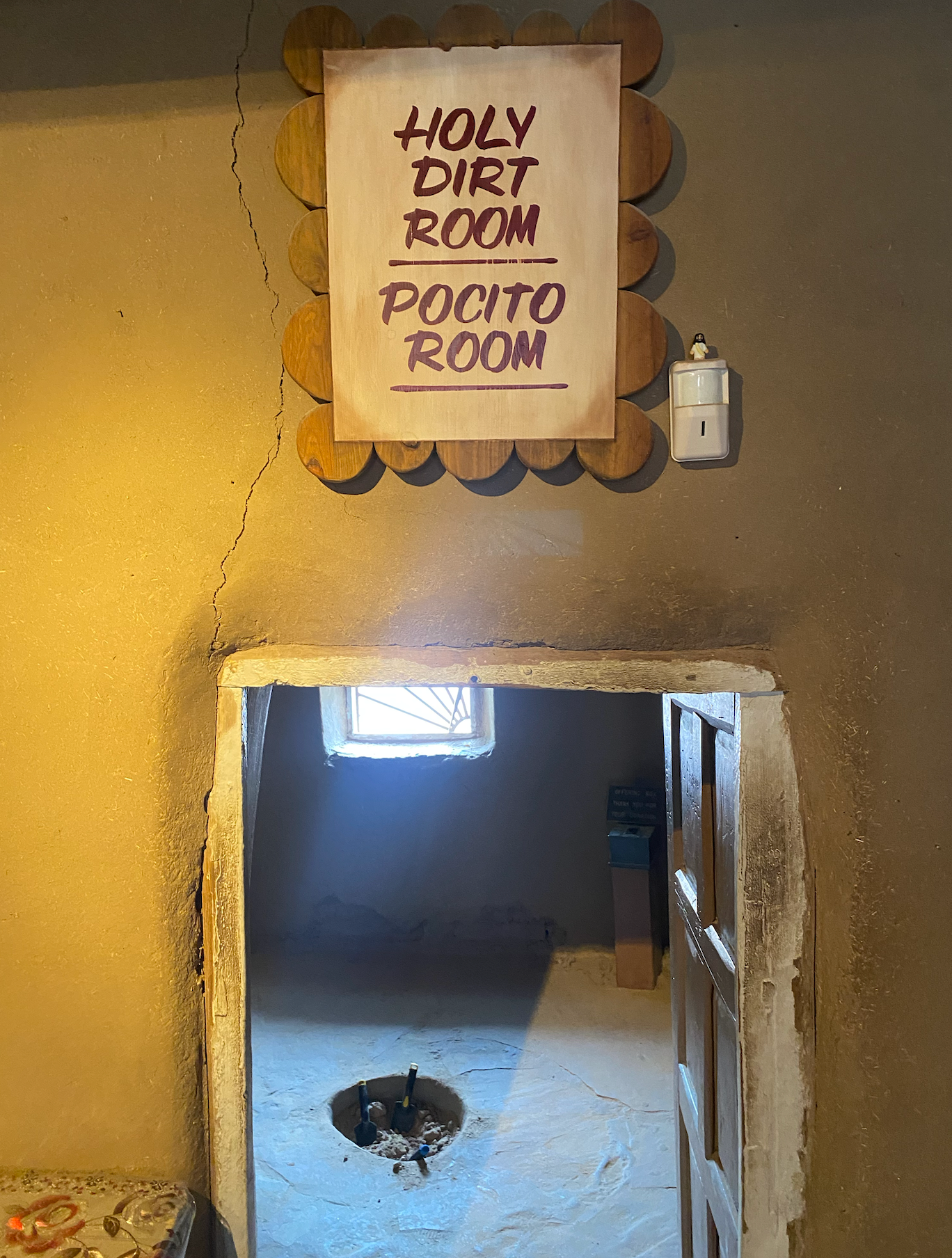
No matter the origin of this holy site, one thing is clear to all who come, it is truly a place where healing and miracles occur. We were even able to grab some holy dirt to take home with us!
El Santo Niño de Atocha
The final stop on our Catholic day trip in New Mexico, was the el Santo Niño de Atocha, which is actually housed at the Santuario of Chimayo but is technically next door to it. Though details about this particular image are scarce, the devotion honors the Holy Child Jesus, who in Chimayo is cherished as a protector of pilgrims, children, the poor, and the sick—many come here specifically to ask for healing and help.
The devotion traces back to the Spanish Santo Niño de Atocha, which portrays the Child Jesus as a small pilgrim carrying bread and water; in Chimayo that image took on a distinctly local life. Pilgrims often leave tiny shoes at his feet as tokens of thanks and signs of faith. Seeing all the baby shoes was incredibly touching, as many in my family have suffered with infertility and prayed for such miracles.

The faithful continue to visit the chapel to pray, seek healing, and give thanks for favors received. El Santo Niño’s association with comfort in hardship helps explain why his devotion remains so strong across New Mexico. Overall, the state’s history with Catholicism is undeniable and quite obvious. Catholics in New Mexico also developed a strong Marian and devotional culture.
One of its most important images is La Conquistadora, brought in the 1600s and later crowned by Pope Pius XII in 1954, reflecting how deeply local Catholic identity became tied to processions, shrines, and popular devotion. La Conquistadora even has her own chapel at the Cathedral Basilica of St. Francis of Assisi that we visited.
Today, the Archdiocese of Santa Fe remains the historic center of that tradition, and New Mexico is still known for its blend of Spanish, Indigenous, and Catholic heritage.