
As summer turns into fall and the weather grows colder, our faith can, quite sadly, follow suit.
Our bodies and minds might imitate the increasing number of slugs that creep across sidewalks. This sluggish outlook makes it tougher to attend daily Mass when it’s darker and colder, with no later Masses available.
The rain might dilute or even drown our plans for all kinds of good works easily accomplished in summer. When the slush, snow, and ice finally arrive, those plans might be chilled altogether in a deep freeze. There is an architectural parallel to this spiritual malady—yet it also comes with a cure.
There was once a cold, bleak chapel on the grounds of the historic Saint Joseph-Saint Ladislaus Church in Norwalk, Connecticut.
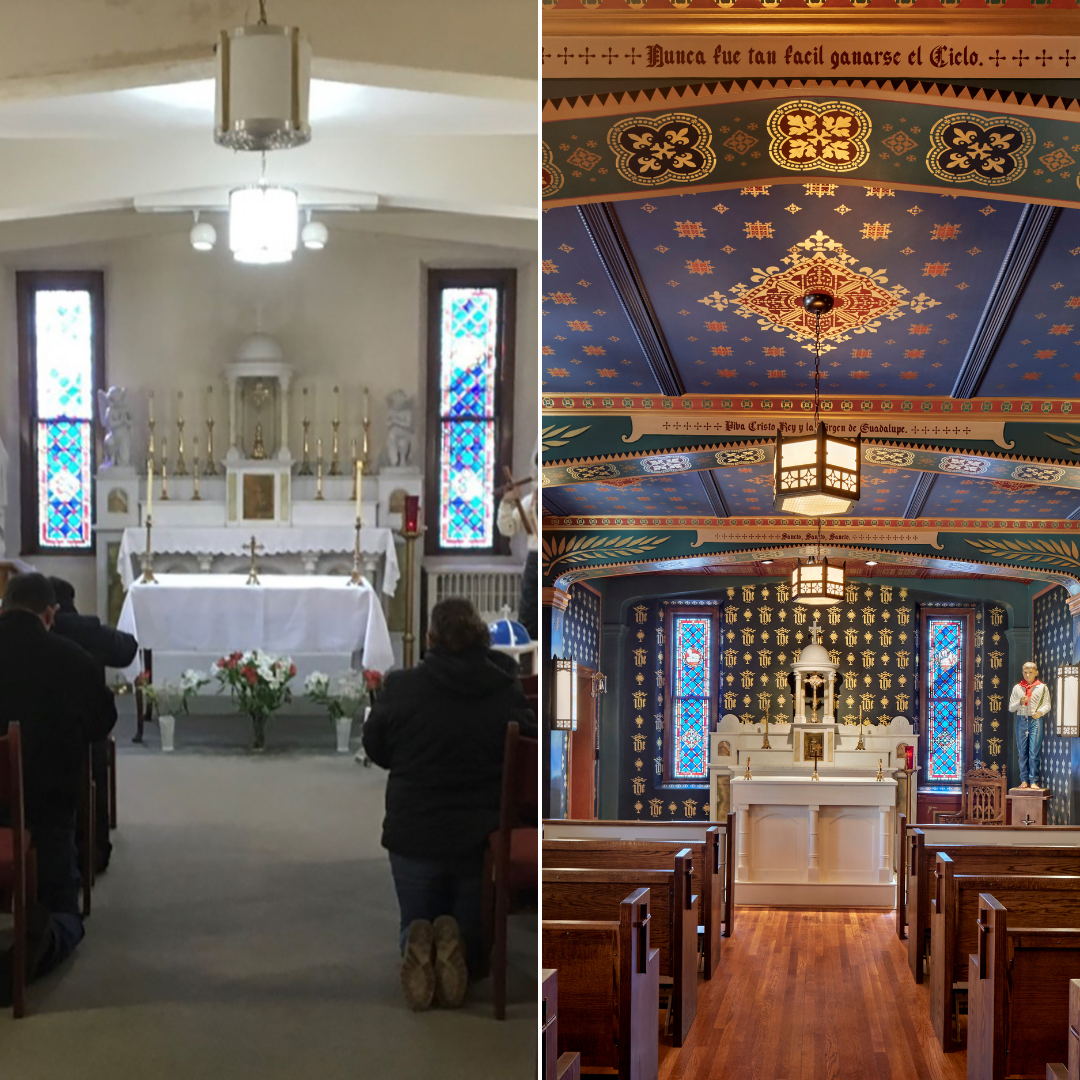
Although this convent chapel was officially alive with the Real Presence of Christ in the Blessed Sacrament, there was barely any outward sign of this supernatural life. The whitewashed walls and ceiling imposed a chill on those who sat in movable chairs. Unanchored in faith, this chapel inspired distraction rather than devotion.
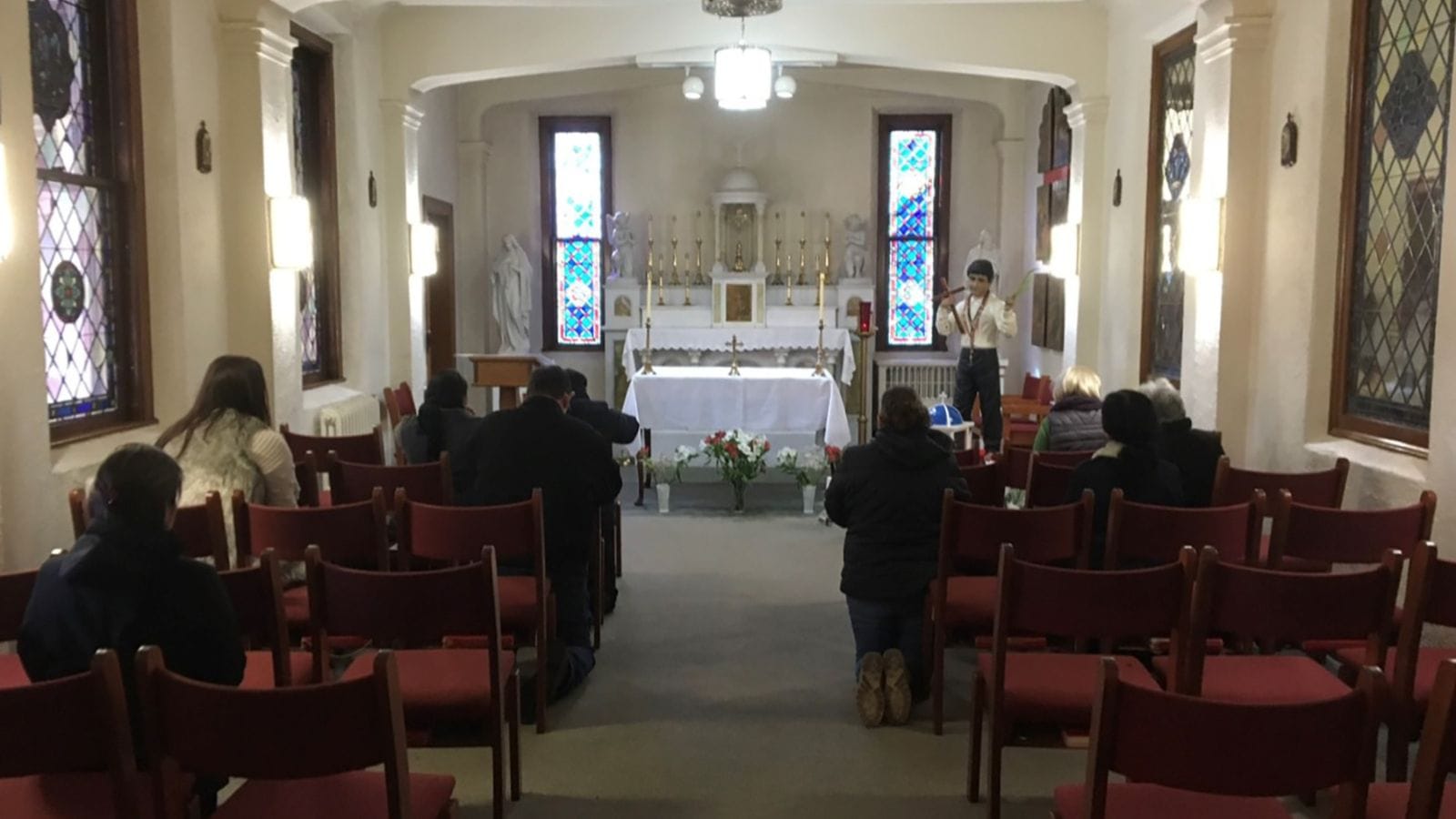
This convent became a parish office, which makes one wonder why the nuns left in the first place. Possibly their faith grew cold amid their chapel’s icy aesthetic; or possibly their icy faith was reflected in a deliberately chosen wintery décor devoid of devotion.
Regardless, the parish finally had enough of the chilly atmosphere and called upon Connecticut’s very own John Canning Liturgical Arts, located in Cheshire, about an hour away.
In the ecclesiastical world, Canning is best known for its restoration of Blessed Michael McGivney’s grand parish church, Saint Mary’s in New Haven, and interior painting of Cardinal Burke’s Our Lady of Gudalupe Shrine in La Crosse, Wisconsin.
In addition to these and other monumental structures, Canning has also creatively crafted chapels into classic calls to Catholic contemplation.
If any studio could turn a cold, bleak room into a warm, vibrant testimony to the heroic virtue of a young martyr, Canning would be it. The first thing to consider was how to make the chapel reflect the courage of its patron, who gave his very blood for Christ.
Saint Jose Luis Sanchez del Rio (Joselito) was born in 1913 in Mexico.
Despite being cruelly persecuted by his own government for being Catholic, Saint Joselito remained steadfast in his beliefs. He was imprisoned, tortured, threatened, and offered bodily freedom if only he would renounce his Savior.
Taking to heart the warning words of Christ in Matthew 18 about it being better to go maimed to Heaven than to Hell with bodily health, Joselito persevered to the end. The 14-year-old was killed in 1928 and is one of the official martyrs of the Cristero War.
Joselito was canonized on October 16, 2016, and his feast is February 10, the day of his martyrdom.
Highlights of the vivified San Joselito Adoration Chapel, completed in 2021, include red walls symbolizing the shedding of blood, gold ceiling palms symbolizing the reward of martyrdom, and, also on the ceiling, gold fleur-de-lis symbols representing purity.
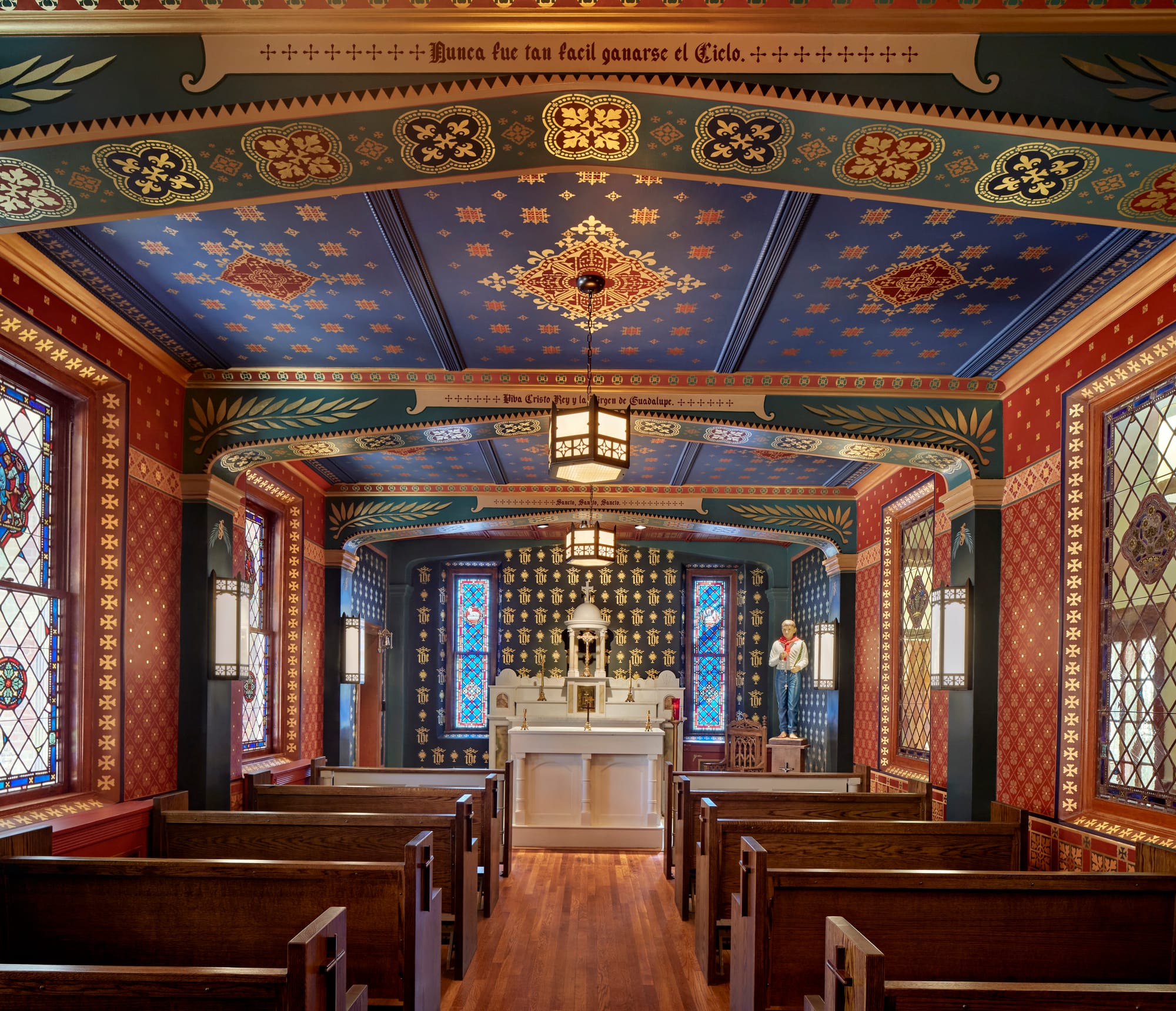
One overlooked aspect of the chapel with theological meaning is its seating. Where moveable chairs once filled the nave, stable pews now stand, indicative of the immovable faith of Saint Joselito.
By the time Saint Joselito’s February feast arrives, many places will see snow and ice. This does not, however, mean an automatic parallel to the level of grace in our souls. As the weather gets colder, may God grant, through the intercession of the courageous Saint Joselito, that our faith in Christ grows all the warmer.