

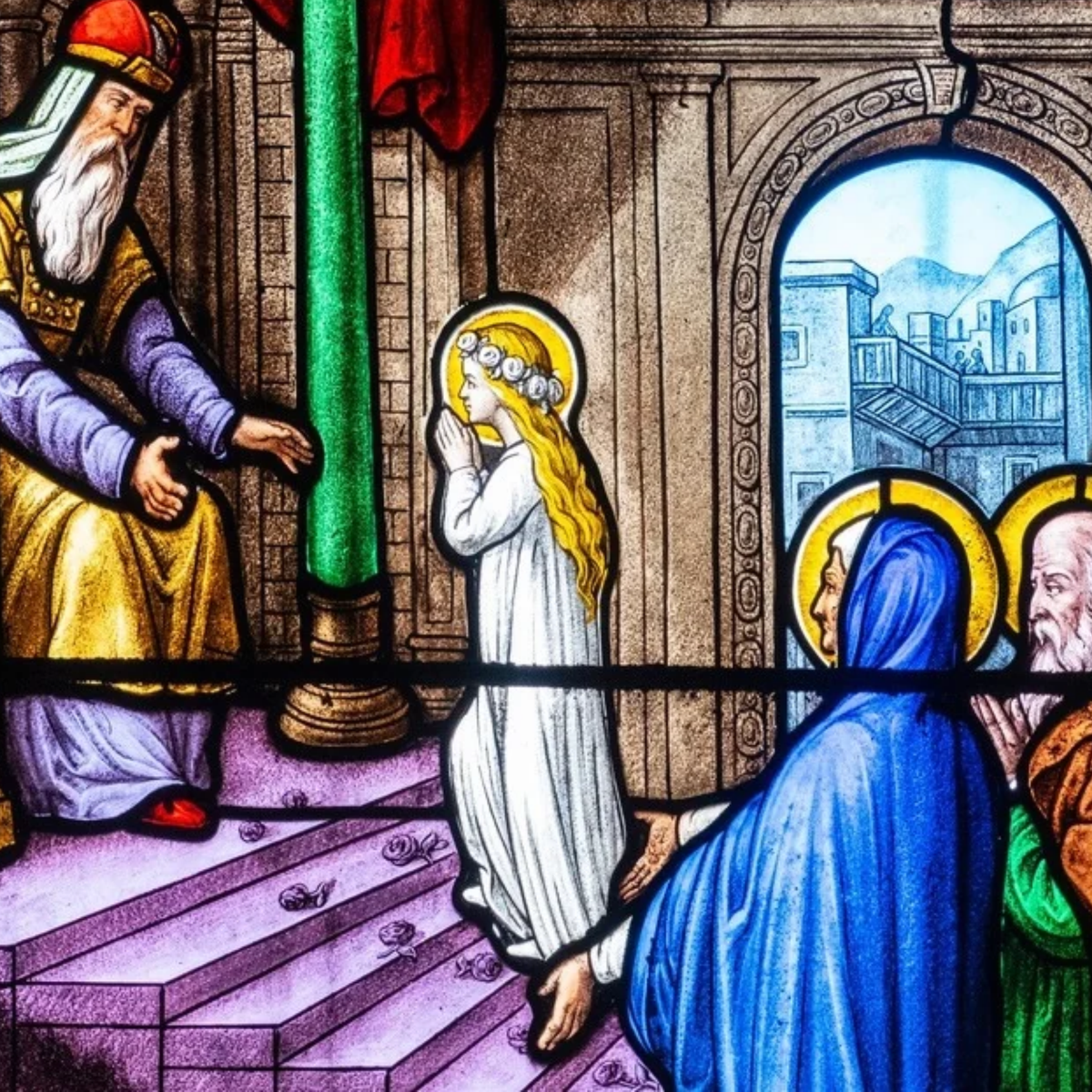
Every February 2, Catholics celebrate the Presentation of the Lord — a scene straight from Luke’s Gospel where Mary and Joseph bring the infant Jesus to the Temple.
Yet every November 21, the Church commemorates a lesser-known, quieter milestone:
The Memorial of the Presentation of the Blessed Virgin Mary!
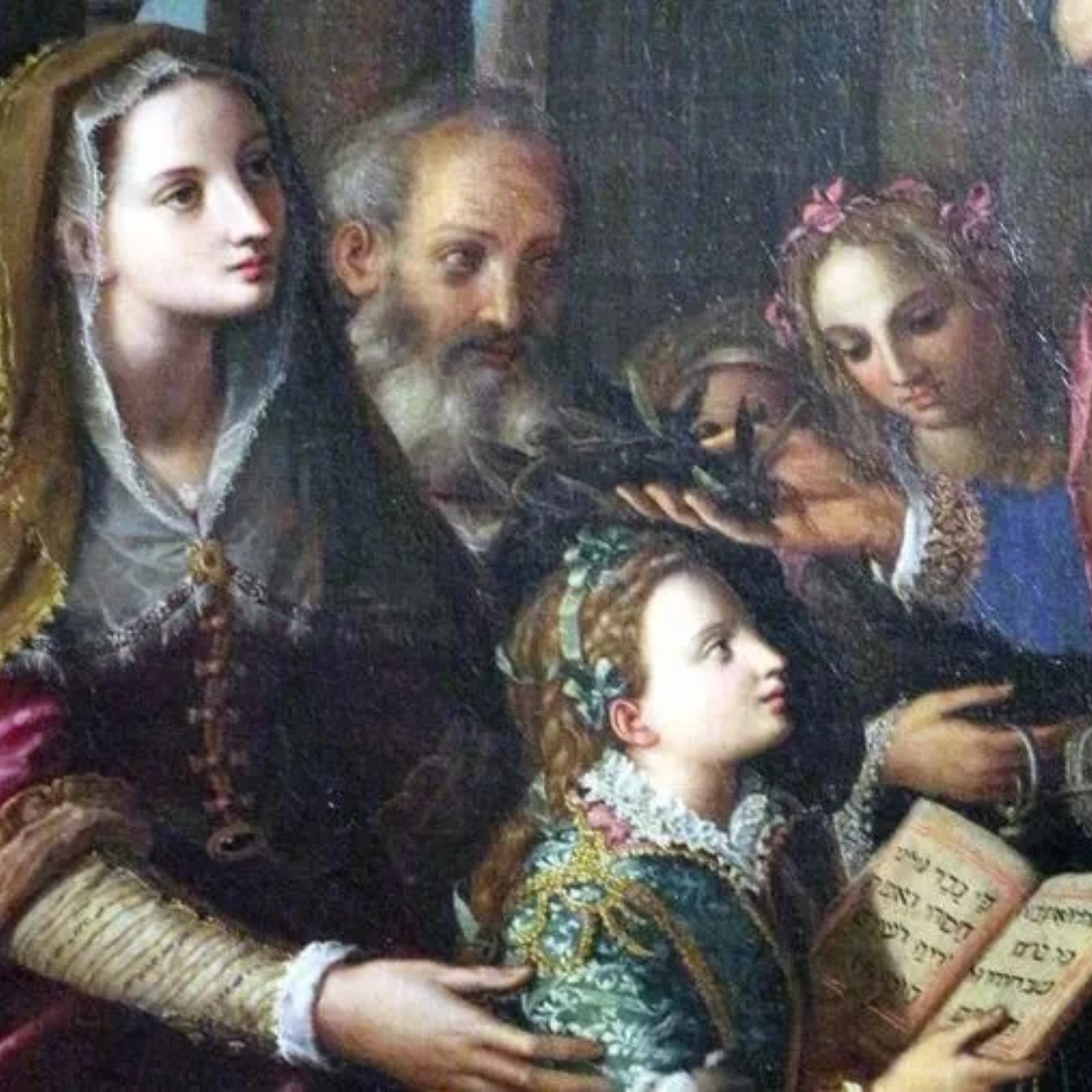
This is the day the Church honors her parents, Sts. Joachim and Anne, for consecrating their young daughter completely to God.
Though it is often overshadowed by larger Marian Solemnities, this ancient feast reveals how God prepared Mary’s heart LONG before the angel Gabriel ever appeared.
Here are six things to know about the Presentation of Mary:
1. The Story Comes From Early Christian Tradition, Not Scripture
Unlike the Presentation of Jesus, you won’t find Mary’s presentation in the New Testament. Instead, the account comes from the Protoevangelium of James, an early Christian writing dated before A.D. 200. While not part of the Scripture, the text preserves venerable apostolic traditions — a point St. Pope Paul VI highlighted in his 1974 apostolic exhortation Marialis Cultus, noting that:
“Despite its apocryphal content, it presents lofty and exemplary values and carries on the venerable traditions having their origins in the Eastern churches.”
2. She Was Only 3 Years Old — and Danced on the Temple Steps
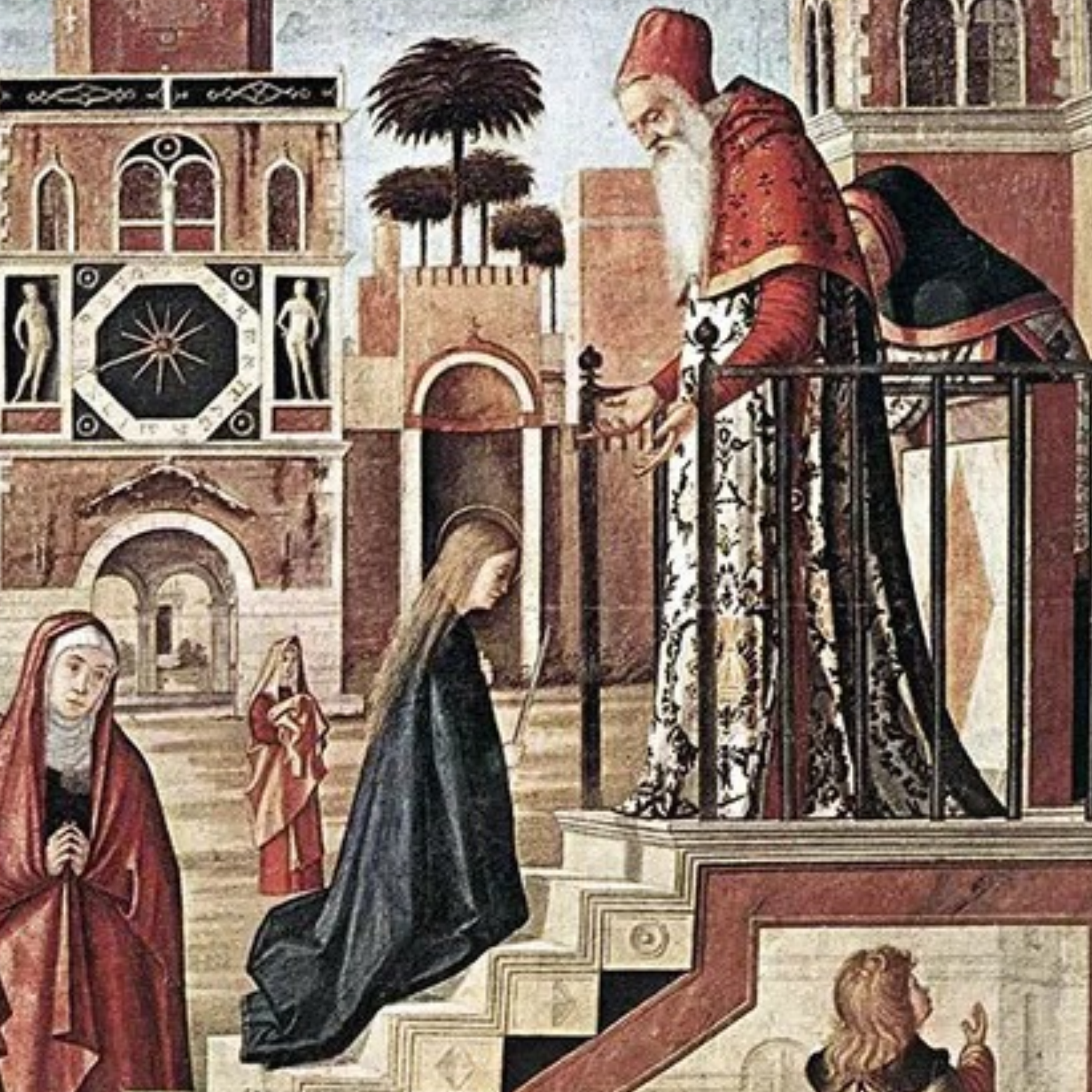
According to early tradition, Joachim and Anne waited until Mary was 3 years old to fulfill their promise of dedicating her to God’s service.
Escorted to the Temple in Jerusalem by young women carrying burning lamps, Mary was welcomed, kissed, and blessed by the Temple priest, who proclaimed:
“The Lord has magnified thy name in all generations. In thee, the Lord will manifest his redemption to the sons of Israel.”
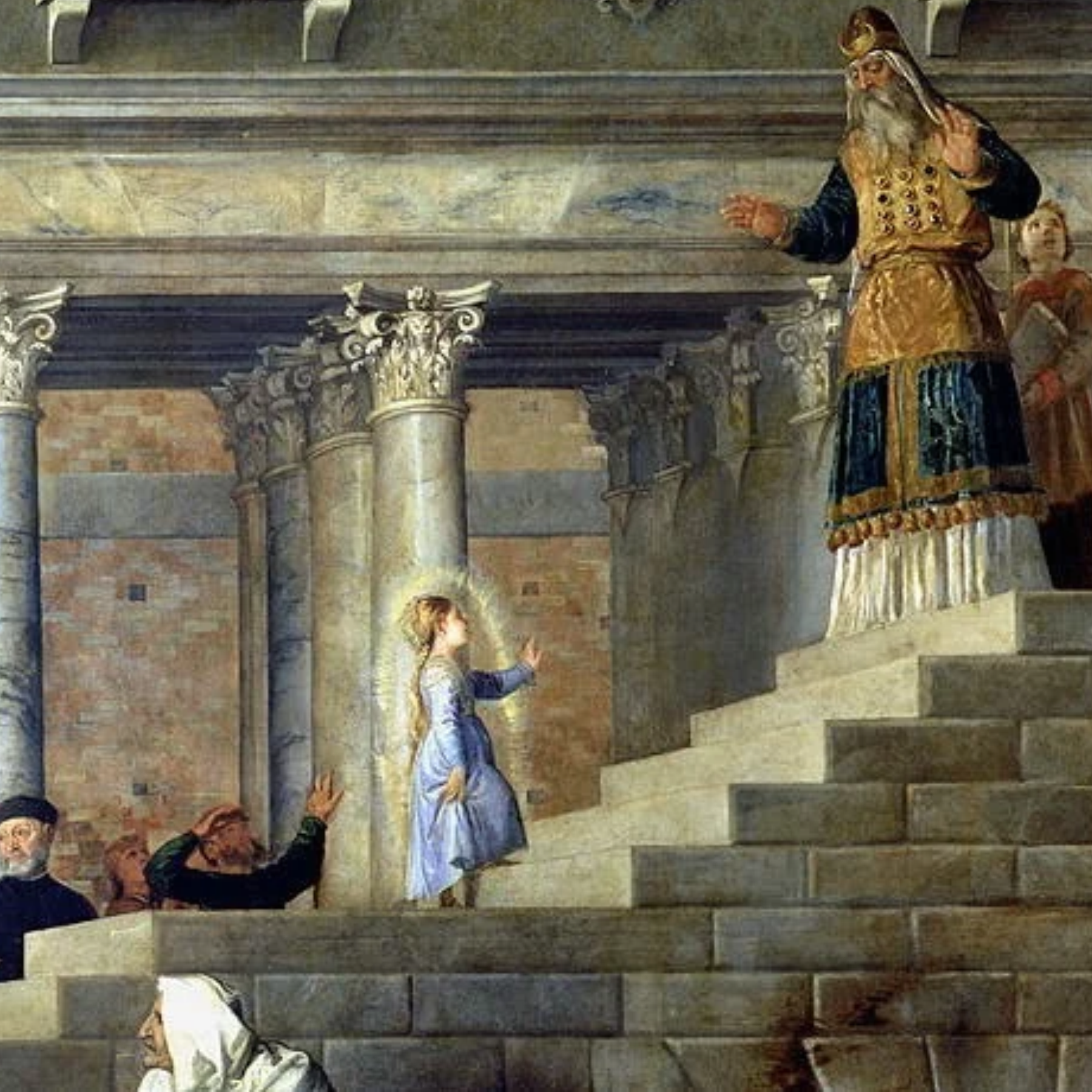
Placed on the third step of the Temple, the young child reportedly danced with joy as her parents returned home to Nazareth glorifying God.
3. She May Have Been Mentored by the Prophetess Anna
In the Temple, Mary lived in an atmosphere saturated with Scripture, prayer, and the presence of the Holy of Holies, under the guardianship of holy women who had dedicated their lives to God. Scripture scholars note that one of those women was likely Anna — the elderly prophetess who would later recognize the infant Jesus at His own presentation in Luke’s Gospel.
4. It Began With a Church Dedication in Jerusalem in 543
The liturgical feast traces its roots directly to November 21, 543, when Emperor Justinian dedicated the Basilica of St. Mary the New near the Temple area in Jerusalem. Early Church Fathers like St. Germanus and St. John Damascene preached on the feast, and while the Byzantine Church celebrates it as one of its 12 Great Feasts, it took centuries to take root in the West — first celebrated formally in Avignon, France, in 1373 before Pope Sixtus IV extended it to the universal Church in 1472.
5. Popes Point to Mary’s Total Self-Offering — and Our Cloistered Sisters
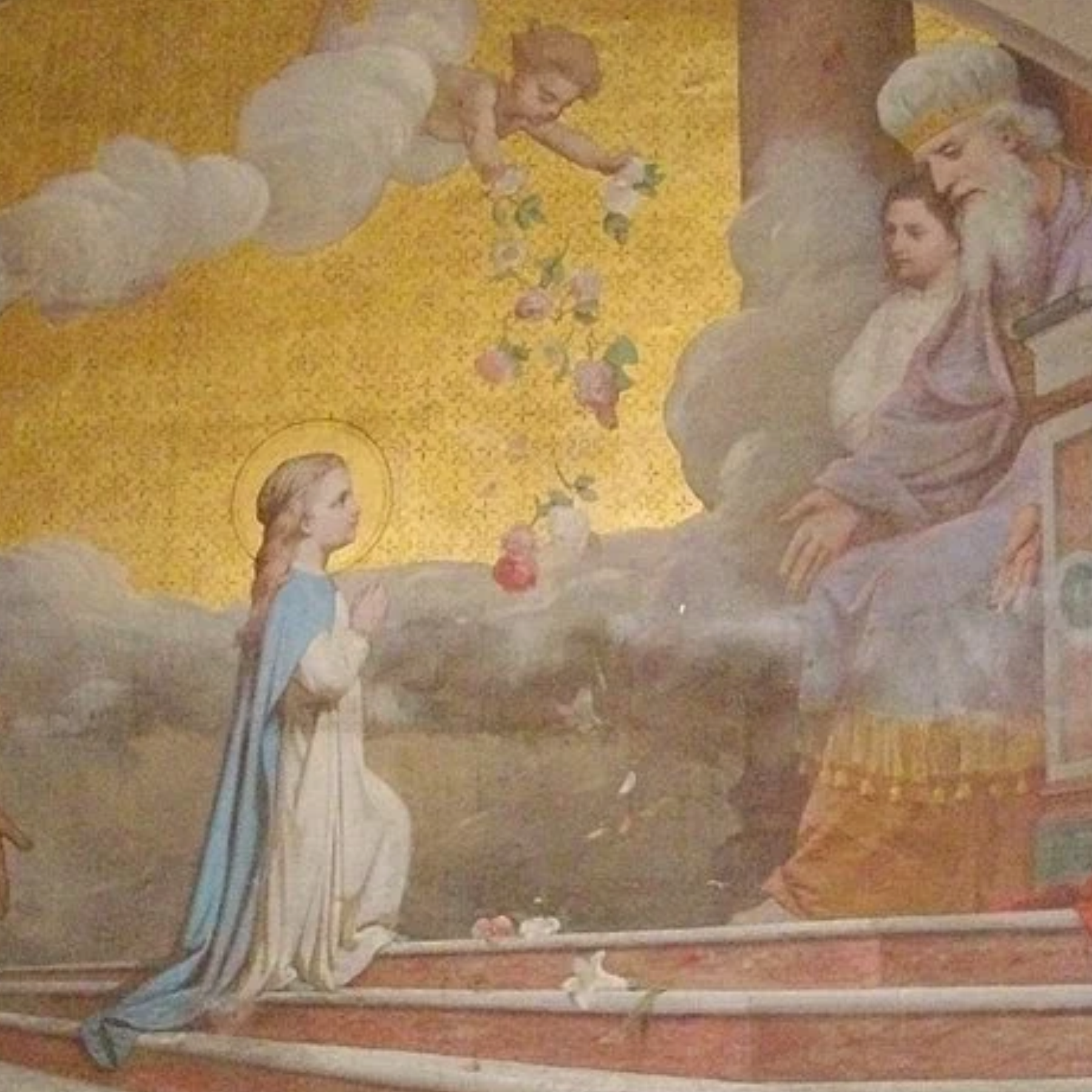
For centuries, the popes have emphasized that Mary’s physical entrance into the Jerusalem Temple foreshadowed her ultimate vocation: becoming the true living dwelling place of the Almighty. As Pope Benedict XVI famously wrote of Mary’s radical availability to God:
“Mary is holy Israel: she says 'yes' to the Lord, she puts herself totally at his disposal and thus becomes the living temple of God.”
Similarly, St. Pope John Paul II pointed to this feast as proof that Mary:
“From her earliest childhood wished to belong unreservedly, completely, to the Lord, as is testified by the commemoration of the Presentation, which is recalled every year on 21 November” (Angelus, Dec. 8, 1978).
Because of Mary’s hidden life of prayer in the Temple, November 21 is also celebrated by the Church as Pro Orantibus Day — the World Day of Cloistered Life — which St. John Paul II described as:
“A day for cloistered women religious who are especially dedicated to prayer, in silence and recollection.”
6. It Celebrates a Parent’s Sacrifice—and Our Own Baptismal Call
Because November 21 is classified as a memorial rather than a solemnity or holy day of obligation, it is easy to let it pass unnoticed. Yet the feast invites Catholics to pause and honor two profound realities: the heroic sacrifice of Sts. Joachim and Anne, who surrendered their only child so she would be completely free to follow God’s will, and Mary’s own radical “yes” to God.
By our baptism, God invites each of us into that same total self-gift — and gives us Mary, the Purest Virgin, as a tender Mother to guide us along the way.